
Crestone
Crestone, Colorado, is a small town situated at the foot of the Sangre de Cristo Range, recognized as a significant spiritual center for various religions including Tibetan Buddhism. Its development as a spiritual hub was notably influenced by Maurice and Hanne Strong in the 1970s, who established the Manitou Foundation and granted land to numerous spiritual organizations.
Key Facts
- ›Crestone was platted in 1880 by George Adams, owner of the Luis Maria Baca Grant no. 4.
- ›In the 1970s, the Baca Grande land development was established, and Maurice and Hanne Strong began transforming the area into a spiritual center.
- ›The town is named after the prominent peaks, Crestone Peak and Crestone Needle, located to its east.
- ›Crestone is a recognized spiritual center for several religions, including Tibetan Buddhist centers, a Hindu temple, and a Zen center.
- ›The town is one of the few places in the U.S. where open-air funeral pyres are legally permitted.

Important Relationships
- George Adams
- Luis Maria Baca Grant No. 4
- Maurice Strong
- Hanne Marstrand Strong
- Manitou Foundation
- Manitou Institute
Sangre De Cristo Range, San Luis Valley, Crestone Peak, Crestone Needle, Baca Grande Subdivision
- Platted By George Adams In 1880.
- Baca Grande Land Development Established In the 1970s.
- Maurice and Hanne Strong Began Developing Crestone As A Spiritual Center In the 1970s.
- Manitou Foundation Granted Land To Spiritual Organizations.
About Crestone
Crestone is a statutory town located in Saguache County, Colorado, nestled at the western foot of the Sangre de Cristo Range within the northern San Luis Valley. Although a small community, with a population of 141 according to the 2020 census, Crestone has gained international recognition as a significant spiritual and intellectual center, drawing visitors and residents interested in a diverse array of religious and philosophical pursuits.
History and Development
The area's history traces back to the granting of the Luis Maria Baca Grant No. 4 in 1860. The town of Crestone itself was platted in 1880 by George Adams, who was the owner of the Baca Grant. Early economic activities included ranching and some mining. A brief boom occurred around 1900 with the reopening of a gold mine and the construction of a railroad spur, but this was short-lived due to a lack of significant ore deposits.
A pivotal period for Crestone began in the 1970s with the establishment of the Baca Grande land development. Maurice Strong, a prominent businessman, and his fiancée, Hanne Marstrand Strong, acquired a controlling interest in the development and were inspired to create a world spiritual center. Through the Manitou Foundation and Manitou Institute, they began granting parcels of land to various traditional spiritual organizations, catalyzing the town's transformation.
Spiritual Hub
Crestone is now a recognized locus for a wide range of religious and spiritual traditions. It hosts several Tibetan Buddhist centers, a Hindu temple, and a Zen center, alongside various New Age activities. This concentration of diverse spiritual groups makes Crestone a destination for pilgrims and those seeking spiritual exploration. The town also holds a unique distinction as one of the few places in the United States where open-air funeral pyres are legally permitted, supported by the non-denominational Crestone End of Life Project.
Geography and Access
The town is situated on the alluvial fan of North Crestone Creek. Its name is derived from the prominent 14,000-foot peaks, Crestone Peak and Crestone Needle, which lie to its east. Access to Crestone is primarily via Saguache County Road T, which connects to U.S. Highway 285. The surrounding public lands are managed by the Rio Grande National Forest and the Bureau of Land Management, offering opportunities for outdoor recreation.
Source: Wikipedia ↗
Frequently Asked Questions
What is Crestone, Colorado known for?
Crestone is internationally known as a spiritual center for a diverse range of religious and spiritual traditions, including Tibetan Buddhism, Hinduism, and Zen Buddhism. It also attracts eco-tourists and pilgrims interested in its unique spiritual offerings.
How did Crestone become a spiritual center?
The transformation of Crestone into a spiritual hub was largely initiated in the 1970s by Maurice and Hanne Strong. They established the Manitou Foundation and granted parcels of land to various spiritual organizations, fostering the growth of diverse religious communities.
What are some of the spiritual organizations located in Crestone?
Crestone is home to several Tibetan Buddhist centers, a Hindu temple, and a Zen center. The Manitou Foundation has been instrumental in granting land to many of these traditional spiritual groups.
Are there any unique end-of-life practices in Crestone?
Yes, Crestone is one of the few places in the United States where open-air funeral pyres are legally permitted. The Crestone End of Life Project supports these practices and provides end-of-life support for the local community.
What is the history of the Baca Grant in Crestone?
The Luis Maria Baca Grant No. 4 was granted in 1860. In the 1970s, a portion of this land was developed into the Baca Grande subdivision, which later became a key area for the establishment of spiritual centers.
Related Buddhist Temples

Wapato
Wapato is a town in Yakima County, Washington, with a rich history shaped by its origins as a railroad stop and its significant agricultural development. Initially established as Simcoe, it was renamed Wapato in 1903 and officially incorporated in 1908. The town's demographics have significantly evolved, particularly with the arrival of Japanese and later Hispanic populations, making it a culturally diverse community.
Kushinagar
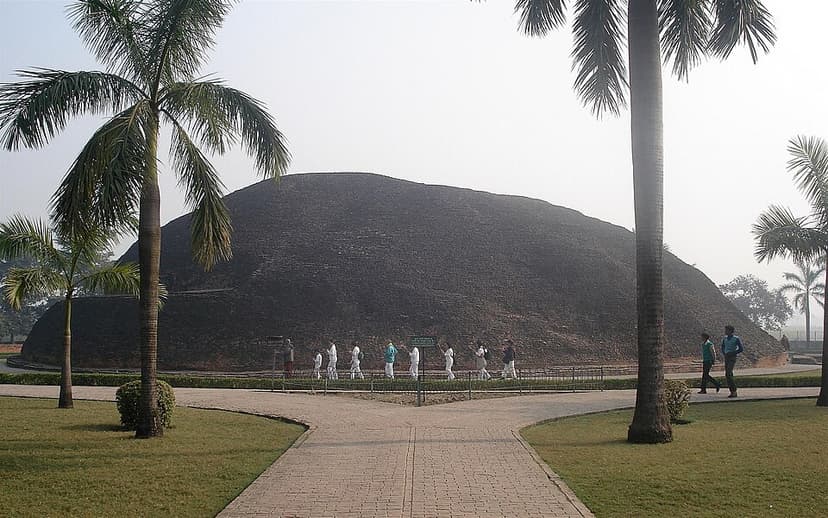
Kushinagar is a significant Buddhist pilgrimage site in Uttar Pradesh, India, renowned as the location where Gautama Buddha is believed to have attained parinirvana. Its historical importance is underscored by archaeological findings and its role in the distribution of Buddha's relics, making it a crucial destination for Buddhists worldwide.

Sarnath
Sarnath is a significant Buddhist pilgrimage site in Uttar Pradesh, India, renowned as the location where Gautama Buddha delivered his first sermon after achieving enlightenment. This pivotal event, known as the First Turning of the Wheel of Dharma, marked the formation of the Buddha's sangha and is commemorated by numerous historical structures and artifacts, including the iconic Lion Capital of Ashoka.