
Wapato
Wapato is a town in Yakima County, Washington, with a rich history shaped by its origins as a railroad stop and its significant agricultural development. Initially established as Simcoe, it was renamed Wapato in 1903 and officially incorporated in 1908. The town's demographics have significantly evolved, particularly with the arrival of Japanese and later Hispanic populations, making it a culturally diverse community.
Key Facts
- ›Founded in 1885 by Alexander Mccredy as a railroad stop named Simcoe.
- ›Renamed Wapato in 1903 due to confusion with Fort Simcoe.
- ›Incorporated on September 16, 1908.
- ›Became a center for Japanese American community in Washington State in the early 1900s.
- ›Experienced significant demographic shifts due to agricultural opportunities and federal policies like the Bracero Program.
- ›Today, Wapato has a Hispanic majority and is a notable agricultural producer.

Important Relationships
- Northern Pacific Railroad
- Yakama Indian Reservation
- Wapato Development Company
- Bracero Program
Yakama Indian Reservation, Irwin Canal
- Founding As Simcoe
- Name Change To Wapato
- Official Incorporation
- Development of 'Japanese Town'
- Attack On African Americans
- Burning of Japanese Language School and Residences
- Evacuation of Japanese Residents Due To Executive Order 9066
- Influx of Hispanic Migrant Workers and Bracero Program
About Wapato
Wapato, Washington
Wapato is a town located in Yakima County, Washington, with a history deeply intertwined with its railroad origins, agricultural development, and evolving cultural landscape. Originally founded in 1885 by Alexander McCredy as Simcoe, a stop on the Northern Pacific Railroad, the town was renamed Wapato in 1903 to avoid confusion with the nearby Fort Simcoe. Its official incorporation followed on September 16, 1908.
History and Demographics
The town's growth was significantly spurred by the construction of the Irwin Canal in 1896, which facilitated agricultural expansion. In the early 1900s, the Wapato Development Company was established, laying out the town site and promoting settlement. Early in its history, Wapato became a notable center for Japanese immigrants, with a vibrant community developing along West 2nd Street, second only to Seattle in Washington State. The Yakima Buddhist Bussei Kaikan, built by members of the congregation, stood as an architecturally significant building during this period.
However, the town's history also includes periods of racial tension and displacement. In 1938, a mob, reportedly including police, attacked African American residents. Following the outbreak of World War II, Japanese residents were forced to evacuate by Executive Order 9066 in 1942, and their community buildings and homes were subjected to arson. The post-war era saw a significant demographic shift with the arrival of Hispanic migrant workers, influenced in part by the Bracero Program. This influx fundamentally reshaped the town's cultural identity, leading to its current status as a community with a Hispanic majority, often described by residents as a "Mexican Town."
Economy and Geography
Agriculture has remained a cornerstone of Wapato's economy. Through the latter half of the 20th century, the region was recognized for producing large volumes of potatoes and apples. Geographically, Wapato is situated within the external boundaries of the Yakama Indian Reservation. The town experiences a cold semi-arid climate.
Modern Wapato
As of the 2020 census, Wapato had a population of 4,607, with a significant majority identifying as Hispanic or Latino. The town's median age is notably young, reflecting a younger population demographic. In recent years, Wapato has made headlines for decisions such as allowing strip clubs in 2012, an effort by some residents to "put Wapato on the map."
Source: Wikipedia ↗
Frequently Asked Questions
When was Wapato founded?
Wapato was founded in 1885 by Alexander McCredy as a railroad stop named Simcoe. The town officially changed its name to Wapato in 1903 and was incorporated on September 16, 1908.
What is the origin of the name Wapato?
The name 'Wapato' comes from the Chinook Jargon word for an edible root, likely derived from the Upper Chinook language. This name was adopted in 1903 to distinguish it from nearby Fort Simcoe.
What was the significance of the Japanese community in Wapato?
As early as 1905, many Japanese people migrated to Wapato, forming a community known as 'Japanese Town'. By the early 20th century, it was a significant center of Washington's Japanese population, second only to Seattle, and featured the architecturally noteworthy Yakima Buddhist Bussei Kaikan.
How has Wapato's population changed over time?
Wapato initially attracted settlers with the development of agriculture. It later saw a significant influx of Japanese immigrants, followed by African Americans, and then extensively Hispanic migrant workers, especially after World War II. Today, the town has a strong Hispanic majority.
What role did agriculture play in Wapato's development?
Agriculture became a major business in Wapato with the construction of the Irwin Canal in 1896. In the early 1900s, the Wapato Development Company was established to promote land sales for agricultural purposes. Through the 1970s and into the 1990s, Wapato was a significant producer of potatoes and apples.
Related Buddhist Temples

Crestone
Crestone, Colorado, is a small town situated at the foot of the Sangre de Cristo Range, recognized as a significant spiritual center for various religions including Tibetan Buddhism. Its development as a spiritual hub was notably influenced by Maurice and Hanne Strong in the 1970s, who established the Manitou Foundation and granted land to numerous spiritual organizations.
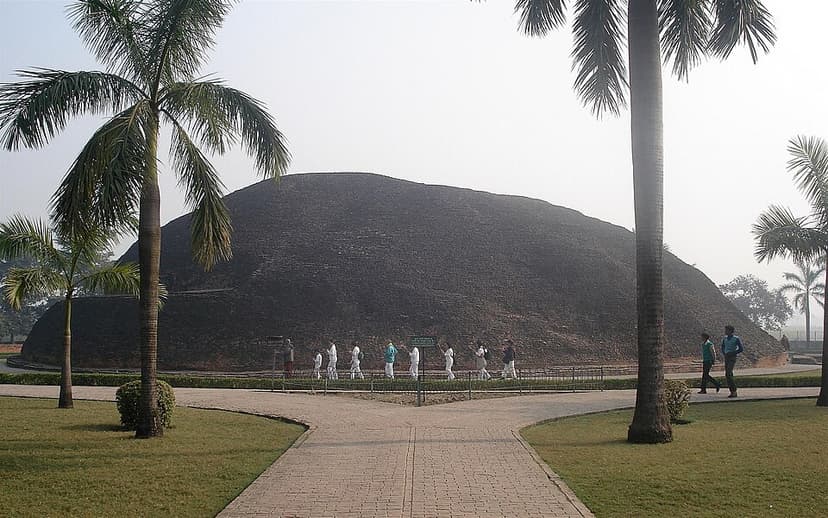
Kushinagar
Kushinagar is a significant Buddhist pilgrimage site in Uttar Pradesh, India, renowned as the location where Gautama Buddha is believed to have attained parinirvana. Its historical importance is underscored by archaeological findings and its role in the distribution of Buddha's relics, making it a crucial destination for Buddhists worldwide.

Moss
Moss is a coastal town and municipality in Norway, historically significant as a commercial and industrial center. Established as a city in 1720 and receiving its charter that year, it played a key role in regional traffic and industry, notably with the Moss Ironworks. The town is also recognized for the signing of the Convention of Moss in 1814, which marked the end of the Dano-Norwegian kingdom and paved the way for economic development.