
Namgyal Monastery
Namgyal Monastery, also known as the "Dalai Lama's Temple" or Namgyal Tantric College, is the personal monastery of the 14th Dalai Lama. Originally founded in 1564 or 1565 in Lhasa, Tibet, it relocated to Dharamshala, India, after the Tibetan uprising of 1959. The monastery plays a crucial role in assisting with rituals involving the Dalai Lama and maintains several branches in India and the United States.
Key Facts
- ›Founded in 1564 or 1565 by the second Dalai Lama, Gendun Gyatso.
- ›Relocated to Dharamshala, India, following the 1959 Tibetan uprising.
- ›Serves as the personal monastery of the 14th Dalai Lama.
- ›Has nearly 200 monks, representing all four main Tibetan monastic lineages.
- ›Established an American branch in Ithaca, New York, in 1992.
- ›Manages a branch monastery in Bodhgaya, India, and a temple in Kushinagar.

- Personal Monastery of the 14th Dalai Lama
- Namgyal Tantric College
- Namgyal Monastery Institute of Buddhist Studies
Dalai Lama's Temple, Namgyal Tantric College, Phende Lekshe Ling
Gendun Gyatso, 14th Dalai Lama
- Relocation To Dharamshala, India, Following the 1959 Tibetan Uprising.
About Namgyal Monastery
Namgyal Monastery, also widely known as the "Dalai Lama's Temple" or Namgyal Tantric College, holds significant importance as the personal monastery of the 14th Dalai Lama. Its history traces back to its founding in either 1564 or 1565 by the second Dalai Lama, Gendun Gyatso, on the site of a pre-existing monastery. Originally named Phende Lekshe Ling, it was later renamed Namgyal in honor of the long-life deity Namgyälma in 1571. Traditionally, the monastery was housed within the Potala Palace in Lhasa, Tibet.
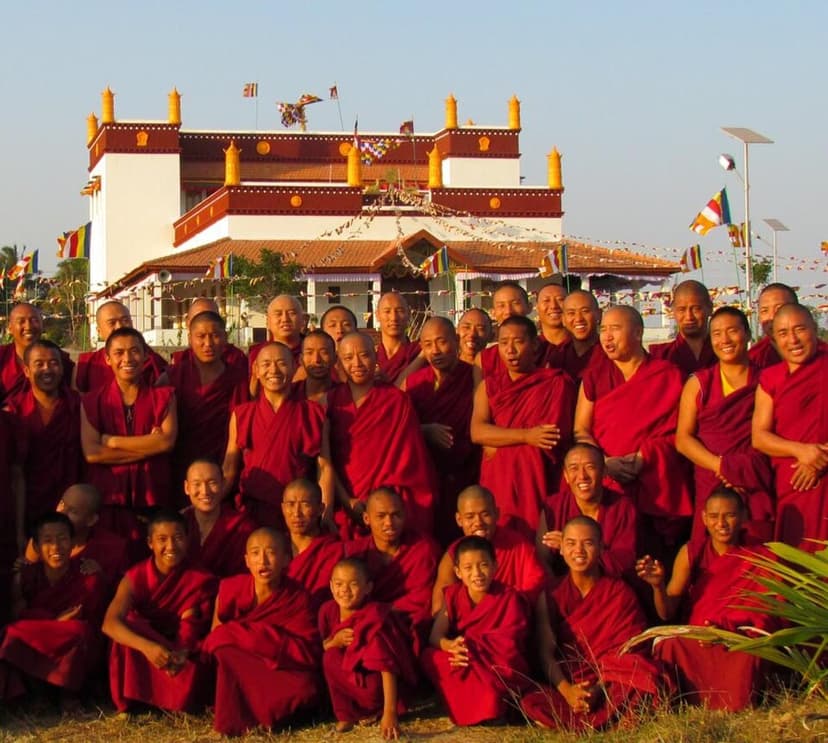
Following the Tibetan uprising in 1959, Namgyal Monastery relocated to its current active site in Mcleod Ganj, Dharamshala, India. The monastery continues to play a vital role in assisting the Dalai Lama with various rituals, with its primary tantric practices encompassing Kalachakra, Yamantaka, Chakrasamvara, Guhyasamaja, and Vajrakilaya. Today, the Dharamshala monastery is home to nearly 200 monks from all four major Tibetan monastic lineages, representing a significant growth from its post-relocation numbers. In addition to its main presence in India, Namgyal Monastery has expanded its reach, establishing an American branch in Ithaca, New York, in 1992, which includes the Namgyal Monastery Institute of Buddhist Studies. It also manages a branch monastery in Bodhgaya, India, and a temple in Kushinagar.
Source: Wikipedia ↗
Frequently Asked Questions
When was Namgyal Monastery founded?
Namgyal Monastery was founded in either 1564 or 1565. It was established on the foundations of a prior monastery known as Phende Gon.
What is the significance of Namgyal Monastery?
Namgyal Monastery's primary role is to assist with rituals involving the Dalai Lama of Tibet. It is also known for its tantric practices, including those of Kalachakra, Yamantaka, Chakrasamvara, Guhyasamaja, and Vajrakilaya.
Where is Namgyal Monastery located?
The main monastery is located in Mcleod Ganj, Dharamshala, India. It also has branches in Bodh Gaya, India, and Ithaca, New York, USA.
How many monks are at Namgyal Monastery in Dharamshala?
According to its website, Namgyal Monastery in Dharamshala has nearly 200 monks. This is an increase from the 55 monks it had in 1959.
Does Namgyal Monastery have branches outside of India?
Yes, on the advice of the 14th Dalai Lama, Namgyal established an American branch in Ithaca, New York, in 1992. This branch includes the Namgyal Monastery Institute of Buddhist Studies.
Related Monasteries

Key Monastery
Key Monastery is a prominent Tibetan Buddhist monastery of the Gelugpa sect, perched atop a hill in the Spiti Valley of Himachal Pradesh, India. As the largest monastery in the region, it serves as a vital religious training center for lamas and houses a significant collection of ancient murals and books. Despite enduring numerous historical plunders and natural disasters, the monastery has been repeatedly rebuilt and remains an active spiritual hub.

Pemayangtse Monastery
Pemayangtse Monastery, founded in 1647 by Lama Lhatsun Chempo, is one of Sikkim's oldest and most significant Nyingma Buddhist monasteries. It holds a prominent position in the state's religious landscape, controlling other Nyingma monasteries and traditionally responsible for the consecration of Sikkimese monarchs. The monastery is renowned for its architectural beauty, religious significance, and its role in preserving the Nyingma tradition.
Rato Dratsang
Rato Dratsang is a significant Tibetan Buddhist monastery of the Gelug order, historically an important center for Buddhist studies and debate in Central Tibet. Founded in the 14th century near Lhasa, it was renowned for its scholars, earning the moniker "Tiger Nest" from the 5th Dalai Lama. After its destruction and the displacement of monks in 1959, Rato Dratsang was re-established in Mundgod, Karnataka, India, and continues to operate as a monastic university with a growing community.