
Rato Dratsang
Rato Dratsang is a significant Tibetan Buddhist monastery of the Gelug order, historically an important center for Buddhist studies and debate in Central Tibet. Founded in the 14th century near Lhasa, it was renowned for its scholars, earning the moniker "Tiger Nest" from the 5th Dalai Lama. After its destruction and the displacement of monks in 1959, Rato Dratsang was re-established in Mundgod, Karnataka, India, and continues to operate as a monastic university with a growing community.
Key Facts
- ›Founded in the 14th century by Tak Pa Zang Bo on the outskirts of Lhasa, Tibet.
- ›Known for its scholars and debaters, earning the nickname "Tiger Nest" from the 5th Dalai Lama.
- ›Served as a monastic center for the intensive study and rigorous debate of Buddhist philosophy and logic.
- ›Re-established in Mundgod, Karnataka, India, in 1983 after the 1959 Tibetan diaspora.
- ›Appointed its first Western abbot, Nicholas Vreeland, in 2012.
- ›Currently has over 100 monks and is considered one of the important Tibetan Government monasteries under the patronage of the Dalai Lama.
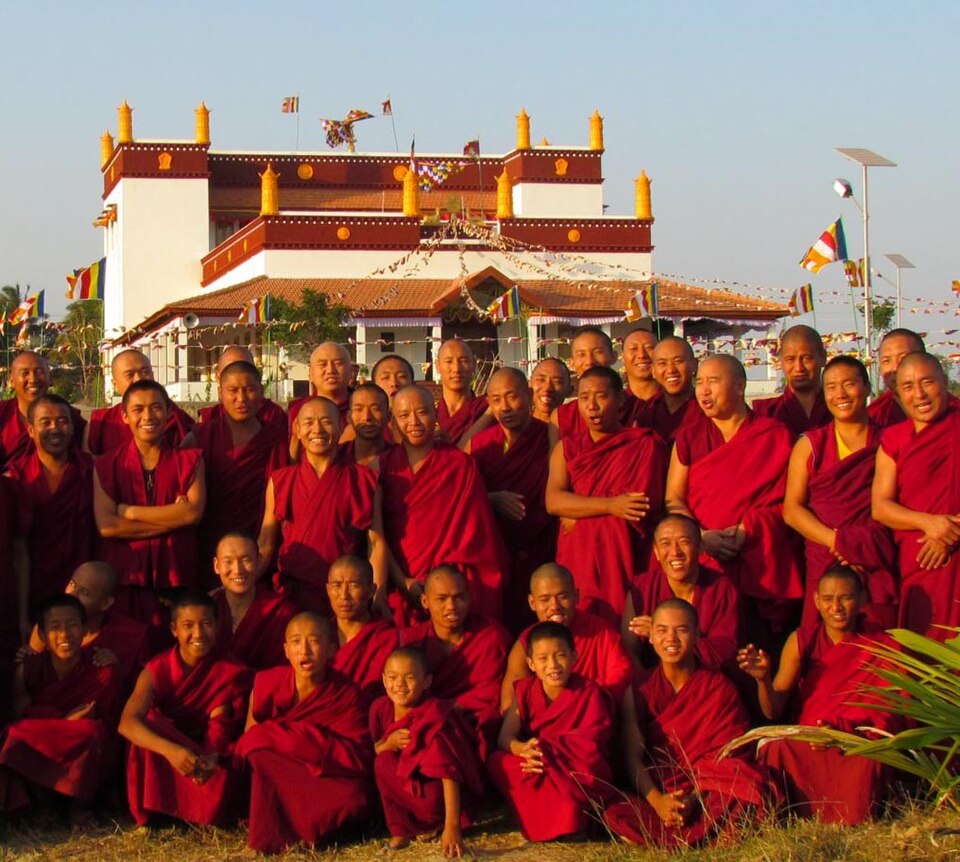
- Center For Buddhist Philosophy and Logic Studies
- Monastic University
- New Monastic Campus With A Temple Inaugurated In 2011
Rato Monastery, Ratö Monastery
Tak Pa Zang Bo, 5th Dalai Lama, Khyongla Rato Rinpoche, Rato Chuwar Rinpoche, Dalai Lama, Nicholas Vreeland
- Founded In the 14th Century
- Referred To As 'Tiger Nest' By the 5th Dalai Lama
- Monks Displaced In 1959
- Re-Established In India In 1983
- New Monastic Campus Construction Began In 2008
- New Temple Inaugurated In 2011
- Nicholas Vreeland Appointed Abbot In 2012
About Rato Dratsang
Rato Dratsang is a significant Tibetan Buddhist monastery belonging to the Gelug, or "Yellow Hat," order. Historically, it served as a vital hub for Buddhist scholarship and rigorous debate in Central Tibet. Founded in the 14th century on the outskirts of Lhasa by Tak Pa Zang Bo, the monastery was celebrated for its learned monks and its dedication to the study of Buddhist philosophy and logic. Its reputation for scholarly excellence led the 5th Dalai Lama to refer to it as the "Tiger Nest," a testament to the intellectual prowess fostered within its walls.
History and Re-establishment
The monastery flourished for centuries, attracting monks from other institutions to engage in intensive study and debate. However, the tumultuous events of 1959 led to the displacement of many monks, and the original Rato Dratsang in Tibet was impacted. In response, Rato Dratsang was re-established in 1983 within a Tibetan refugee settlement in Mundgod, Karnataka State, southern India. Initially comprising modest facilities, it gradually expanded with the acquisition of more land and the construction of a new monastic campus, with the new temple inaugurated by the Dalai Lama in January 2011. As of 2020, the monastery hosts over 100 monks and continues its mission as a monastic university.
Leadership and Foundation
In a historic appointment, the 14th Dalai Lama named Nicholas Vreeland, a Western monk, as the Abbot of Rato Dratsang in May 2012, marking a significant moment for the monastery and Tibetan Buddhism in the West. The monastery is recognized as one of the important Tibetan Government monasteries under the patronage of His Holiness the Dalai Lama. To support its growth and scholarly endeavors, the Rato Dratsang Foundation was established in 1986. This non-profit organization aims to generate financial support, foster scholarly affiliations with Western educational centers, and facilitate the translation and publication of important Buddhist texts.
Source: Wikipedia ↗
Frequently Asked Questions
When was Rato Dratsang founded?
Rato Dratsang was founded in the 14th century by Tak Pa Zang Bo on the outskirts of Lhasa, the capital city of Tibet.
Why was Rato Dratsang called the 'Tiger Nest'?
The 5th Dalai Lama, Ngawang Lobsang Gyatso, referred to Rato Dratsang as the "Tiger Nest" because of its fine scholars and debaters. He praised the monastery for the roar of logic emanating from its wisdom.
What happened to Rato Dratsang after 1959?
Following events in 1959, Rato Dratsang was re-established in a Tibetan Refugee Settlement in Mundgod, Karnataka State, in southern India. The original Rato Dratsang still exists in Tibet.
Is Rato Dratsang still an active monastery?
Yes, Rato Dratsang is an active monastic university. As of 2020, it has over 100 monks and continues its tradition of Buddhist studies.
Who is the current Abbot of Rato Dratsang?
In May 2012, the 14th Dalai Lama appointed Geshe Thupten Lhundup, also known as Nicholas Vreeland, as the new abbot. This marked the first time a Westerner was appointed abbot of a major Tibetan Buddhist monastery.
What is the Rato Dratsang Foundation?
The Rato Dratsang Foundation is a 501(c)(3) non-profit organization established in 1986. Its goals include generating financial support for the monastery, establishing scholarly affiliations with Western institutions, and facilitating the translation and publication of Tibetan Buddhist texts.
Related Monasteries

Key Monastery
Key Monastery is a prominent Tibetan Buddhist monastery of the Gelugpa sect, perched atop a hill in the Spiti Valley of Himachal Pradesh, India. As the largest monastery in the region, it serves as a vital religious training center for lamas and houses a significant collection of ancient murals and books. Despite enduring numerous historical plunders and natural disasters, the monastery has been repeatedly rebuilt and remains an active spiritual hub.

Namgyal Monastery
Namgyal Monastery, also known as the "Dalai Lama's Temple" or Namgyal Tantric College, is the personal monastery of the 14th Dalai Lama. Originally founded in 1564 or 1565 in Lhasa, Tibet, it relocated to Dharamshala, India, after the Tibetan uprising of 1959. The monastery plays a crucial role in assisting with rituals involving the Dalai Lama and maintains several branches in India and the United States.

Pemayangtse Monastery
Pemayangtse Monastery, founded in 1647 by Lama Lhatsun Chempo, is one of Sikkim's oldest and most significant Nyingma Buddhist monasteries. It holds a prominent position in the state's religious landscape, controlling other Nyingma monasteries and traditionally responsible for the consecration of Sikkimese monarchs. The monastery is renowned for its architectural beauty, religious significance, and its role in preserving the Nyingma tradition.