
Báo Quốc Temple
Báo Quốc Temple is a significant Buddhist temple located in the historic city of Huế, Vietnam. It served as one of the city's three national temples during the Nguyễn dynasty and has a history of royal patronage and continuous renovation. The temple is notable for its role in Buddhist education and monastic training, housing important relics and architectural features.
Key Facts
- ›Founded in 1670 by Thiền master Thích GiáC Phong.
- ›Served as one of three national temples of Huế during the Nguyễn dynasty.
- ›Received royal patronage from multiple Nguyễn emperors and empresses.
- ›Houses relics of Gautama Buddha within a small stupa.
- ›Established a school for teaching Buddhism in 1935 and a monastery for training monks in 1940.
- ›Underwent significant renovations in 1808, 1858, and 1957.

Important Relationships
- Nguyễn Phúc Tần
- Nguyễn Phúc Khoát
- Emperor Gia Long
- Empress Hiếu Khương
- Emperor Minh Mạng
- Emperor Tự Đức
- Thích Giác Phong
- Thích Phổ Tịnh
- Thích Trí Thủ
- Thích Thiên n
- Thân Trọng Hy
- Trương Như Thung
- Thích Phước Hải
- Thích Thiện Hạnh
- Thích Đức Thanh
- Thích Hải Ấn
- Triple Gate
- Large Bell and Gong
- Stupas Dedicated To Buddhist Patriarchs
- Main Temple Building With Dragon Pillars
- Triple Statue of the Buddha
- Stupa Containing Relics of Gautama Buddha
- Altar With Statue of Gautama Buddha Flanked By Ananda and Mahakassapa
- Altar With Lotus Sutra, Ceremonial Bell, and Wooden Fish Gong
- Built In 1670 By ThiềN Master ThíCh GiáC Phong.
- Received Plaque With Name SắC Tứ BáO QuốC Tự In 1747.
- Renovated and Expanded During the NguyễN Dynasty, Including In 1808.
- Emperor Minh MạNg Visited and Renamed the Temple In 1824.
- Imperial Celebration For Emperor Minh MạNg's 40th Birthday Held In 1830.
- Renovation Efforts Began In 1858 Under Emperor Tự đứC.
- School For Teaching Buddhism Opened In 1935.
- Monastery For Training Monks Created In 1940.
- Latest Phase of Construction and Renovation In 1957.
- Ham Long Primary School Opened Within Grounds In 1959.
- Ham Long Bodhi School Closed In 1975.
About Báo Quốc Temple
Báo Quốc Temple (Vietnamese: Chùa Báo Quốc) is a historically significant Buddhist temple situated in the ancient city of Huế, Vietnam. Established in 1670, it held the distinguished status of one of the city's three national temples during the era of the Nguyễn dynasty. Its location on Báo Quốc Street, in the Phường Đúc ward, places it on the southern bank of the Perfume River, a short distance west of the city center, on a hill known as Hàm Long.
History and Royal Patronage
The temple was originally founded by the Chinese Thiền master Thích Giác Phong and was first named Hàm Long Sơn Thiên Thọ Tự. Over the centuries, it received substantial patronage from the Nguyễn lords and emperors, leading to frequent renovations and expansions. In 1747, Nguyễn Phúc Khoát bestowed upon it a plaque, renaming it Sắc Tứ Báo Quốc Tự. Emperor Gia Long's reign saw further imperial involvement, with Empress Hiếu Khương sponsoring construction projects in 1808, including a triple gate and a large bell. Emperor Minh Mạng later renamed the pagoda to its present title, Chùa Báo Quốc, in 1824 and even celebrated his 40th birthday there in 1830. The temple's decay in later years prompted extensive renovation efforts initiated by Emperor Tự Đức in 1858, which were directly funded by the royal family.
Revival and Educational Role
In the 1930s, Báo Quốc Temple became a focal point for the revival of Buddhist education in Vietnam. A school dedicated to teaching Buddhism was established within its grounds in 1935, followed by the creation of a monastery for training monks in 1940, which continues to operate. The most recent major phase of construction and renovation took place in 1957, overseen by the provincial Buddhist association and the temple's abbot. In 1959, the Ham Long Primary School was opened on the temple grounds, which later expanded to offer secondary education before its closure in 1975.
Architecture and Features
Spanning two hectares, Báo Quốc Temple welcomes visitors through its triple gates into a courtyard surrounded by balconied buildings. To the left are stupas dedicated to Buddhist patriarchs, with the oldest dating back to 1714. The main temple building is characterized by four pillars adorned with dragon figures. Among its significant religious artifacts is a triple statue of the Buddha, accompanied by Mahayana sutras. A small stupa within the temple enshrines relics of Gautama Buddha. Another altar features a statue of Gautama Buddha between his attendant Ananda and the first patriarch, Mahakassapa. The temple also houses a copy of the Lotus Sutra, alongside a ceremonial bell and a wooden fish gong.
Source: Wikipedia ↗
Frequently Asked Questions
When was Báo Quốc Temple founded?
Báo Quốc Temple was originally built in 1670 by the Buddhist monk Thích Giác Phong. Its name and significance evolved over centuries under the Nguyễn lords and emperors.
What is the historical significance of Báo Quốc Temple?
It was one of the three national temples of Huế during the Nguyễn dynasty and received considerable royal patronage. The temple has also been a center for Buddhist education and monastic training since the 1930s.
What are some notable features of Báo Quốc Temple?
The temple features a triple gate, a large bell, and a gong. Inside, there is a triple statue of the Buddha, a stupa containing Gautama Buddha's relics, and altars dedicated to Buddhist figures and sutras.
Has Báo Quốc Temple undergone renovations?
Yes, the temple has a history of renovations and expansions, notably in 1808 under Empress Hiếu Khương, in 1858 under Emperor Tự Đức, and a major phase in 1957 under the provincial Buddhist association.
Is Báo Quốc Temple still active as a monastery?
A monastery for training monks was created at Báo Quốc Temple in 1940 and is still operating to this day, indicating its continued function as a monastic residence.
Related Buddhist Temples
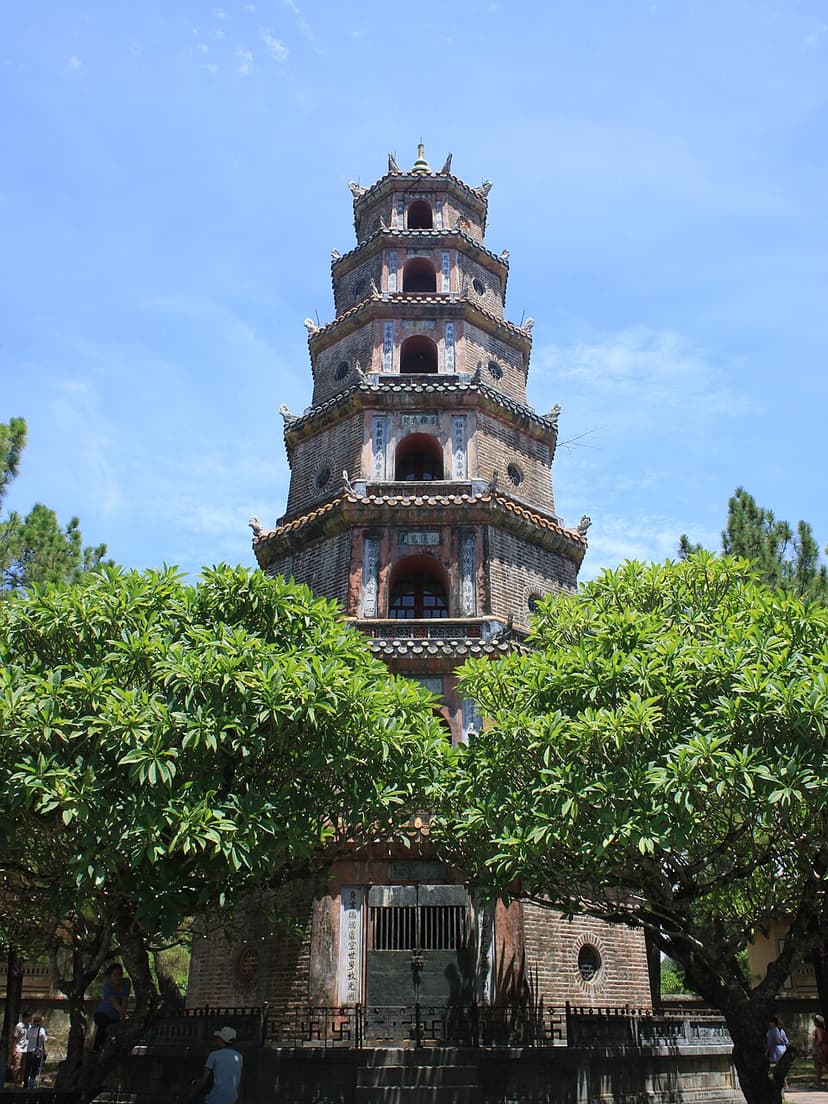
Thiên Mụ Temple
Thiên Mụ Temple, meaning "Temple of the Celestial Lady," is a historic Buddhist temple located in Huế, Vietnam. It is renowned for its iconic seven-story Phước Duyên pagoda, which has become an unofficial symbol of the city and a frequent subject in local folk poetry. The temple holds significant historical and religious importance, having been a center for Buddhist protests and a patronized site by Vietnamese royalty.
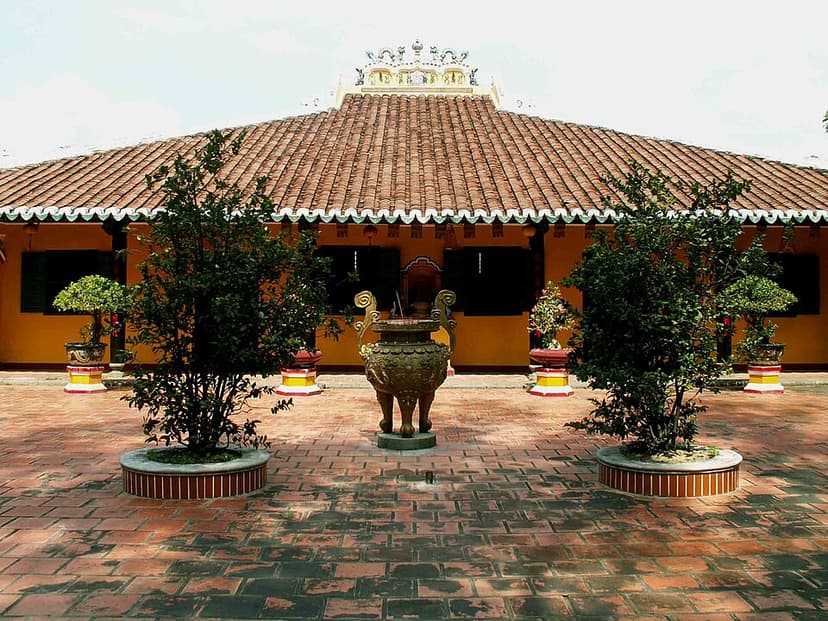
Giác Lâm Temple
Giác Lâm Temple, established in 1744, is one of the oldest Buddhist temples in Ho Chi Minh City, Vietnam. Officially recognized as a state-cultural and historical site in 1988, it holds significant historical and architectural value, showcasing a blend of Mahayana Buddhist traditions and Vietnamese temple construction. The temple features a notable seven-story stupa and numerous historic statues, making it a key landmark and religious center.

Vietnamese Buddhist community
Vietnamese Buddhism is a major form of East Asian Mahayana Buddhism, deeply integrated into Vietnam's cultural and historical fabric. It has a history spanning over two millennia, evolving through various dynasties and adapting to syncretic influences from Taoism, Chinese spirituality, and Vietnamese folk religion. Today, it remains the largest organized religion in Vietnam, with a significant portion of the population adhering to its practices.