
Thiên Mụ Temple
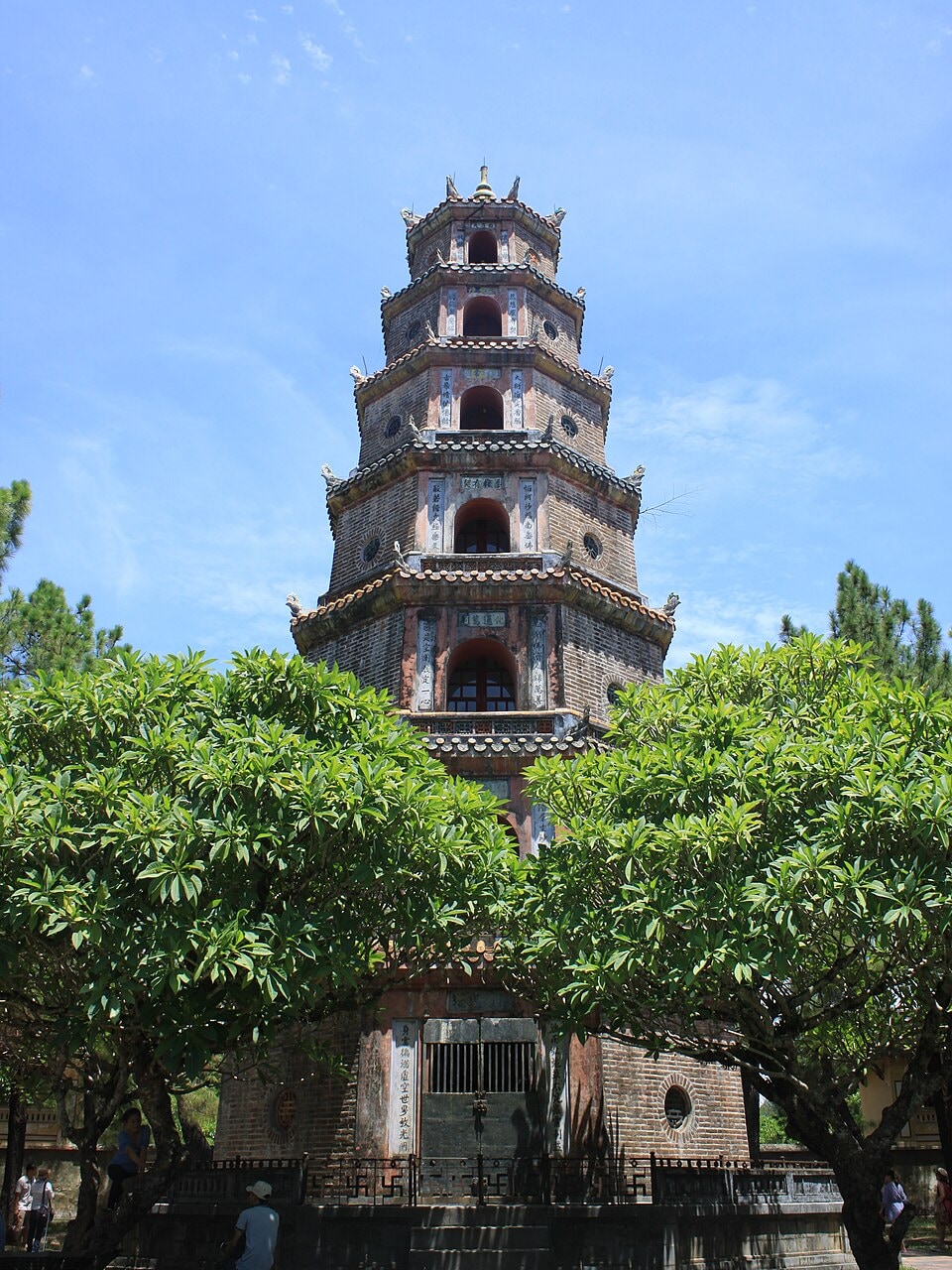
Thiên Mụ Temple, meaning "Temple of the Celestial Lady," is a historic Buddhist temple located in Huế, Vietnam. It is renowned for its iconic seven-story Phước Duyên pagoda, which has become an unofficial symbol of the city and a frequent subject in local folk poetry. The temple holds significant historical and religious importance, having been a center for Buddhist protests and a patronized site by Vietnamese royalty.
Key Facts
- ›Founded in 1601 on the order of Nguyễn Hoàng, the first Nguyễn lord of Thuận Hóa.
- ›Features the PhướC Duyên pagoda, a seven-story octagonal structure erected in 1844.
- ›Houses a giant bell cast in 1710, weighing 3,285 kg.
- ›Was a focal point for anti-government protests during the summer of 1963.
- ›Contains the Austin motor vehicle used by Thích Quảng ĐứC for his 1963 self-immolation.
- ›The temple grounds include a statue of a large marble turtle, a symbol of longevity.
Important Relationships
- Nguyễn Hoàng (Nguyễn Lord)
- Nguyễn Phúc Tần (Nguyễn Lord)
- Nguyễn Phúc Chu (Nguyễn Lord)
- Shi Da Shan (Zen Master)
- Emperor Thiệu Trị
- Emperor Gia Long
- Emperor Minh Mạng
- Emperor Thành Thái
- Hòa Thượng Thích Ðôn Hậu
- Thích Quảng Đức
- Ngo Dinh Diem (President)
PhướC DuyêN Pagoda, Giant Bell, Statue of Maitreya, Marble Turtle Statue, Austin Motor Vehicle
- Founded In 1601
- Major Expansions In 1665 and 1714
- Zen Master Shi Da Shan Appointed Abbot In 1695
- Emperor ThiệU Trị Erects PhướC DuyêN Pagoda In 1844
- Severely Damaged By Cyclone In 1904, Reconstructed In 1907
- Center of Anti-Government Buddhist Protests In 1963
- Focal Point of Anti-Communist Protests In Early 1980s
Traditional Vietnamese Buddhist
About Thiên Mụ Temple
Thiên Mụ Temple, which translates to "Temple of the Celestial Lady," is a historically significant Buddhist temple situated in the city of Huế, Vietnam. Its distinctive seven-story Phước Duyên pagoda is widely recognized as the unofficial emblem of Huế and has been immortalized in numerous local folk rhymes and songs. The temple's strategic location on Hà Khê hill, overlooking the northern bank of the Perfume River, approximately 5 kilometers from the Citadel of Huế, adds to its scenic and spiritual importance.
History and Establishment
The temple's origins trace back to 1601 when it was ordered to be built by Nguyễn Hoàng, the first of the Nguyễn lords. At the time, he governed Thuận Hóa, acting as a de facto independent ruler of central Vietnam under the nominal authority of the Lê dynasty. According to historical accounts, Nguyễn Hoàng was inspired by a local legend of an old woman, known as Thiên Mụ, who foretold that a pagoda erected on the hill would bring prosperity to the country. This celestial lady was an adaptation of a pre-existing Cham goddess, Po Nagar. The original structure was modest and later underwent significant expansions and refurbishments.
Nguyễn Dynasty Patronage and Development
Throughout the 17th and 18th centuries, Thiên Mụ Temple saw substantial development under the patronage of the Nguyễn lords. In 1665, Lord Nguyễn Phúc Tần initiated major construction. In 1695, the esteemed Zen Master Shi Da Shan from China was invited to oversee the development of a Buddhist congregation and became the pagoda's abbot, patronized by Lord Nguyễn Phúc Chu. In 1710, Lord Chu funded the casting of a massive bell weighing 3,285 kg, which became a celebrated cultural artifact. A significant phase of expansion occurred in 1714 under Chu, which saw the erection of triple gates, various shrines, halls for dharma preaching, towers for sutras, and living quarters for the sangha. Chu also organized the annual vassana retreat and commissioned an expedition to China to acquire over a thousand volumes of Buddhist scriptures.
During the 19th century, the temple continued to receive royal favor from the Nguyễn dynasty emperors. Emperor Minh Mạng sponsored further renovations, and his successor, Emperor Thiệu Trị, commissioned the construction of the Từ Nhân Pagoda in 1844, which is now known as the Phước Duyên Pagoda. This iconic pagoda, standing 21 meters tall with seven stories, each dedicated to a different Buddha, has become intrinsically linked with the identity of Huế.
Notable Features and Later History
The temple complex features a statue of a large marble turtle, a symbol of longevity, alongside structures detailing the pagoda's architectural history and poems by Emperor Thiệu Trị. A devastating cyclone in 1904 caused severe damage, leading to authorized reconstructions by Emperor Thành Thái in 1907. While these reconstructions continued to the present day, the temple did not regain the grandeur of its Nguyễn dynasty era. Today, the grounds also host a tourist facility and a stupa honoring Hòa Thượng Thích Ðôn Hậu, the abbot during the 20th-century reconstruction. The main hall displays a statue of Maitreya, accompanied by Bồ Tát Văn Thù Sư Lợi (Manjushri Bodhisattva) and Bồ Tát Phổ Hiền (Samantabhadra Bodhisattva).
Role in Modern History
In the summer of 1963, Thiên Mụ Temple became a critical center for anti-government protests organized by South Vietnam's Buddhist majority, who were protesting discrimination under President Ngô Đình Diệm. The temple was a frequent location for hunger strikes, barricades, and demonstrations. Later, in the early 1980s, the temple was the site of anti-communist protests and arrests of monks. The temple also preserves the Austin motor vehicle in which Thích Quảng Đức was transported for his self-immolation in 1963, a pivotal act that drew international attention to the plight of Buddhists in South Vietnam.
Source: Wikipedia ↗
Frequently Asked Questions
When was Thiên Mụ Temple founded?
Thiên Mụ Temple was founded in 1601 on the command of Nguyễn Hoàng, the governor of Thuận Hóa. This was based on a local legend of a celestial lady who prophesied a pagoda would be built on the hill for the country's prosperity.
What is the significance of the Phước Duyên pagoda?
The Phước Duyên pagoda, also known as Từ Nhân Pagoda, was erected in 1844 by Emperor Thiệu Trị. This seven-story octagonal structure stands 21 meters tall and is considered the unofficial symbol of Huế.
Does Thiên Mụ Temple hold any significant relics or artifacts?
Yes, the temple houses a giant bell cast in 1710, weighing 3,285 kg, which was once considered a prized cultural relic. It also holds the Austin motor vehicle that transported Thích Quảng Đức to his self-immolation in 1963.
What historical events is Thiên Mụ Temple associated with?
During the summer of 1963, Thiên Mụ Temple was a significant site for anti-government protests by the Buddhist majority against President Ngô Đình Diệm's discriminatory policies. It also became a focal point for anti-communist protests in the early 1980s.
What architectural styles can be found at Thiên Mụ Temple?
The temple exhibits traditional Vietnamese Buddhist architecture. The most prominent structure, the Phước Duyên pagoda, is octagonal with seven stories. The temple also features shrines, halls for preaching, towers for sutras, and living quarters for monks.
Related Buddhist Temples

Báo Quốc Temple
Báo Quốc Temple is a significant Buddhist temple located in the historic city of Huế, Vietnam. It served as one of the city's three national temples during the Nguyễn dynasty and has a history of royal patronage and continuous renovation. The temple is notable for its role in Buddhist education and monastic training, housing important relics and architectural features.
Giác Lâm Temple
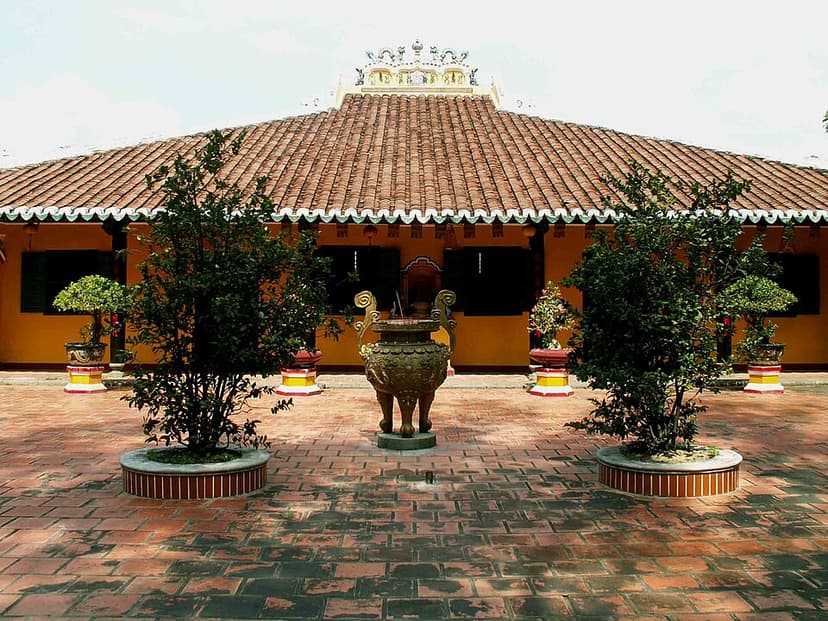
Giác Lâm Temple, established in 1744, is one of the oldest Buddhist temples in Ho Chi Minh City, Vietnam. Officially recognized as a state-cultural and historical site in 1988, it holds significant historical and architectural value, showcasing a blend of Mahayana Buddhist traditions and Vietnamese temple construction. The temple features a notable seven-story stupa and numerous historic statues, making it a key landmark and religious center.

Vietnamese Buddhist community
Vietnamese Buddhism is a major form of East Asian Mahayana Buddhism, deeply integrated into Vietnam's cultural and historical fabric. It has a history spanning over two millennia, evolving through various dynasties and adapting to syncretic influences from Taoism, Chinese spirituality, and Vietnamese folk religion. Today, it remains the largest organized religion in Vietnam, with a significant portion of the population adhering to its practices.