
Banteay Kdei
Banteay Kdei is a Buddhist temple located in Angkor, Cambodia, built in the mid-12th to early 13th centuries during the reign of Jayavarman VII. Characterized by its Bayon architectural style, it served as a Buddhist monastic complex. Although currently dilapidated due to construction issues and poor stone quality, it is undergoing renovation and was occupied by monks until the 1960s.
Key Facts
- ›Built in the MID-12th to early 13th centuries AD during the reign of Jayavarman VII.
- ›Features the Bayon architectural style, similar in plan to Ta Prohm and Preah Khan.
- ›Served as a Buddhist monastic complex and was occupied by monks until the 1960s.
- ›Suffered from faulty construction and poor quality sandstone, leading to its dilapidated state.
- ›Undergoing renovation with restoration efforts funded by Sophia University and the APSARA Authority.
- ›A cache of 274 Buddhist statue fragments was unearthed in 2001 during archaeological research.

Important Relationships
- Jayavarman VII
- Ta Prohm
- Preah Khan
- Angkor Wat
- Phimai temple
- Sdok Kak Thom
- Suryavarman II
- Jayavarman II
- Rajendravarman
- Kavindrarimathana
- Henri Marchal
- Ch. Battuer
- Sophia University
- APSARA Authority
- Cyark
Bayon Architectural Style, Two Concentric Galleries, Cloister, Cruciform Gopuras With Lokesvara Images, Sculptures In Bayon and Angkor Wat Styles, Hall of Dancers, Library Buildings, Four Corner Towers
- Built During the Reign of Jayavarman Vii.
- Vandalized In the 13th Century.
- Cleared of Vegetation and Exposed In 1920-1922.
- Partially Occupied By Monks Until the 1960s.
- Archaeological Research By Sophia University Mission From 2002-2012.
- Discovery of 274 Buddhist Statue Fragments In 2001.
- Restoration and Reconstruction Efforts Involving Laser Scans and Imaging.
Bayon
About Banteay Kdei
Banteay Kdei, meaning "A Citadel of Chambers" or "Citadel of Monks' cells," is a significant Buddhist temple located in the Angkor Archaeological Park in Cambodia. It was constructed in the mid-12th to early 13th centuries during the reign of Jayavarman VII, a prolific builder of temples who was instrumental in rebuilding the Khmer capital after invasions. The temple showcases the distinct Bayon architectural style, sharing a similar plan with nearby structures like Ta Prohm and Preah Khan, though it is smaller and less intricate.
History and Construction
The temple complex is situated southeast of Ta Prohm and east of Angkor Thom. Its construction is attributed to Jayavarman VII, though some theories suggest it might have been built by Jayavarman II in honor of his religious teacher. The site itself was built on the foundations of a 10th-century temple established by Rajendravarman. The temple was originally conceived as a Buddhist monastic complex and was later occupied by monks intermittently until the 1960s. Despite its grandeur, Banteay Kdei has suffered from structural issues, largely due to faulty construction and the use of lower-quality sandstone, which has contributed to its current dilapidated state.
Architectural Features and Layout
Banteay Kdei is characterized by its two successive enclosure walls and two concentric galleries from which towers emerge. The eastern side is preceded by a cloister. The complex is laid out within a large compound wall made of laterite stones, containing three enclosures. Notable architectural elements include cruciform gopuras adorned with images of Lokesvara (Avalokitesvara), a Buddhist deity, and smiling faces often identified with King Jayavarman II, similar to those found in the Bayon temple. The temple is a repository of sculptures in both the Bayon and Angkor Wat architectural styles. Despite damage from vandalism and neglect over centuries, significant carvings of apsaras and Buddha images can still be found.
Restoration and Preservation
After remaining neglected and overgrown for centuries, Banteay Kdei was cleared of vegetation between 1920 and 1922 under the guidance of Henri Marchal. Modern restoration efforts have involved advanced techniques, including laser scans and imaging, as part of a collaborative project between Sophia University of Tokyo, the University of California, and the nonprofit CyArk. These initiatives aim to facilitate the restoration and reconstruction of the temple's structures. The APSARA Authority has also made substantial progress in the conservation of Angkor monuments. While some areas of the temple are currently cordoned off due to ongoing restoration, strengthening measures, such as tying structures together with cables, are evident in parts of the interior to ensure their preservation.
Source: Wikipedia ↗
Frequently Asked Questions
What is Banteay Kdei and where is it located?
Banteay Kdei is a Buddhist temple in Angkor, Cambodia, situated southeast of Ta Prohm and east of Angkor Thom. It was built as a Buddhist monastic complex.
When was Banteay Kdei constructed?
The temple was constructed in the mid-12th to early 13th centuries AD, during the reign of King Jayavarman VII.
What is the architectural style of Banteay Kdei?
Banteay Kdei is built in the Bayon architectural style, which shares similarities in its layout with temples like Ta Prohm and Preah Khan, though it is less complex and smaller in size.
What is the current condition of Banteay Kdei?
The temple is currently in a dilapidated state due to faulty construction and the poor quality of sandstone used. It is undergoing renovation and preservation efforts.
Was Banteay Kdei ever occupied by monks?
Yes, Banteay Kdei was a Buddhist monastic complex and was occupied by monks at various intervals until the 1960s.
What significant archaeological findings have been made at Banteay Kdei?
In 2001, during archaeological research, a significant cache of 274 sandstone Buddhist statue fragments was discovered, along with some metal art pieces.
Related Buddhist Temples

Bayon
The Bayon is a richly decorated Theravada Buddhist temple located in the center of Angkor Thom, Cambodia. Built in the late 12th or early 13th century as the state temple of King Jayavarman VII, it is renowned for its numerous towers adorned with serene, smiling stone faces, widely interpreted as representations of the king and symbolizing compassion and royal authority. Originally conceived as a Mahayana Buddhist monument, it later adapted to the spread of Theravada Buddhism, illustrating the close relationship between Buddhism and royal power in the Khmer Empire.
Angkor Wat
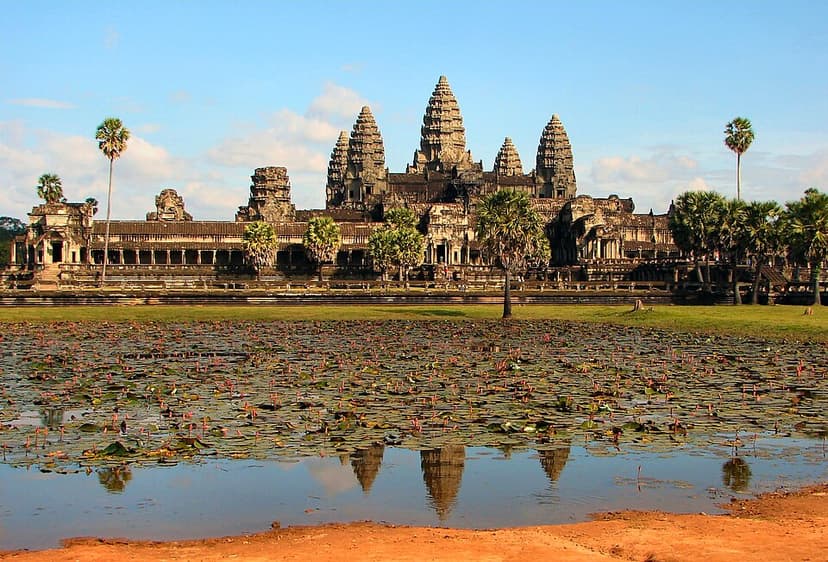
Angkor Wat, originally a Hindu temple dedicated to Vishnu and commissioned by King Suryavarman II in the early 12th century, is the largest religious complex in the world and a cornerstone of Khmer architecture. It was gradually transformed into a Theravada Buddhist temple from the late 13th century onwards and has remained an active center of Buddhist worship, serving as a potent symbol of Cambodia and appearing on its national flag.

Baphuon
The Baphuon is a significant Buddhist temple located in Angkor Thom, Cambodia, renowned for its "golden mountain" appearance and its intricate carvings. Originally dedicated to Shiva, it was later converted to Theravada Buddhism, with major restoration efforts transforming it into what has been called the "largest 3D jigsaw puzzle in the world."