
Atamasthana
Temple complex·Sri Lanka·4th century BC·Theravada
Atamasthana, meaning "Eight Sacred Places," refers to a collection of eight significant Buddhist sites located in Anuradhapura, Sri Lanka. These locations are believed to be places visited by the Buddha during his legendary trips to the island, making them central to Buddhist pilgrimage and devotion in Sri Lanka. The city of Anuradhapura itself, where these sites are concentrated, was a major political and religious capital for centuries and is now a UNESCO World Heritage Site.
Key Facts
- ›Atamasthana comprises eight sacred locations in Anuradhapura, Sri Lanka, believed to be visited by the Buddha.
- ›Anuradhapura, the ancient capital where these sites are located, was founded around 350 BC and served as a major Buddhist center.
- ›Key sites include Jaya Sri Maha Bodhi (a sacred fig tree sapling), Ruwanwelisaya (a large stupa), and Thuparamaya (housing a relic of the Buddha's collarbone).
- ›The city and its religious monuments, including those within Atamasthana, were significantly developed under rulers like King Dutugemunu.
- ›Anuradhapura was a UNESCO World Heritage Site nominated in 1982, highlighting its historical and cultural importance.
- ›These sites played a crucial role in the establishment and development of Buddhism in Sri Lanka.
Important Relationships
- Emperor Ashoka
- Sangamitta
- King Pandukabhaya
- King Devanampiya Tissa
- King Dutugemunu
- King Valagamba
- King Mahasena
- King Meghavanna
- King Kirthi Sri Rajasingha
- King Kasyapa I
- King Kasyapa V
- King Parakramabahu
- King Wattagamini Abhaya
Jaya Sri Maha Bodhi, Ruwanwelisaya, Thuparamaya, Lovamahapaya, Abhayagiri Dagaba, Jetavanarama, Mirisaveti Stupa, Lankarama
- Buddha's Believed Visits To Sri Lanka.
- Planting of the Sacred Bodhi Tree Sapling In 288 Bc.
- Construction of Thuparamaya By King Devanampiya Tissa In the 3rd Century Bc.
- King Dutugemunu's Reign and Construction of Major Monuments Like Ruwanwelisaya, Mirisaveti Stupa, and Lovamahapaya.
- Abandonment of the City After An Invasion In 993 Ad.
Sinhalese Architecture
About Atamasthana
Atamasthana, translating to "Eight Sacred Places" in Sinhala, represents a collection of eight highly revered Buddhist sites located in the ancient city of Anuradhapura, Sri Lanka. These sites are central to Sri Lankan Buddhism, as they are believed to be locations where Gautama Buddha set foot during his legendary visits to the island. The concentration of these sacred spots in Anuradhapura underscores the city's profound historical and religious importance as a former capital and a cradle of Buddhism in Sri Lanka.
History and Significance
The ancient city of Anuradhapura, where the Atamasthana are situated, was founded around 350 BC and served as the capital of the Anuradhapura Kingdom for over 1,300 years. During this extensive period, it evolved into a preeminent center for Buddhist learning and practice, significantly influencing the island's architecture and religious landscape. The establishment of Buddhism in Sri Lanka is deeply intertwined with these sites, particularly the Jaya Sri Maha Bodhi, which is a sapling from the sacred Bodhi tree under which the Buddha attained enlightenment. The arrival of this sapling in the 3rd century BC, brought by the Buddhist nun Sangamitta, marks a pivotal moment in the island's religious history.
Major rulers played a crucial role in developing and preserving these sacred locations. King Devanampiya Tissa, for instance, built the Thuparamaya in the 3rd century BC to house a relic of the Buddha's collarbone. Later, King Dutugemunu, after defeating South Indian invaders, endowed the site with magnificent monuments such as the Ruwanwelisaya, Mirisaveti Stupa, and Lovamahapaya, re-establishing Buddhism's prominence. Despite periods of decline and abandonment following invasions, the archaeological significance and spiritual importance of Anuradhapura and its Atamasthana have led to its recognition as a UNESCO World Heritage Site in 1982.
The Eight Sacred Places
The eight sites that constitute the Atamasthana are:
- Jaya Sri Maha Bodhi: A sacred fig tree, believed to be a southern branch of the Bodhi tree in Bodh Gaya, India, under which the Buddha attained enlightenment. It is considered the oldest living, human-planted tree with a known planting date.
- Ruwanwelisaya: A massive stupa, also known as Mahathupa or Swarnamali Chaitya, built by King Dutugemunu. It is renowned for its architectural grandeur.
- Thuparamaya: The first dagaba (stupa) built in Sri Lanka, constructed by King Devanampiya Tissa to enshrine the Buddha's right collarbone. It is historically significant as the earliest monument chronicled in Sri Lanka.
- Lovamahapaya: Also known as the Brazen Palace or Lohaprasadaya, this was a large monastic building with a bronze-tiled roof, built by King Dutugemunu. Only its foundation and rows of pillars remain today.
- Abhayagiri Dagaba: A prominent stupa and the centerpiece of the Abhayagiri Vihara, a major monastic center that was a hub for a sect studying both Mahayana and Theravada Buddhism. It was once a very extensive ruin complex.
- Jetavanaramaya: A stupa constructed by King Mahasena, believed to enshrine a part of the Buddha's sash or belt. When built, it was one of the tallest monuments in the world.
- Mirisaveti Stupa: Built by King Dutugemunu after defeating King Elara, its construction is attributed to a moment of self-punishment after realizing he had partaken in a meal without offering it to the Sangha.
- Lankarama: A stupa built by King Valagamba, which, like Thuparamaya, shows evidence of a circular Vatadage (reliquary chamber) that once encircled it.
Together, these sites form the core of Anuradhapura's sacred geography and continue to be vital pilgrimage destinations for Buddhists worldwide, preserving the legacy of the Buddha's presence and the early history of Buddhism in Sri Lanka.
Source: Wikipedia ↗
Frequently Asked Questions
What are the Eight Sacred Places (Atamasthana)?
The Atamasthana are eight specific locations in Anuradhapura, Sri Lanka, that are considered sacred because they are believed to have been visited by the Buddha. These sites are central to Buddhist pilgrimage in the country.
Where are the Atamasthana located?
All eight of the Atamasthana sites are situated in the ancient city of Anuradhapura, which was the capital of the Anuradhapura Kingdom in Sri Lanka. Anuradhapura is located in the North Central Province of the island.
What is the historical significance of Anuradhapura?
Anuradhapura was founded around 350 BC and served as a principal royal capital and a major center for Buddhism for over 1,300 years. It significantly influenced architectural development in Sri Lanka and is now a UNESCO World Heritage Site.
Which specific sites are part of the Atamasthana?
The eight sacred places are Jaya Sri Maha Bodhi, Ruwanwelisaya, Thuparamaya, Lovamahapaya, Abhayagiri Dagaba, Jetavanarama, Mirisaveti Stupa, and Lankarama.
What important relics are housed within the Atamasthana sites?
Thuparamaya is known to house the right collarbone of the Buddha, presented by Emperor Ashoka. Jetavanarama is believed to enshrine a part of a sash or belt tied by the Buddha.
When was Anuradhapura founded and by whom?
According to the Mahavamsa, the sacred city of Anuradhapura was founded around 350 BC by Pandukabhaya, the first king of the Anuradhapura kingdom.
Related Buddhist Temples
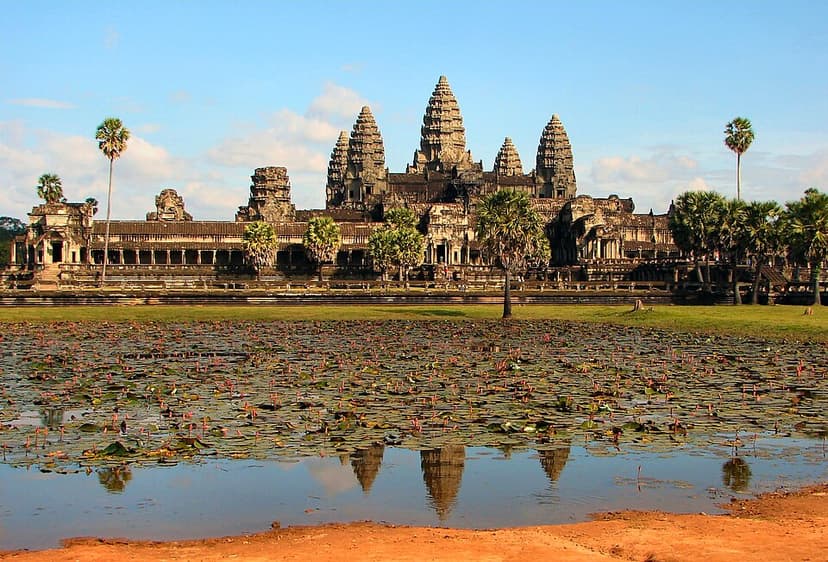
Angkor Wat
Angkor Wat, originally a Hindu temple dedicated to Vishnu and commissioned by King Suryavarman II in the early 12th century, is the largest religious complex in the world and a cornerstone of Khmer architecture. It was gradually transformed into a Theravada Buddhist temple from the late 13th century onwards and has remained an active center of Buddhist worship, serving as a potent symbol of Cambodia and appearing on its national flag.

Badachu
Badachu, meaning "Eight Great Sites," is a sprawling temple complex comprising eight Buddhist monasteries and nunneries located on the Cuiwei, Pingpo, and Lushi hills on the outskirts of Beijing. These sites are significant for their historical Buddhist presence and their picturesque setting in the Western Hills.

Bujang Valley
Bujang Valley is a significant historical complex in Malaysia, dating from the 5th to 14th centuries CE, characterized by its Indianized Hindu-Buddhist influences. It is considered Malaysia's richest archaeological area, with numerous temple ruins (candi) and evidence of early iron smelting, making it a proposed UNESCO World Heritage site.