
Badachu
Badachu, meaning "Eight Great Sites," is a sprawling temple complex comprising eight Buddhist monasteries and nunneries located on the Cuiwei, Pingpo, and Lushi hills on the outskirts of Beijing. These sites are significant for their historical Buddhist presence and their picturesque setting in the Western Hills.
Key Facts
- ›Badachu is a collection of eight Buddhist temples and nunneries.
- ›The complex is spread across three mountains: Hutou (Tiger's Head), Qinglong (Green Dragon), and Cuiwei (also called Pingpo).
- ›Cuiwei Mountain, the highest of the three, is believed to be the burial place of Princess Cuiwei and houses five of the temples.
- ›Hutou Mountain contains two temples, Changan Temple and Lingguang Temple.
- ›Qinglong Mountain is associated with a legend of a monk taming dragons and holds Zhengguo Temple.
- ›The name "Badachu" translates to "eight Great Sites."

Important Relationships
- Princess Cuiwei
Eight Buddhist Temples and Nunneries, Scenic Mountain Setting
About Badachu
Badachu, a name that translates to "Eight Great Sites," is a significant Buddhist complex located on the western outskirts of Beijing, China. This collection encompasses eight distinct Buddhist temples and nunneries strategically situated across the scenic Cuiwei, Pingpo, and Lushi hills, forming a part of the region's Western Hills.
Geographical and Religious Significance
The complex is organized across three prominent mountains. Hutou Mountain, meaning "Tiger's Head," is also historically referred to as Mingjue Mountain and hosts two temples: Changan Temple and Lingguang Temple. To the south lies Qinglong Mountain, which translates to "Green Dragon" and is known in its eastern section as Lushi Mountain. Legend attributes the taming of two dragons by a monk named Lu Shi to this mountain, which also contains the Zhengguo Temple along with the ruins of other religious structures. The highest of the three, Cuiwei Mountain, also known as Pingpo Mountain, is historically significant as the reputed burial place of Princess Cuiwei and is home to five of the eight temples: Sanshanan Nunnery, Dabei Temple, Longquan Nunnery, Xiangjie Temple, and Baozhu cave.
Source: Wikipedia ↗
Frequently Asked Questions
What does the name Badachu mean?
Badachu translates to "Eight Great Sites" in English. This name refers to the eight distinct Buddhist temples and nunneries that make up the complex.
Where is Badachu located?
Badachu is situated on the outskirts of Beijing, China, specifically nestled within the Cuiwei, Pingpo, and Lushi hills in the Shijingshan District, at the foot of the Western Hills.
Which mountains are part of the Badachu complex?
The Badachu complex is spread across three mountains: Hutou Mountain (also known as Mingjue Mountain), Qinglong Mountain (also known as Lushi Mountain), and Cuiwei Mountain (also known as Pingpo Mountain).
How many temples are in Badachu?
The Badachu complex consists of eight Buddhist temples and nunneries. These are distributed among the three mountains, with Cuiwei Mountain housing five, Hutou Mountain housing two, and Qinglong Mountain holding one.
Related Buddhist Temples
Atamasthana
Atamasthana, meaning "Eight Sacred Places," refers to a collection of eight significant Buddhist sites located in Anuradhapura, Sri Lanka. These locations are believed to be places visited by the Buddha during his legendary trips to the island, making them central to Buddhist pilgrimage and devotion in Sri Lanka. The city of Anuradhapura itself, where these sites are concentrated, was a major political and religious capital for centuries and is now a UNESCO World Heritage Site.
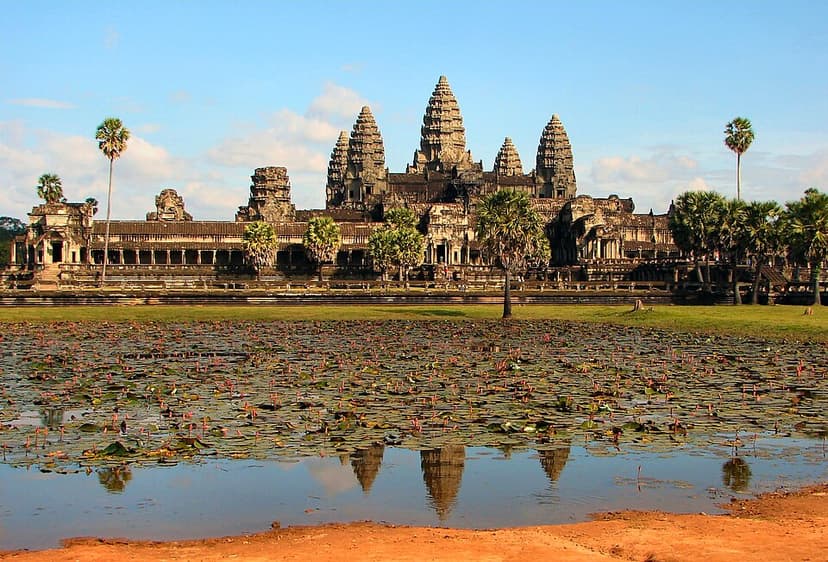
Angkor Wat
Angkor Wat, originally a Hindu temple dedicated to Vishnu and commissioned by King Suryavarman II in the early 12th century, is the largest religious complex in the world and a cornerstone of Khmer architecture. It was gradually transformed into a Theravada Buddhist temple from the late 13th century onwards and has remained an active center of Buddhist worship, serving as a potent symbol of Cambodia and appearing on its national flag.

Bujang Valley
Bujang Valley is a significant historical complex in Malaysia, dating from the 5th to 14th centuries CE, characterized by its Indianized Hindu-Buddhist influences. It is considered Malaysia's richest archaeological area, with numerous temple ruins (candi) and evidence of early iron smelting, making it a proposed UNESCO World Heritage site.