
Bujang Valley
Temple Complex·Malaysia·1st century
Bujang Valley is a significant historical complex in Malaysia, dating from the 5th to 14th centuries CE, characterized by its Indianized Hindu-Buddhist influences. It is considered Malaysia's richest archaeological area, with numerous temple ruins (candi) and evidence of early iron smelting, making it a proposed UNESCO World Heritage site.
Key Facts
- ›Sprawling historical complex from the 5th to 14th centuries CE with Indianized Hindu-Buddhist influences.
- ›Considered Malaysia's richest archaeological area, with over 50 temple ruins (candi) unearthed.
- ›Features early iron smelting sites and a clay brick monument dating back to 110 AD, one of the oldest man-made structures in Southeast Asia.
- ›Proposed for UNESCO World Heritage List status, with international backing from several Asian countries.
- ›The valley's name is interpreted to mean 'Scholars' Valley' from Sanskrit, or possibly 'Serpent Valley' from 'bhujangga'.

Important Relationships
- Claudius Ptolemaeus (Ptolemy)
- Funan
- Srivijaya
- Majapahit
Candi, Iron Smelting Sites, Jetty Remains, Clay Brick Monument
- Discovery of Iron Smelting Sites and A Clay Brick Monument Dating To 110 Ad.
- Demolition of Candi No. 11 By A Land Developer In 2013, Leading To Controversy and Renewed Efforts For Heritage Gazetting.
- Nomination Process For Unesco World Heritage List Status Since 2013.
About Bujang Valley
Bujang Valley, originally known in Sanskrit as Scholars' Valley and now in Malay as Lembah Bujang, is a vast historical and archaeological complex located in Malaysia between Mount Jerai and the Muda River. This sprawling area, covering approximately 224 square kilometers (with potential expansion to 1,000 square kilometers due to new discoveries), flourished from the 5th to the 14th centuries CE, exhibiting significant Indianized Hindu-Buddhist influences. It is recognized as Malaysia's richest archaeological zone.
Archaeological Discoveries
The valley is characterized by the discovery of over 50 ancient temple ruins, referred to as candi. Among the most notable findings are iron smelting sites and a clay brick monument at the Sungai Batu site, dating back to 110 AD. This makes the monument one of the oldest man-made structures recorded in Southeast Asia. Relics found within the valley, including inscribed stone caskets, tablets, metal artifacts, ceramics, and Hindu icons, are now displayed at the Bujang Valley Archaeological Museum.
Historical Context and Significance
The historical trajectory of Bujang Valley suggests that local rulers adopted Indian cultural and political models earlier than those in regions like Kutai and Tarumanegara. Situated strategically on the maritime trade route between China and South India, the valley was a hub for Chinese and South Indian traders, evident from the discovery of trade ceramics, sculptures, and inscriptions from the 5th to the 14th centuries CE. The area was administered by various maritime powers, including Funan, Srivijaya, and Majapahit, before trade eventually declined.
Research and Heritage Status
Archaeological research in Bujang Valley has a long history, with early contributions from Western archaeologists like H.G. Quaritch Wales, followed by local scholars such as Nik Hassan Shuhaimi Nik Abdul Rahman. In recent years, research has expanded significantly, revealing numerous new sites. The valley is currently undergoing a nomination process for inclusion in the UNESCO World Heritage List, a status supported by numerous Asian diplomats. However, a significant controversy arose in 2014 when ruins of a temple, Candi No. 11, were destroyed by a land developer, highlighting the ongoing challenges in preserving this invaluable heritage site.
Source: Wikipedia ↗
Frequently Asked Questions
What is Bujang Valley?
Bujang Valley is a large historical and archaeological complex in Malaysia, featuring ruins of Hindu-Buddhist temples and evidence of early industrial activity. It is considered the richest archaeological area in the country.
What is the historical significance of Bujang Valley?
It represents a period of Indian cultural and political influence in Southeast Asia, with evidence of trade and religious practices dating back to the 5th to 14th centuries CE. It predates similar influences found in other parts of Indonesia.
Are there any UNESCO World Heritage sites in Bujang Valley?
Bujang Valley is currently a proposed UNESCO World Heritage List site. While it has received endorsements, further research and conservation efforts are ongoing to secure its designation.
What kinds of ruins can be found in Bujang Valley?
Over 50 ancient temple ruins, known as candi, have been discovered. Additionally, excavations have revealed remains of jetties and iron-smelting sites.
What is the meaning of the name Bujang Valley?
The name is interpreted in several ways. From Sanskrit, 'bhujangga' means 'scholar,' suggesting 'Scholars' Valley.' In modern Malay, 'bujang' means 'bachelor.' Another interpretation links 'bhujangga' to 'serpent,' referring to the winding rivers in the area.
Related Buddhist Temples
Atamasthana
Atamasthana, meaning "Eight Sacred Places," refers to a collection of eight significant Buddhist sites located in Anuradhapura, Sri Lanka. These locations are believed to be places visited by the Buddha during his legendary trips to the island, making them central to Buddhist pilgrimage and devotion in Sri Lanka. The city of Anuradhapura itself, where these sites are concentrated, was a major political and religious capital for centuries and is now a UNESCO World Heritage Site.

Badachu
Badachu, meaning "Eight Great Sites," is a sprawling temple complex comprising eight Buddhist monasteries and nunneries located on the Cuiwei, Pingpo, and Lushi hills on the outskirts of Beijing. These sites are significant for their historical Buddhist presence and their picturesque setting in the Western Hills.
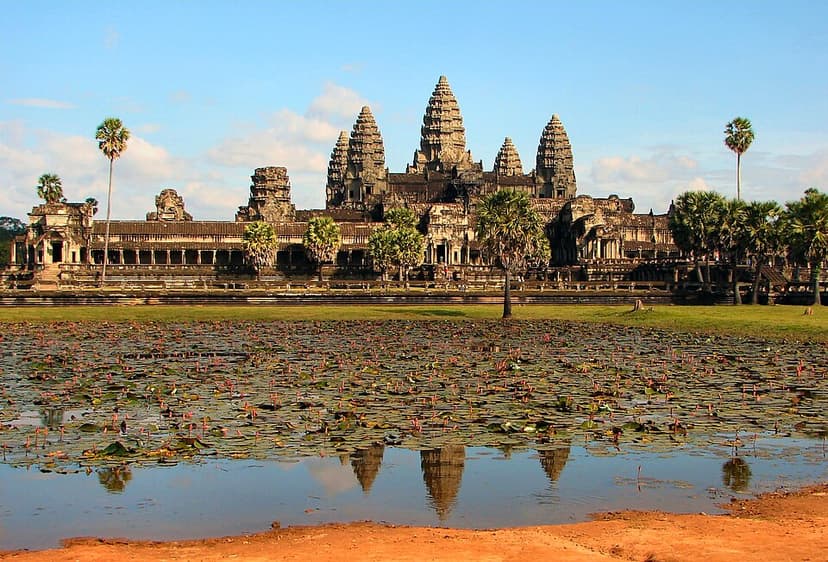
Angkor Wat
Angkor Wat, originally a Hindu temple dedicated to Vishnu and commissioned by King Suryavarman II in the early 12th century, is the largest religious complex in the world and a cornerstone of Khmer architecture. It was gradually transformed into a Theravada Buddhist temple from the late 13th century onwards and has remained an active center of Buddhist worship, serving as a potent symbol of Cambodia and appearing on its national flag.