
Basilica of Our Lady of the Assumption, Monastery of St Benedict
Brazil·São Paulo
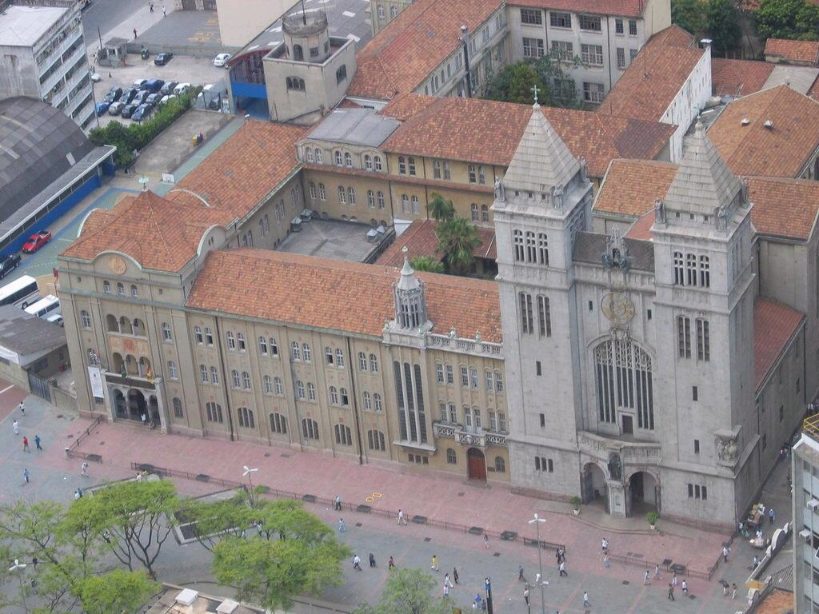
The Basilica of Our Lady of the Assumption, part of the Monastery of Saint Benedict in São Paulo, Brazil, is a significant religious and architectural site. Originally founded in 1598, the current church was constructed between 1910 and 1914 in the Neo-Romanesque style. It is notable for its daily Gregorian chant services and its historical role in events of local importance.
Key Facts
- ›The monastery's foundation dates back to July 14, 1598, with the current church built between 1910 and 1914.
- ›The basilica is dedicated to our Lady of the Assumption, having previously been consecrated to Saint Benedict and our Lady of Montserrat.
- ›The current church was designed by German architect Richard Berndl and decorated by Benedictine monk Adalbert Gressnigt.
- ›It is a center for the Benedictine 'ora et labora' tradition, with monks celebrating the Divine Office and Mass daily with Gregorian chant.
- ›The monastery hosted Pope Benedict XVI in May 2007 during his first visit to Brazil.
- ›The basilica houses significant 17th-century sculptures by Friar Agostinho de Jesus and a 1777 crucifix.
Neo-Romanesque
Our Lady of the Assumption, Saint Benedict
- Remains of FernãO Dias Pais
- Sculptures of St. Benedict and St. Scholastica By Friar Agostinho De Jesus
- Crucifix By José Pereira Mutas
- Image of Our Lady of the Conception
Benedictines
Richard Berndl, Adalbert Gressnigt
About Basilica of Our Lady of the Assumption, Monastery of St Benedict
The Basilica of Our Lady of the Assumption is the central church of the Monastery of Saint Benedict, located in the city of São Paulo, Brazil. This significant religious complex traces its origins back to July 14, 1598, when the monastery was first established. The current basilica, a striking example of Neo-Romanesque architecture, was constructed between 1910 and 1914, designed by the German architect Richard Berndl and extensively decorated by Benedictine monk Adalbert Gressnigt.
History and Religious Significance
The monastery's history is intertwined with the early development of São Paulo. Initially dedicated to Saint Benedict, its patron saint later changed to Our Lady of Montserrat and eventually to Our Lady of the Assumption. The basilica serves as the spiritual heart of the Benedictine community, where monks uphold the tradition of 'ora et labora' (pray and work). Daily services include the Divine Office and Mass, both celebrated with Gregorian chant, contributing to the basilica's serene atmosphere.
The monastery has also played a role in historical events, including a period of political tension in 1641. In more recent times, it gained international recognition when it hosted Pope Benedict XVI in May 2007 during his inaugural visit to Brazil. The basilica is also home to valuable artistic and historical artifacts.
Architectural Features and Artistic Heritage
The architectural style of the Basilica of Our Lady of the Assumption is primarily Neo-Romanesque, characterized by its solid construction and harmonious proportions. Adalbert Gressnigt, influenced by the Beuron Art School, was instrumental in shaping the interior's aesthetic, aiming to foster a spiritual connection between worshippers and the divine through art based on ancient principles. The basilica features stained glass windows depicting the Evangelists, the death of Saint Benedict, and Our Lady of the Assumption, all designed by Gressnigt.
Significant artworks within the basilica include 17th-century clay sculptures of St. Benedict and St. Scholastica by Friar Agostinho de Jesus, considered the first Brazilian sculptor. Other notable pieces include a crucifix from 1777 by José Pereira Mutas and sculptures of the apostles by Adrien Henri Vital van Emelen. The basilica also houses a renowned church organ, installed in 1954, and a library with an extensive collection of rare books and manuscripts.
Source: Wikipedia ↗
Frequently Asked Questions
When was the Monastery of Saint Benedict founded?
The Monastery of Saint Benedict was founded on July 14, 1598. The land for the monastery was granted by Captain-Major Jorge Correia.
Who designed the current church of the Basilica of Our Lady of the Assumption?
The current church was designed by German architect Richard Berndl. Its interior decoration was largely planned and executed by Benedictine monk Adalbert Gressnigt.
What is the architectural style of the Basilica of Our Lady of the Assumption?
The building follows the Neo-Romanesque style. Much of the interior decoration is influenced by the Beuron Art School, which sought to connect faithful and God through ancient artistic principles.
What religious services are held at the Basilica of Our Lady of the Assumption?
The basilica holds the Divine Office in the monastic rite and Mass in the Roman rite daily, both celebrated with Gregorian chant by the resident monks.
What historical events are associated with the Monastery of Saint Benedict?
The monastery played a role in stabilizing tensions in 1641 when Amador Bueno declined the title of King of São Paulo and retreated there. It also underwent significant renovations and was visited by Pope Benedict XVI in 2007.
What notable artworks or relics are housed in the basilica?
The basilica contains 17th-century clay sculptures of St. Benedict and St. Scholastica by Friar Agostinho de Jesus, a 1777 crucifix by José Pereira Mutas, and stained glass windows designed by Adalbert Gressnigt.
Related Basilicas
Abbatial Basilica of the Monastery of St Benedict
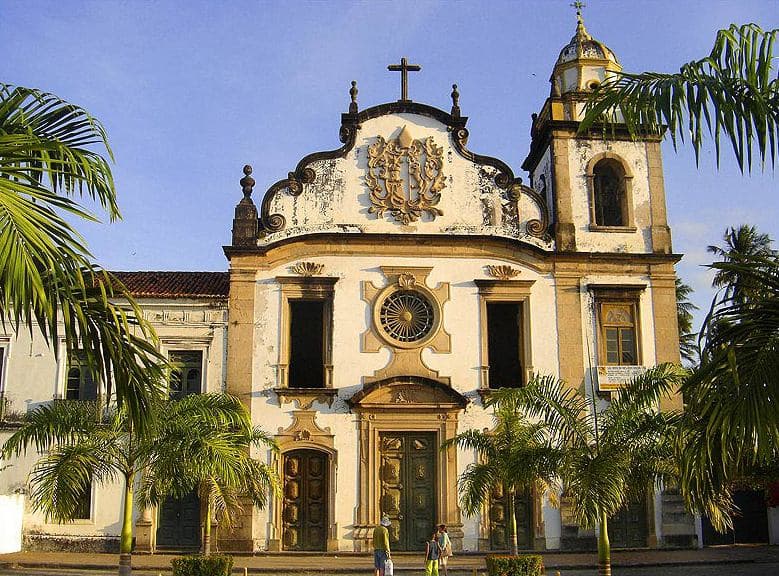
The Basilica and Monastery of St. Benedict is a significant Baroque architectural complex in Olinda, Pernambuco, Brazil. It is part of the historic center of the city, which is recognized as a UNESCO World Heritage Site. The basilica holds importance for its historical roots in Portuguese colonization and its elevated status as a Minor Basilica.

Basilica of Our Lady of Nazareth of Exile
The Basilica of Our Lady of Nazareth of Exile, also known as the Basilica of Belém, is a minor basilica of the Catholic Church located in Belém, Pará, Brazil. Construction began in 1909 on the site where the image of the Virgin of Nazareth was discovered. The basilica is notable for its Neoclassical design, commissioned by Barnabite priests and inspired by the Basilica of Saint Paul Outside the Walls in Rome, though it controversially lacked steeples in its original plan.

Basilica Shrine of Our Lady of the Assumption
The Minor Basilica and Archdiocesan Shrine of Our Lady of the Assumption, commonly known as Santa Maria Church, is a Roman Catholic basilica located in Santa Maria, Ilocos Sur, Philippines. It is recognized as a UNESCO World Heritage Site as part of the Baroque Churches of the Philippines, celebrated for its unique synthesis of functional, defensive, and religious architectural principles adapted to the local environment. The basilica currently serves as the Pro-Cathedral of the Archdiocese of New Segovia while its main cathedral undergoes repairs.