
Basilica Shrine of Our Lady of the Assumption
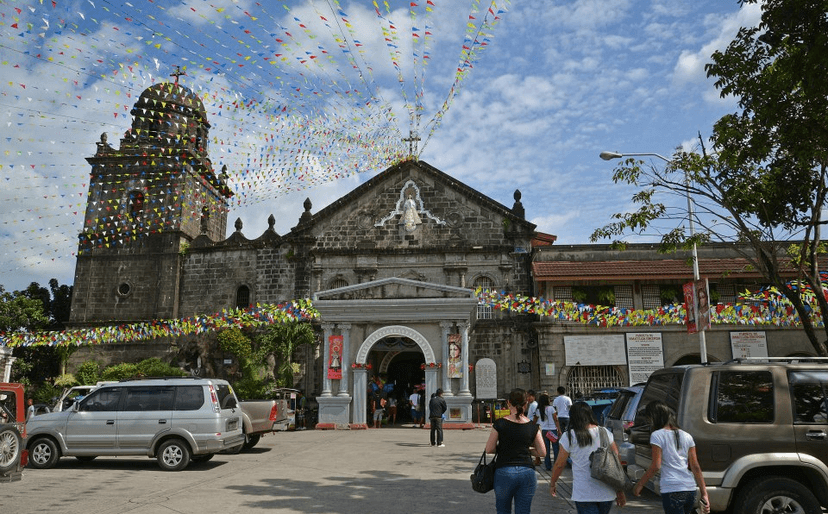
The Minor Basilica and Archdiocesan Shrine of Our Lady of the Assumption, commonly known as Santa Maria Church, is a Roman Catholic basilica located in Santa Maria, Ilocos Sur, Philippines. It is recognized as a UNESCO World Heritage Site as part of the Baroque Churches of the Philippines, celebrated for its unique synthesis of functional, defensive, and religious architectural principles adapted to the local environment. The basilica currently serves as the Pro-Cathedral of the Archdiocese of New Segovia while its main cathedral undergoes repairs.
Key Facts
- ›Construction of the present church began in 1765, with the bell tower added in 1810 and the protective wall in 1863.
- ›The church is situated atop a prominent hill, surrounded by a defensive wall, and accessible by an 85-step granite stairway.
- ›Its architectural style is a prime example of Spanish colonial ecclesiastical architecture, incorporating elements of Earthquake Baroque.
- ›The basilica was designated a UNESCO World Heritage Site on December 11, 1993, as part of the Baroque Churches of the Philippines.
- ›It was elevated to an Archdiocesan Shrine on August 15, 2022, and declared a Minor Basilica by Pope Francis on November 18, 2024.
- ›The church houses the miraculous image of our Lady of the Assumption (Apo Baket), a 112 CM tall wooden statue with ivory face and hands.

Spanish Colonial, Earthquake Baroque
- Miraculous Image of Our Lady of the Assumption
About Basilica Shrine of Our Lady of the Assumption
The Minor Basilica and Archdiocesan Shrine of Our Lady of the Assumption, commonly known as Santa Maria Church, stands as a significant example of Spanish colonial ecclesiastical architecture in Santa Maria, Ilocos Sur, Philippines. Recognized as a UNESCO World Heritage Site since December 11, 1993, as part of the Baroque Churches of the Philippines, the basilica is celebrated for its unique blend of functional, defensive, and religious design principles, strategically situated atop a hill.
History and Legend
The parish began as a chapel-of-ease in 1567 and became an independent ministry in 1769, dedicated to Our Lady of the Assumption. Local legend recounts miraculous occurrences involving the Virgin Mary's image appearing on a guava tree, leading to the church's relocation to its present elevated site. Construction of the current church commenced in 1765. The bell tower was erected in 1810, and a protective wall around the hill was built during renovations in 1863. The basilica was officially designated a National Historical Landmark and later elevated to an Archdiocesan Shrine on August 15, 2022. Pope Francis declared it a Minor Basilica on November 18, 2024.
Architectural Features
Unlike many Philippine churches located in central plazas, Santa Maria Church is fortified and sits on a hill, accessible by an impressive 85-step granite stairway. The structure exhibits thick outer walls reinforced by numerous buttresses, characteristic of Earthquake Baroque architecture, designed to withstand seismic activity. Its façade features a large portal, three windows, and is framed by heavy circular buttresses. The bell tower is freestanding and octagonal, with each level narrowing towards the top, also in the Earthquake Baroque style. The adjacent convent, partly obscuring the church's façade, is another unusual feature dictated by the hill's topography.
Miraculous Image
The basilica is venerated for housing the miraculous image of Our Lady of the Assumption, known as Apo Baket. This wooden statue, measuring 112 centimeters tall, depicts the Virgin Mary with her hands extended upward, symbolizing her assumption into heaven. The image is adorned with an ornate blue cape decorated with silver floral designs and a white dress embroidered with gold thread, standing on a pedestal of clouds surrounded by angelic heads.
Source: Wikipedia ↗
Frequently Asked Questions
What is the architectural style of Santa Maria Church?
Santa Maria Church is a significant example of Spanish colonial ecclesiastical architecture, notably featuring elements of Earthquake Baroque. Its design incorporates functional, defensive, and religious principles, adapted to the local topography and climate.
When was Santa Maria Church built?
Construction of the present church began in 1765. The bell tower was added in 1810, and further renovations, including the construction of a protective wall around the hill, occurred in 1863.
Why is Santa Maria Church a UNESCO World Heritage Site?
The church was designated a UNESCO World Heritage Site on December 11, 1993, as part of the 'Baroque Churches of the Philippines.' This recognition highlights its outstanding example of Spanish colonial ecclesiastical architecture and its adaptation of European building traditions to the Philippine context.
What is the significance of the basilica's location?
The church is uniquely situated atop a prominent hill, surrounded by a defensive wall, resembling a fortress. This elevated position reflects its historical dual role as a place of worship and a strategic lookout point during the Spanish colonial era.
What relics or important images are housed in the basilica?
The basilica is home to the miraculous image of Our Lady of the Assumption, also known as Apo Baket. This statue is made of wood with ivory features and is dressed in ornate clothing, symbolizing her assumption into heaven.
What is the current role of Santa Maria Church?
Santa Maria Church currently serves as the Pro-Cathedral of the Archdiocese of Nueva Segovia. It was also elevated to an Archdiocesan Shrine in 2022 and officially declared a Minor Basilica in 2024.
Related Basilicas

Basilica of St Nicholas of Tolentino
The Minor Basilica of Saint Nicholas of Tolentino, also known as Sinait Basilica, is a significant Roman Catholic church located in Sinait, Ilocos Sur, Philippines. It is renowned for housing the El Santo Cristo Milagroso, a revered life-sized image of the crucified Christ. The church, one of the oldest religious structures in the Philippines, was elevated to the rank of minor basilica by Pope Francis in 2021.
Basilica of La Purisima Concepcion
The Minor Basilica and Parish of La Purísima Concepción, also known as Santa Maria Church, is a significant Roman Catholic Minor Basilica located in Santa Maria, Bulacan, Philippines. Dedicated to the Virgin Mary of the Immaculate Conception, it holds a miraculous Marian image and was elevated to the status of Minor Basilica by Pope Francis in 2021, following a pontifical decree of coronation for its enshrined image.

Basilica Shrine of Our Lady Mediatrix
The Basilica Shrine of Our Lady Mediatrix of All Graces, also known as the Basilica of Santa Maria, is a Catholic church in Santa Maria, Rio Grande do Sul, Brazil. It holds the unique distinction of being the only basilica globally dedicated to Mary as the Mediatrix of all Graces, making it a significant site for Marian devotion in the region.