
Abbatial Basilica of the Monastery of St Benedict
The Basilica and Monastery of St. Benedict is a significant Baroque architectural complex in Olinda, Pernambuco, Brazil. It is part of the historic center of the city, which is recognized as a UNESCO World Heritage Site. The basilica holds importance for its historical roots in Portuguese colonization and its elevated status as a Minor Basilica.
Key Facts
- ›The monastery and its church were founded early in the Portuguese colonization of Brazil.
- ›The current church's construction began around 1660, following damage from the Dutch invasion.
- ›Construction of the present church was completed in 1761.
- ›It was elevated to the rank of Minor Basilica by Pope John Paul II in 1998.
- ›The basilica is situated in Olinda, Pernambuco, Brazil.
- ›Together with much of the historic center of Olinda, it is a UNESCO World Heritage Site.
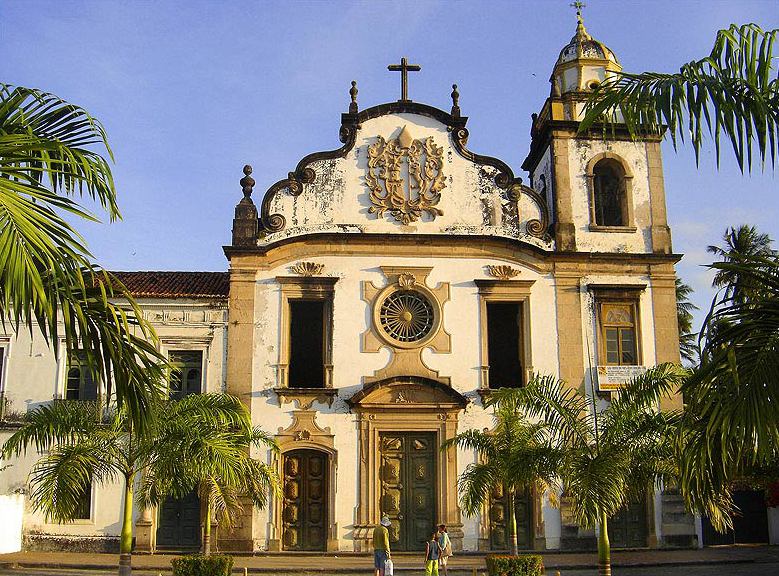
Baroque
Benedict of Nursia
Order of St. Benedict
About Abbatial Basilica of the Monastery of St Benedict
The Abbatial Basilica of the Monastery of St Benedict, also known as the Basilica and Monastery of São Bento, is a prominent Catholic architectural complex located in Olinda, Pernambuco, Brazil. Constructed in the Baroque style, it is a significant component of the historic center of Olinda, which has been designated a UNESCO World Heritage Site.
History and Construction
The foundation of the Monastery of St. Benedict dates back to the early period of Portuguese colonization in Brazil. The Order of St. Benedict established a presence in Pernambuco at the request of Jorge de Albuquerque Coelho, the captain's grantee, who offered them numerous advantages. The construction of the present church, which forms the basilica, commenced around 1660. This reconstruction followed a devastating fire that ravaged the city and the old monastic complex during the Dutch invasion. The building of the church was completed in 1761.
Religious Designation and Heritage
In recognition of its importance, the Church of the Monastery of St. Benedict was elevated to the rank of Minor Basilica by Pope John Paul II on February 19, 1998, through the apostolic letter "Spectabile quidem." This designation underscores its historical, architectural, and spiritual significance within the Catholic Church. As part of the historic center of Olinda, the basilica contributes to the rich cultural heritage recognized by UNESCO.
Source: Wikipedia ↗
Frequently Asked Questions
When was the Basilica and Monastery of St. Benedict built?
The construction of the present church began around 1660 and was finished in 1761. The monastery's foundation dates back to the early days of Portuguese colonization in Brazil.
What is the architectural style of the Basilica and Monastery of St. Benedict?
The basilica is built in the Baroque style. This style is characteristic of many important religious and architectural complexes from the colonial period.
Is the Basilica and Monastery of St. Benedict a UNESCO World Heritage Site?
Yes, the Basilica and Monastery of St. Benedict is a UNESCO World Heritage Site. It is recognized as part of the historic center of Olinda, Pernambuco, Brazil.
What is the religious significance of the Basilica and Monastery of St. Benedict?
The basilica holds religious significance as part of the Monastery of St. Benedict, founded by the Order of St. Benedict. It was elevated to the rank of Minor Basilica by Pope John Paul II in 1998.
Related Basilicas

Basilica of Our Lady of Nazareth of Exile
The Basilica of Our Lady of Nazareth of Exile, also known as the Basilica of Belém, is a minor basilica of the Catholic Church located in Belém, Pará, Brazil. Construction began in 1909 on the site where the image of the Virgin of Nazareth was discovered. The basilica is notable for its Neoclassical design, commissioned by Barnabite priests and inspired by the Basilica of Saint Paul Outside the Walls in Rome, though it controversially lacked steeples in its original plan.
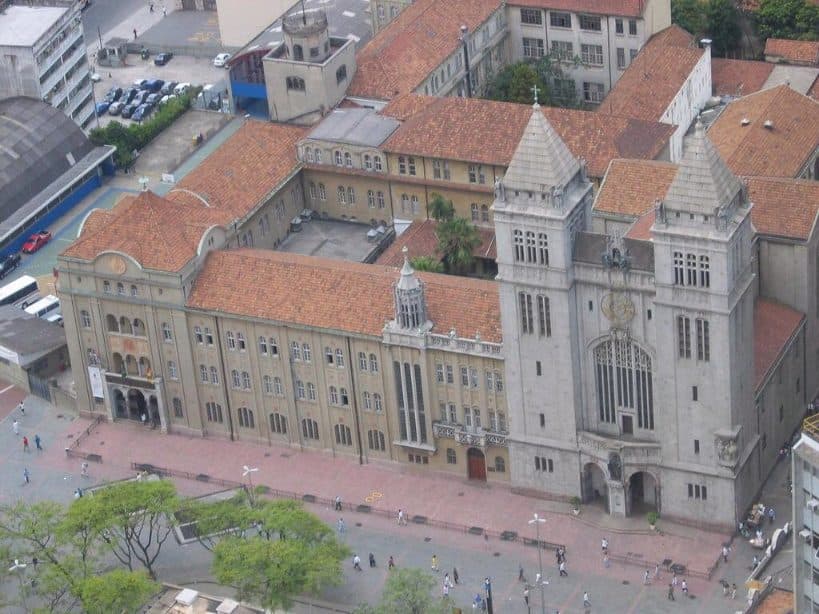
Basilica of Our Lady of the Assumption, Monastery of St Benedict
The Basilica of Our Lady of the Assumption, part of the Monastery of Saint Benedict in São Paulo, Brazil, is a significant religious and architectural site. Originally founded in 1598, the current church was constructed between 1910 and 1914 in the Neo-Romanesque style. It is notable for its daily Gregorian chant services and its historical role in events of local importance.

Archcathedral Basilica of St John the Baptist
Archcathedral Basilica of St John the Baptist is a Catholic church located in Warsaw, Poland, serving as the mother church of the Archdiocese of Warsaw and a significant national pantheon. Originally built in the 14th century, it has undergone numerous modifications and destructions, most notably during World War II, before its post-war reconstruction. Its historical importance is underscored by its role as a coronation and burial site for Polish royalty and notable figures, and its inclusion as part of a UNESCO World Heritage Site.