
Basilica of Our Lady of Nazareth of Exile
Brazil·Belém
The Basilica of Our Lady of Nazareth of Exile, also known as the Basilica of Belém, is a minor basilica of the Catholic Church located in Belém, Pará, Brazil. Construction began in 1909 on the site where the image of the Virgin of Nazareth was discovered. The basilica is notable for its Neoclassical design, commissioned by Barnabite priests and inspired by the Basilica of Saint Paul Outside the Walls in Rome, though it controversially lacked steeples in its original plan.
Key Facts
- ›Construction began in 1909 on the site where the image of the Virgin of Nazareth was found.
- ›The basilica's design was created by Gino Coppedè in 1909, following the model of Basilica of Saint Paul Outside the Walls in Rome.
- ›Dual bell towers were added to the basilica despite the architect's original intent for no steeples.
- ›Pope Pius XI declared the temple a basilica on July 19, 1923.
- ›The basilica measures 62 meters long, 24 meters wide, and 20 meters high, with towers reaching an additional 42 meters.
- ›It was listed as a historic structure by the Department of Historic, Artistic and Cultural Heritage of Pará in 1992.

Neoclassical, Eclectic
Virgin of Nazareth
Image of the Virgin of Nazareth
Barnabite Priests
Gino Coppedè
About Basilica of Our Lady of Nazareth of Exile
The Basilica of Our Lady of Nazareth of Exile, also known by the Portuguese name Basílica Nossa Senhora de Nazaré do Desterro and the local moniker Basilica of Belém, is a significant minor basilica of the Catholic Church situated in the city of Belém, in the state of Pará, Brazil. Its origins are tied to the discovery of the image of the Virgin of Nazareth by Plácido José de Souza in the vicinity of the Murututu Igarapé. The foundational construction for the current edifice commenced in 1909.
Design and Construction
The basilica's design was entrusted to the Italian architect Gino Coppedè in 1909, who envisioned it as a basilica rather than a simple parish church. Coppedè's plan was influenced by the Basilica of Saint Paul Outside the Walls in Rome, characterized by an eclectic Neoclassical style. Notably, Coppedè's original design did not include steeples. However, local authorities, citing the tradition of churches in the Lusophone world, mandated the addition of dual bell towers, a feature that contrasted with the architect's initial concept.
The cornerstone for the basilica was laid on October 24, 1909, by Santino Maria Coutinho, then Archbishop of Belém. The structure itself is substantial, measuring 62 meters (203 ft) in length, 24 meters (79 ft) in width, and 20 meters (66 ft) in height. Its bell towers rise an additional 42 meters (138 ft) and house nine bells, the largest of which is over 2 tons and measures 1.8 meters (5.9 ft) in diameter.
Religious and Historical Recognition
The temple's status as a basilica was officially recognized by Pope Pius XI on July 19, 1923. Further veneration was bestowed upon its Marian image when Pope Pius XII granted a decree of pontifical coronation on July 9, 1953, with the coronation taking place on August 15 of the same year. In a more recent elevation, Pope Benedict XVI designated the basilica as the Archdiocesan Marian Sanctuary on May 31, 2006, renaming it the Basilica Sanctuary of the Virgin of Nazareth.
Protected Heritage
Reflecting its historical and architectural importance, the Basilica of Our Lady of Nazareth was formally listed as a historic structure by the Department of Historic, Artistic and Cultural Heritage (DPHAC) of the state of Pará in 1992, ensuring its preservation for future generations.
Source: Wikipedia ↗
Frequently Asked Questions
When was the Basilica of Our Lady of Nazareth of Exile built?
Construction of the Basilica of Our Lady of Nazareth of Exile began in 1909. The current structure was designed in the same year, and the cornerstone was laid on October 24, 1909.
Who designed the Basilica of Our Lady of Nazareth of Exile?
The current structure of the basilica was designed by Gino Coppedè in 1909. He planned the structure as a basilica, drawing inspiration from the Basilica of Saint Paul Outside the Walls in Rome.
What is the significance of the Basilica of Our Lady of Nazareth of Exile?
It is a minor basilica of the Catholic Church and holds significant religious importance as the site where the image of the Virgin of Nazareth was found. It was officially declared a basilica by Pope Pius XI in 1923.
What are the dimensions of the basilica?
The basilica measures 62 meters (203 ft) in length, 24 meters (79 ft) in width, and 20 meters (66 ft) in height. Its towers extend an additional 42 meters (138 ft) upwards.
Has the basilica received any special designations?
Yes, Pope Pius XI declared it a basilica on July 19, 1923. Pope Pius XII granted a decree of pontifical coronation to its Marian image in 1953, and Pope Benedict XVI elevated it to the status of Archdiocesan Marian Sanctuary in 2006.
Related Basilicas
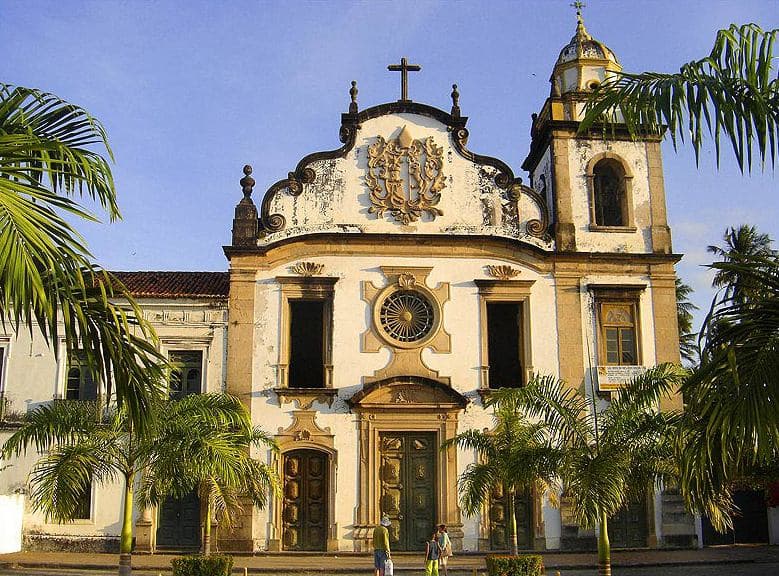
Abbatial Basilica of the Monastery of St Benedict
The Basilica and Monastery of St. Benedict is a significant Baroque architectural complex in Olinda, Pernambuco, Brazil. It is part of the historic center of the city, which is recognized as a UNESCO World Heritage Site. The basilica holds importance for its historical roots in Portuguese colonization and its elevated status as a Minor Basilica.
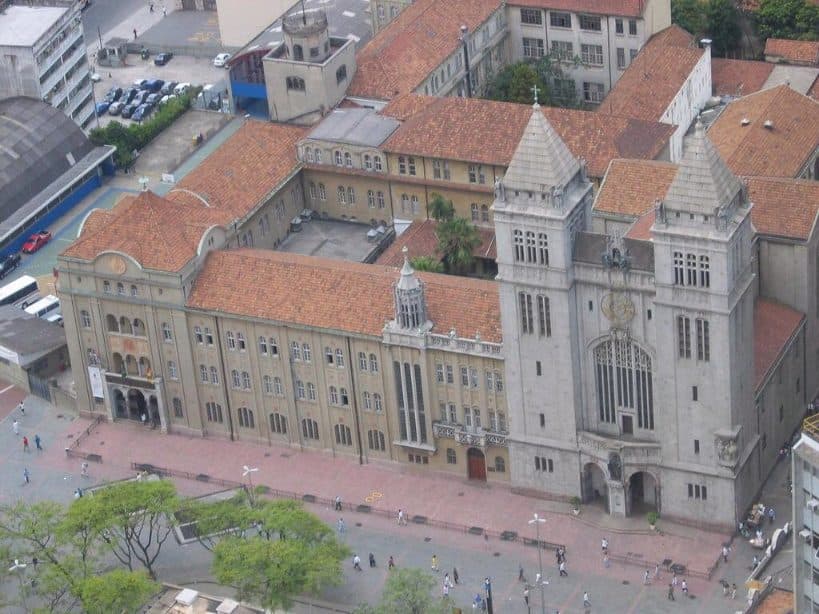
Basilica of Our Lady of the Assumption, Monastery of St Benedict
The Basilica of Our Lady of the Assumption, part of the Monastery of Saint Benedict in São Paulo, Brazil, is a significant religious and architectural site. Originally founded in 1598, the current church was constructed between 1910 and 1914 in the Neo-Romanesque style. It is notable for its daily Gregorian chant services and its historical role in events of local importance.

"Old" Basilica of Our Lady of Guadalupe
The Insigne y Nacional Basílica de Santa María de Guadalupe, commonly known as the Basilica of Our Lady of Guadalupe, is a prominent Catholic church in Mexico City dedicated to the Virgin Mary under her invocation as Our Lady of Guadalupe. It is one of the most visited Marian shrines in the world, attracting an estimated twenty million pilgrims annually, with a significant portion visiting around December 12th, the feast day of Our Lady of Guadalupe. The sanctuary complex includes the older church, now referred to as the Old Basilica, built in the early 18th century, and the modern New Basilica constructed in the 1970s to accommodate the growing number of devotees.