
Ptahil
Ptahil is a celestial being within Mandaeism, identified as the Fourth Life and the third emanation from the First Life, Hayyi Rabbi. Often seen as the Mandaean equivalent of the demiurge, Ptahil plays a significant role in the creation of the material world, Tibil, with assistance from other divine and sometimes problematic figures.
Key Facts
- ›Ptahil is an uthra, a celestial being in Mandaeism.
- ›He is the third emanation from Hayyi Rabbi, the First Life.
- ›Ptahil is described as the Mandaean version of the demiurge.
- ›He assisted in the creation of the material world, Tibil.
- ›Ptahil is sometimes identified with the archangel Gabriel.
- ›His parentage is complex, sometimes described as son of Abatur, and in other accounts, son of Hibil Ziwa and Zahreil.
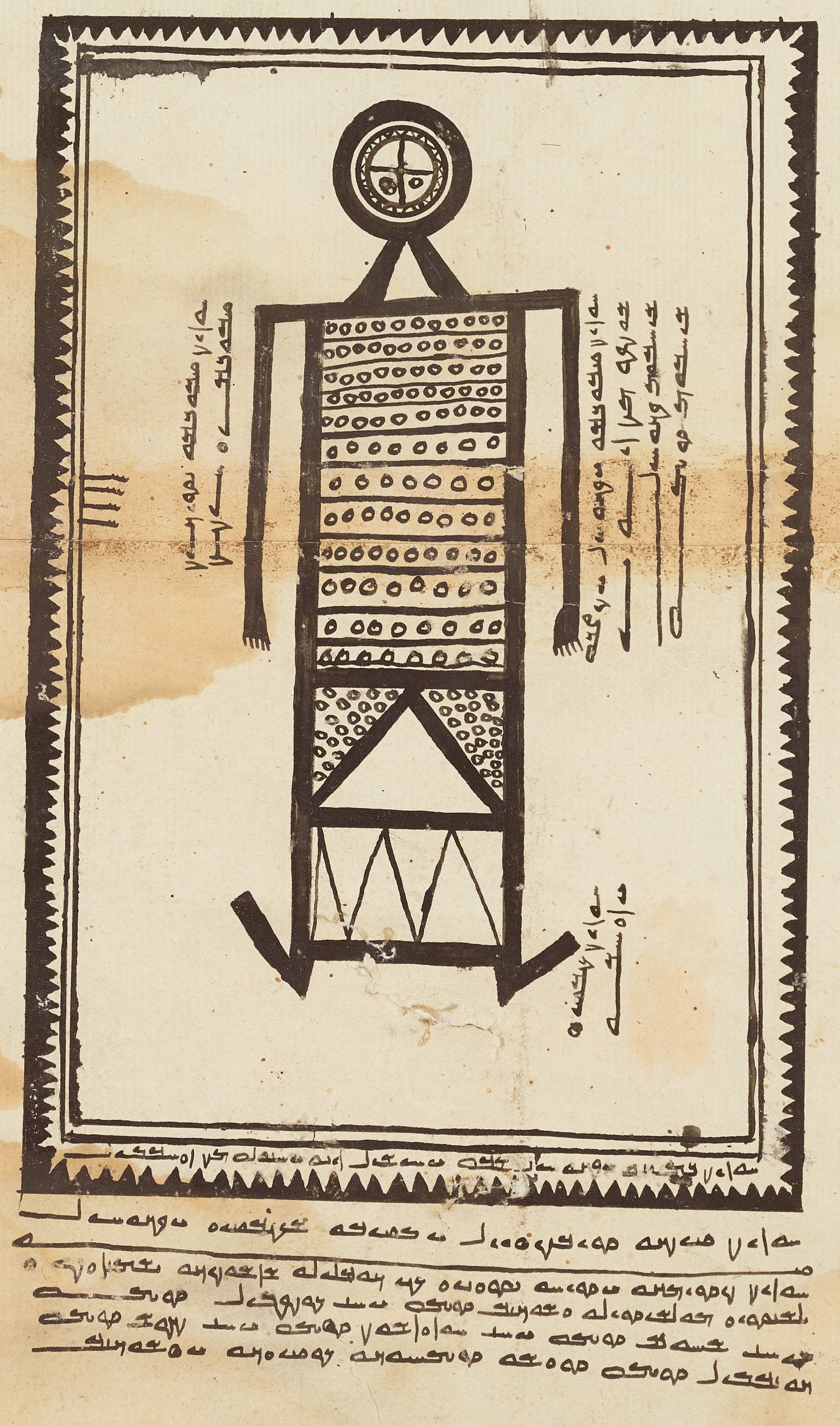
Ptahil-Uthra, Ptahil bar Zahreil
Creator of the Material World, Demiurge
Mandaean Book of John, Asut Malkia, Sefer Harazim
Hayyi Rabbi, Yushamin, Abatur, Gabriel, Ruha, Hibil Ziwa, Zahreil, YukašAr
About Ptahil
Ptahil is a prominent celestial being, known as an uthra, within the Mandaean religion. He holds the designation of the Fourth Life and is recognized as the third emanation originating from Hayyi Rabbi, the supreme First Life. Ptahil is frequently understood as the Mandaean equivalent of a demiurge, a creator deity who shapes the material world.
Role in Creation
Ptahil is most notably associated with the creation of the material universe, referred to as Tibil. While the ultimate command for creation comes from Hayyi Rabbi, the task is delegated to Ptahil. He is credited with successfully solidifying the earth, a process facilitated by secrets of solidification passed down from Abatur, the Third Life. In this creative endeavor, Ptahil sometimes collaborates with Ruha, a figure described as a sinful and fallen ruler from the World of Darkness. Their roles in the creation process are depicted as varying, with each gaining prominence when the other's power wanes. Ptahil's role in creation is also linked to Gabriel, with whom he is sometimes identified.
Parentage and Lineage
The lineage of Ptahil is described in different ways within Mandaean texts. He is considered the son of Abatur, the Third Life. However, some narratives present a different origin, stating that Ptahil emerged as the son of the savior uthra Hibil Ziwa and Zahreil. Zahreil is a lilith and a genius of childbirth, dwelling in the beds of pregnant women to ensure the well-being of mother and child. When Hibil Ziwa descended to the World of Darkness, he married Zahreil, though some accounts suggest the marriage was not consummated. In certain prayers, such as the Asut Malkia, Ptahil is referred to as "Ptahil bar Zahreil," meaning "Ptahil, son of Zahreil."
Etymology and Other Traditions
The name "Ptahil" has been a subject of etymological study. One theory suggests it is composed of Aramaic elements meaning "God opened" or "create." Another prominent conjecture, originally made by Mark Lidzbarski and supported by later scholars, posits a derivation from the Egyptian deity Ptah combined with the angelic suffix 'il'. While some scholars have questioned the extent of Ptah's influence on Mesopotamian Gnostic traditions, others have noted potential identifications of Ptah and El in Canaan during periods of Egyptian rule, which could inform the name's origin.
Ptahil, or a similar angelic figure named Ptḥiʾl, also appears in Jewish mystical texts. In the Sefer HaRazim, Ptḥiʾl is listed among angels situated on the ninth step of the second firmament.
Source: Wikipedia ↗
Frequently Asked Questions
Who is Ptahil in Mandaeism?
Ptahil is a significant celestial being, or uthra, in Mandaeism. He is known as the Fourth Life and is the third emanation from the supreme deity, Hayyi Rabbi (the First Life).
What is Ptahil's role in creation?
Ptahil is often described as the Mandaean demiurge, responsible for the creation of the material world, Tibil. He received the secrets of solidification from Abatur, enabling him to solidify the earth.
Is Ptahil associated with any other divine figures?
Yes, Ptahil is sometimes identified with Gabriel. He also collaborates with Ruha, a sinful female ruler from the World of Darkness, in the creation process, though their roles and influence vary.
What is the etymology of the name Ptahil?
The name Ptahil has been subject to scholarly debate regarding its origin. Theories suggest it may be derived from the Egyptian deity Ptah and the angelic term 'il', or potentially from Aramaic roots meaning 'God opened' or 'create'.
What are the different accounts of Ptahil's parentage?
Accounts of Ptahil's parentage differ. He is sometimes considered the son of Abatur (the Third Life). In other narratives, he is described as the son of Hibil Ziwa and Zahreil, a genius of childbirth.
Is Ptahil mentioned in Jewish texts?
Yes, an angel named Ptḥiʾl (פתחיאל) is listed in the Jewish text Sefer HaRazim. This angel is described as being on the ninth step of the second firmament among other angels.
Related Angels
Adathan
Angels are spiritual beings, often depicted as messengers or guardians, found in various religious and mythological traditions. They serve as intermediaries between the divine and the human realms, playing roles such as divine messengers, protectors, and worshippers of a higher power. Their presence is significant across Abrahamic religions and other belief systems, where they embody divine will and offer guidance.
Bihram Rabba
Bihram Rabba, often referred to as "Bihram the Great," is a significant uthra, or angel, within Mandaeism. He presides over the masbuta, the Mandaean baptismal ritual, and plays a role in Mandaean scriptures where he is depicted as assisting in a rebellion against Yushamin and his sons. His name likely originates from Persian royal names.
Etinsib Ziwa
Etinsib Ziwa is a divine being or angel within Mandaeism, known for initiating a battle against Nbaṭ in the Mandaean Book of John. This celestial conflict involves other divine figures and the sons of Yushamin, highlighting Etinsib Ziwa's role in cosmic struggles within this tradition.