
Gabriel
Gabriel is an archangel venerated in Abrahamic religions, primarily serving as God's messenger. He is known for announcing divine will and significant events, such as the births of John the Baptist and Jesus. Gabriel plays a crucial role in interpreting visions and is considered a guardian angel in some traditions.
Key Facts
- ›Gabriel's name originates from Hebrew, meaning 'man of God' or 'strength of God'.
- ›He is prominently featured in the Book of Daniel, where he interprets visions for the prophet.
- ›In the New Testament, Gabriel announces the births of John the Baptist and Jesus to Zechariah and Mary, respectively.
- ›Islamic tradition reveres Gabriel as the Angel of Revelation, responsible for transmitting the Quran to Muhammad.
- ›Gabriel is often depicted as a warrior angel, assisting in battles and delivering divine punishment.
- ›In some Jewish traditions, he is one of four angels guarding God's throne and the four parts of the Earth.
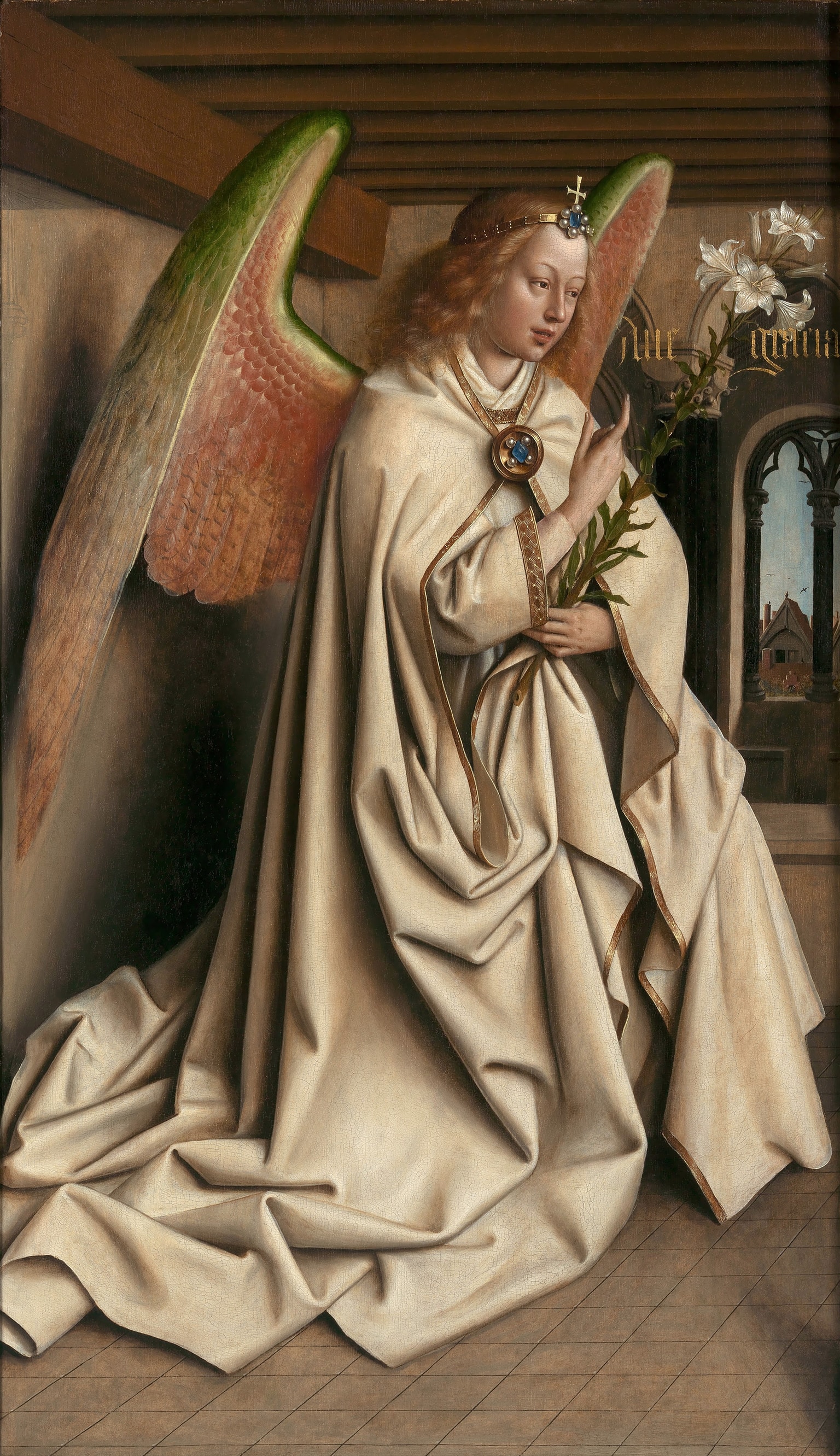
Jibril, Jibrael, Jabrail, Jabra'il, Jibrāʾīl, Gaḇrīʾēl
Messenger, Revealer, Announcer, Guardian, Warrior
Gold, Fire
Trumpet, Lily
Book of Daniel, Gospel of Luke, Quran
Divine Will, Truth
Michael, Raphael, Uriel, Phanuel, Daniel, Zechariah, Mary, Jesus, John the Baptist, Muhammad, Noah
Art, Literature, Music, Infancy Gospels, Gnostic Texts
About Gabriel
Gabriel is a prominent archangel revered across Judaism, Christianity, and Islam, most notably for his role as a divine messenger. His name, derived from Hebrew, signifies 'man of God' or 'strength of God,' reflecting his close connection to the divine and his powerful pronouncements.
Role as a Divine Messenger
Gabriel's primary function is to announce God's will to humanity. In the Hebrew Bible, he appears in the Book of Daniel to interpret complex visions, offering prophetic insight. In the New Testament, he delivers two of Christianity's most significant announcements: foretelling the birth of John the Baptist to Zechariah and, famously, announcing to Mary that she would conceive and bear Jesus through a virgin birth.
In Islamic tradition, Gabriel, known as Jibril, is considered the Angel of Revelation. Muslims believe he transmitted the entirety of the Quran to the Prophet Muhammad, commencing with the first verses of Surah Al-Alaq. His role as a conduit of divine scripture is central to Islamic faith.
Hierarchical Position and Other Functions
While not explicitly named an archangel in the canonical Hebrew Bible or New Testament, Gabriel is widely regarded as one in intertestamental Jewish literature, such as the Book of Enoch, where he is listed among the holy angels. Rabbinic Judaism places him as one of the four angels at God's throne, serving as a guardian and executing God's will on Earth, often working alongside Michael but typically acting on Earth more than in heaven. In some mystical Jewish traditions, he is associated with the sefira of Yesod.
Beyond his messenger role, Gabriel is also depicted as a warrior. Islamic texts describe him assisting in battles and delivering divine punishment, such as leveling the city of Sodom. A familiar literary trope, though not consistently found in the earliest scriptures, is Gabriel blowing a trumpet to signal the resurrection of the dead.
Reverence and Cultural Depictions
Gabriel is venerated as a saint in many Christian denominations, with feast days observed on various dates, including March 24th, September 29th, and November 8th, depending on the tradition. His appearances in art and literature are numerous, often portraying him with a lily or a trumpet, symbolizing purity and his role in divine pronouncements and eschatology. The Church of Jesus Christ of Latter-day Saints identifies Gabriel with the biblical figure Noah, referring to him by his heavenly name.
Gabriel's multifaceted role as revealer, messenger, guardian, and warrior has cemented his status as one of the most important and recognizable angelic figures across religious and cultural landscapes.
Source: Wikipedia ↗
Frequently Asked Questions
What is the meaning of the name Gabriel?
The name Gabriel is derived from Hebrew, combining 'gever' (man) and 'El' (God or mighty one), thus translating to 'man of God' or 'strength of God'. This name is seen by some as prefiguring Jesus' dual nature as both human and divine.
Where is Gabriel mentioned in the Hebrew Bible?
Gabriel is explicitly mentioned in the Book of Daniel, where he interprets visions for the prophet. While not always named, he is also inferred to be present in other passages of Daniel and in some interpretations of the Book of Ezekiel.
What are Gabriel's key roles in the New Testament?
In the Gospel of Luke, Gabriel appears twice: first to Zechariah to announce the birth of John the Baptist, and then to Mary to announce the virgin birth of Jesus. He acts as a divine messenger in these pivotal events.
How is Gabriel viewed in Islam?
In Islam, Gabriel (Jibril) is a paramount archangel and the Angel of Revelation. Muslims believe he conveyed the Quran to the Prophet Muhammad and also informed prophets like Zechariah and Mary of divine messages. He is also associated with conveying punishment and assisting in battles.
Is Gabriel depicted as a warrior angel?
Yes, Gabriel is depicted as a warrior in various traditions. He is believed to have assisted in battles, such as the Battle of Badr in Islamic tradition, and is sometimes shown as a force against evil or fallen angels.
What is the significance of Gabriel's horn?
A common literary trope portrays Gabriel blowing a trumpet to announce the resurrection of the dead at the end of time. While the Bible mentions a trumpet blast, it does not always specify Gabriel as the trumpeter, with this association appearing more prominently in later Christian literature.
Is Gabriel considered a saint?
Many branches of Christianity, including Eastern Orthodoxy, the Catholic Church, Lutheranism, and Anglicanism, revere Gabriel as a saint. His feast day is celebrated on various dates across different Christian denominations.
Related Angels
Asmodel
Angels are supernatural beings, often depicted as messengers or servants of a divine power, playing significant roles in Abrahamic religions and various other spiritual traditions. They are typically portrayed as benevolent entities, though some traditions also include fallen angels or demons. Angels are frequently associated with divine will, protection, and the execution of celestial judgment.
Fallen angels
Fallen Angels are celestial beings who, in various religious traditions, are believed to have rebelled against divine authority and subsequently been cast out from heaven. Their primary roles are often depicted as adversaries to good, tempting humanity or actively opposing divine will. Their significance lies in theological discussions of free will, sin, and the cosmic struggle between good and evil.

Sandalphon
Sandalphon is an archangel prominent in Rabbinic Jewish and early Christian mystical traditions, though not explicitly mentioned in scripture. He is often depicted as gathering prayers and presenting them to God, and is sometimes identified with the prophet Elijah or as the twin brother of Metatron. Sandalphon holds various roles, including a guardian of unborn children, a master of heavenly song, and a figure associated with the sephirah Malkuth in Kabbalah.