
Asmodel
Angels are supernatural beings, often depicted as messengers or servants of a divine power, playing significant roles in Abrahamic religions and various other spiritual traditions. They are typically portrayed as benevolent entities, though some traditions also include fallen angels or demons. Angels are frequently associated with divine will, protection, and the execution of celestial judgment.
Key Facts
- ›Angels are spiritual beings often serving as intermediaries between the divine and the mortal realms.
- ›They are described in religious texts as messengers, guardians, and warriors.
- ›Hierarchies of angels exist within some traditions, with different ranks and responsibilities.
- ›Belief in angels is prominent in Judaism, Christianity, and Islam.
- ›Some traditions describe fallen angels who rebelled against their creator.
- ›Angels can be associated with specific domains or functions, such as healing or guidance.
Messenger, Guardian, Servant of Divine Will
Bible, Quran
God, Demons
Art, Literature, Music, Popular Culture
About Asmodel
Angels
Angels are celestial or supernatural beings that feature prominently across various religious and spiritual traditions, most notably in the Abrahamic faiths: Judaism, Christianity, and Islam. They are commonly understood as divine messengers, intermediaries between a higher power and humanity, tasked with conveying divine will, offering guidance, and sometimes executing judgment.
Nature and Roles
The concept of angels often includes a hierarchical structure, with different orders or choirs of angels possessing varying degrees of proximity to the divine and specialized functions. These roles can range from the most exalted beings, like Seraphim and Cherubim, who are close to the divine presence, to guardian angels assigned to protect individuals or groups. Angels are frequently depicted as pure spirits, incorporeal beings, though they can manifest in physical forms, often appearing as luminous or human-like figures.
Scriptural and Traditional Significance
In religious texts, angels play critical roles. They announce significant births, deliver divine prophecies, intervene in human affairs, and participate in celestial battles. While primarily benevolent beings, some traditions also describe the existence of fallen angels, entities that rebelled against the divine and are often associated with evil or demonic forces.
The belief in angels extends beyond their scriptural roles, influencing art, literature, and popular culture throughout history. They continue to be a subject of theological discussion and spiritual contemplation, representing concepts of divine protection, spiritual guidance, and the unseen forces that govern the universe.
Source: Wikipedia ↗
Frequently Asked Questions
What is the origin of the term 'angel'?
The term 'angel' derives from the Greek word 'angelos,' meaning 'messenger.' This reflects their primary role in many religious traditions as divine messengers.
Are angels depicted as male or female?
Across various traditions, angels are generally depicted as genderless or androgynous beings. When they appear in human form, they are often presented with masculine characteristics, though this is not a universal depiction.
What are the primary roles of angels?
Angels are primarily known as messengers of a divine being, delivering important communications. They also serve as guardians for individuals and groups, and in some narratives, act as divine warriors or agents of judgment.
Do angels have a hierarchy?
Yes, many theological and mythological systems describe a hierarchy of angels. These ranks, such as Seraphim, Cherubim, and Archangels, denote different levels of proximity to the divine and specific duties.
Are there 'fallen' angels?
Yes, several religious traditions, most notably Christianity and Islam, describe the concept of fallen angels. These are beings who rebelled against the divine power and were cast out, often becoming demons or malevolent entities.
Related Angels
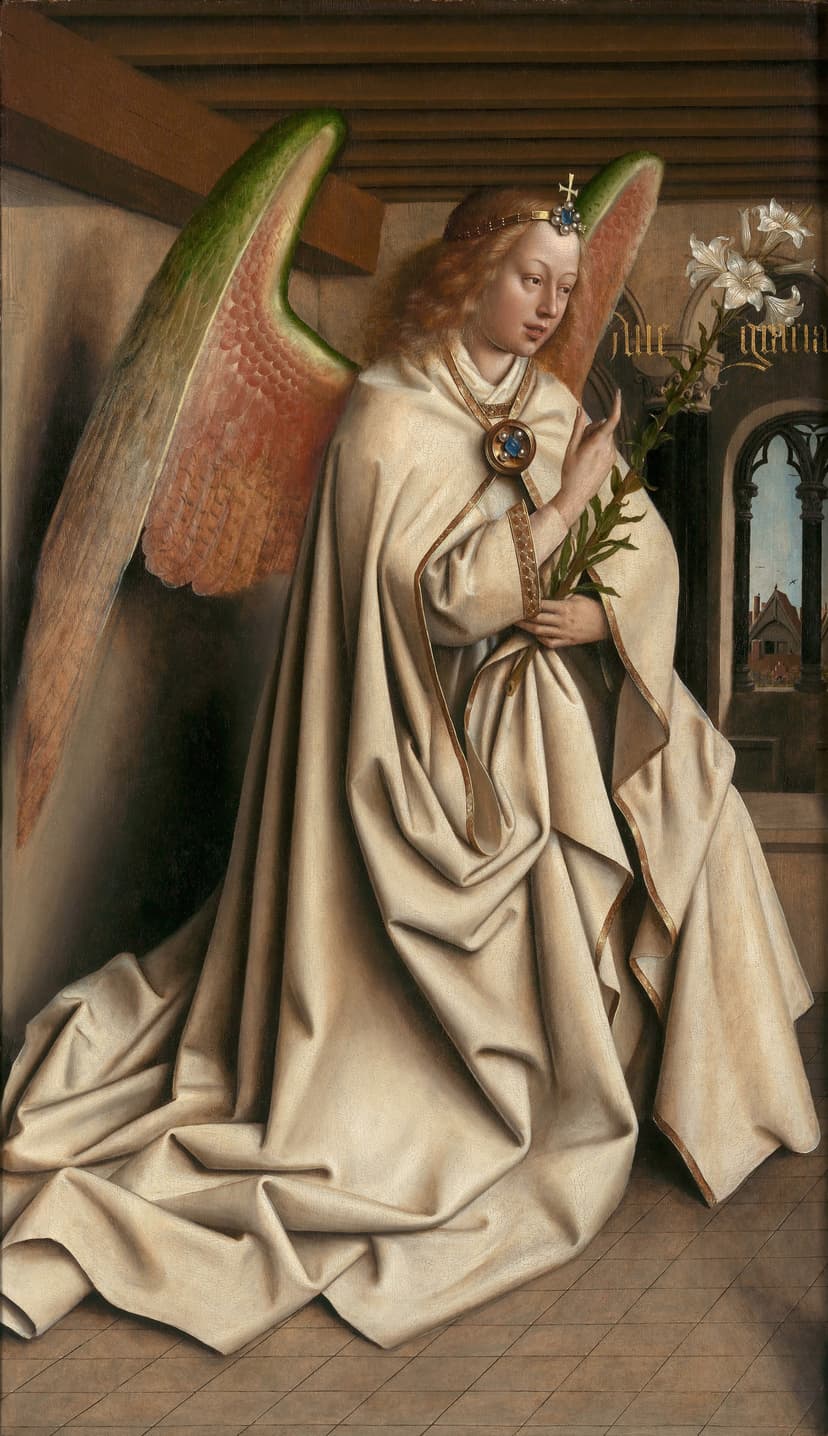
Gabriel
Gabriel is an archangel venerated in Abrahamic religions, primarily serving as God's messenger. He is known for announcing divine will and significant events, such as the births of John the Baptist and Jesus. Gabriel plays a crucial role in interpreting visions and is considered a guardian angel in some traditions.
Fallen angels
Fallen Angels are celestial beings who, in various religious traditions, are believed to have rebelled against divine authority and subsequently been cast out from heaven. Their primary roles are often depicted as adversaries to good, tempting humanity or actively opposing divine will. Their significance lies in theological discussions of free will, sin, and the cosmic struggle between good and evil.
Manda d-Hayyi
Manda d-Hayyi is a prominent angel (uthra) in Mandaeism, revered as the "Gnosis of Life" or "Knower of Life." Sent by the Great Life (Hayyi Rabbi), Manda d-Hayyi serves as a divine messenger, bringing essential knowledge and gnosis to Earth. He is considered the most important uthra, playing a significant role in Mandaean cosmology and theology, particularly in relation to John the Baptist and the transmission of sacred wisdom.