
Manda d-Hayyi
Manda d-Hayyi is a prominent angel (uthra) in Mandaeism, revered as the "Gnosis of Life" or "Knower of Life." Sent by the Great Life (Hayyi Rabbi), Manda d-Hayyi serves as a divine messenger, bringing essential knowledge and gnosis to Earth. He is considered the most important uthra, playing a significant role in Mandaean cosmology and theology, particularly in relation to John the Baptist and the transmission of sacred wisdom.
Key Facts
- ›Manda D-Hayyi is an uthra (angel or guardian) in Mandaeism.
- ›He is described as the messenger of the Great Life (Hayyi Rabbi, the transcendent God).
- ›Manda D-Hayyi is credited with bringing "manda" (knowledge or gnosis) to Earth.
- ›He is depicted as a small boy aged three years and one day in some texts.
- ›Manda D-Hayyi has been known to journey into the World of Darkness to confront demons.
- ›He is sometimes identified with or related to Hibil Ziwa.
Manda ḏ-Hiia, Yuzaṭaq Manda d-Hayyi, Yuzaṭaq Manda ḏ-Hiia
Messenger, Bringer of Gnosis/Knowledge
Light, Life, Water, Flame
Radiance, Great Attire, Staff of Living Water, Wreath of the Living Flame, Armor of the Great Ones, Mace, Veil, Robe of the Great Ones
Right Ginza, Mandaean Book of John, Book 3 of the Right Ginza, Book of John, the Baptism of Hibil Ziwa
Knowledge, Gnosis
Hayyi Rabbi, John the Baptist, Ruha, Gaf, Yushamin, NṣAb Ziwa, Hibil Ziwa, Adam Kasia, Abatur, Raziel
About Manda d-Hayyi
Manda d-Hayyi, also known as Manda ḏ-Hiia, is a central angelic figure, or uthra, within the Mandaean religion. His name translates to "Gnosis of Life" or "Knower of Life," highlighting his paramount role as a conduit of divine knowledge to the earthly realm. Sent by the supreme deity, the Great Life (Hayyi Rabbi), Manda d-Hayyi is considered the most important uthra because he brings "manda" (knowledge or gnosis) to Tibil, the Mandaean term for Earth.
Role and Significance
Manda d-Hayyi's primary function is that of a divine messenger, tasked with imparting wisdom and understanding to humanity. He is notably associated with John the Baptist, with some Mandaean texts describing Manda d-Hayyi appearing to John as a young boy, who is then baptized by John. This interaction underscores Manda d-Hayyi's importance in the transmission of spiritual teachings within Mandaean tradition.
Journeys and Conflicts
The lore surrounding Manda d-Hayyi includes accounts of his journeys into the World of Darkness, the Mandaean underworld. In these perilous expeditions, he confronts and triumphs over demonic entities such as Gaf and other demons. These narratives emphasize his strength and divine authority in overcoming malevolent forces.
Relationships and Parallels
Manda d-Hayyi's identity and role are sometimes intertwined with other significant figures. He is occasionally identified with or portrayed as closely related to Hibil Ziwa, another important uthra. The exact nature of this relationship varies across texts, with Manda d-Hayyi sometimes named as Hibil's father, and at other times Hibil being described as Manda d-Hayyi's son.
Comparisons have also been drawn between Manda d-Hayyi and the angel Raziel in Jewish Kabbalah. Both figures are depicted as intermediaries who convey esoteric knowledge and divine secrets to humanity, with Raziel delivering the "Sefer Raziel" to Adam and Manda d-Hayyi instructing him in Mandaean tradition. This parallel highlights a shared theme of divine knowledge transmission across different esoteric traditions.
Symbolism and Attributes
Manda d-Hayyi is associated with potent symbolic "weapons" that represent his divine power and spiritual authority. These include "Radiance and Light (Ziwa u Nhūra)," a "margna (staff) of Living Water (Mia Hiia)," and the "wreath of the Living Flame (ʿŠata Haita)," among other divine accouterments. These elements underscore his celestial nature and his role as a protector and guide.
Source: Wikipedia ↗
Frequently Asked Questions
Who is Manda d-Hayyi in Mandaeism?
Manda d-Hayyi is a significant uthra, or angel, in Mandaeism. His name translates to 'Gnosis of Life' or 'Knower of Life,' signifying his role as a bringer of divine knowledge.
What is the primary role of Manda d-Hayyi?
Manda d-Hayyi's primary role is to act as a messenger from the Great Life (Hayyi Rabbi) to humanity. He delivers essential knowledge and gnosis to Earth, making him the most important uthra in this regard.
How is Manda d-Hayyi depicted in Mandaean texts?
In some Mandaean texts, such as the Right Ginza, Manda d-Hayyi is depicted as a "small boy aged three years and one day." He is also shown undertaking journeys into the World of Darkness to confront demons.
What is Manda d-Hayyi's relationship with John the Baptist?
Manda d-Hayyi is sent as a messenger to John the Baptist in Mandaean tradition. In one account, John the Baptist baptizes Manda d-Hayyi, after which John is taken to the World of Light.
Are there any connections between Manda d-Hayyi and other angelic figures?
Manda d-Hayyi is sometimes identified with or related to Hibil Ziwa, another important figure in Mandaeism. Their relationship is described in various ways, including as father and son or as the same entity in different contexts.
What are the symbolic weapons of Manda d-Hayyi?
According to the Right Ginza, Manda d-Hayyi's "weapons" include Radiance and Light, a great attire, the staff of Living Water, the wreath of the Living Flame, and the armor of the Great Ones.
Related Angels

Uthra
Uthras are divine messengers of light within Mandaeism, often translated as 'excellency' or 'angelic guardian.' These benevolent, ethereal beings reside in celestial dwellings in the World of Light, communicating telepathically, and can also serve as guides or messengers for souls. They are comparable to the Yazatas in Zoroastrianism and are a fundamental aspect of Mandaean cosmology.
Yukabar
Yukabar is an uthra, or angel, originating from the Mandaean World of Light. He is recognized as the envoy of life, tasked with raising souls, and is also known by variations of his name that include "Manda-Hiia" or "Ziwa."
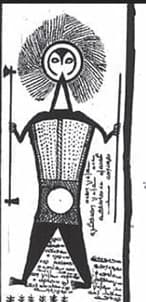
Hibil Ziwa
Hibil Ziwa is a significant angelic being (uthra) in Mandaeism, originating from the World of Light. He is considered the Mandaean equivalent of the archangel Gabriel and is known for his descent into the World of Darkness to conquer its rulers and restore cosmic balance. Hibil Ziwa plays a crucial role in Mandaean cosmology, particularly in narratives of purification and salvation.