
Abatur
Mandaean·Uthra
Angels are celestial beings found in various religious traditions, often serving as intermediaries between the divine and the mortal realms. Their roles vary from messengers and guardians to warriors and judges, playing significant roles in theology and mythology across Abrahamic and other faiths.
Key Facts
- ›Abatur is an uthra, a Mandaean term for angels or guardians.
- ›His name translates to 'father of the Uthras'.
- ›He is known as the 'Ancient' (ˁattīqā) and 'the deeply hidden and guarded'.
- ›Abatur is described as the son of Yushamin, the first emanation of Hayyi Rabbi.
- ›He has two personae: Abatur Rama and Abatur of the Scales.
- ›Abatur of the Scales weighs the souls of the dead to determine their fate.
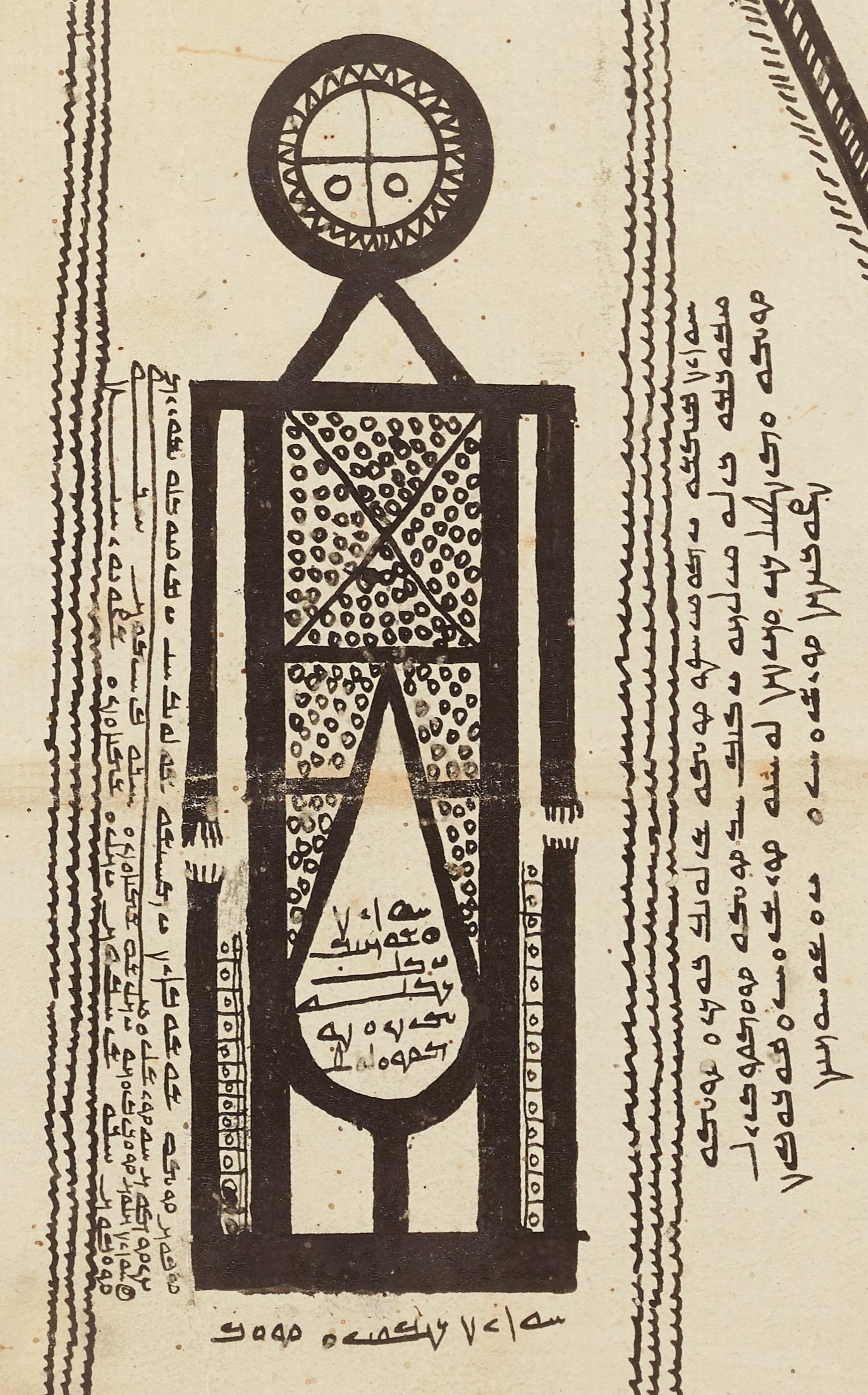
Abathur, Awāthur, The Ancient (ˁattīqā), The deeply hidden and guarded, Third Life, Bhaq Ziwa
- Weighs the Souls of the Dead
- Judge of the Dead
- Facilitates the Creation of the Material World
Polaris, Void, Muddy Black Water
Scales, Reflection
Qulasta
Purity
Hayyi Rabbi, Yushamin, Hibil, Ptahil, Manda D-Hayyi, Primordial Adam
- Depicted In Mandaean Illustrated Diwans
- Faces Divided Into Quarters, With Eyes In Lower Sections
About Abatur
Abatur is a prominent spiritual entity within the Mandaean religion, a Gnostic tradition that originated in the Near East. He is recognized as an "uthra," which in Mandaean cosmology refers to angels or divine guardians. Abatur holds a significant position as the second of three subservient emanations created by Hayyi Rabbi, the supreme "Great Living God" in Mandaean belief.
Role and Significance
His name, Abatur, is etymologized as meaning "father of the Uthras" or "father of the excellencies." He is also known by epithets such as the "Ancient" (ˁattīqā) and "the deeply hidden and guarded." A crucial aspect of Abatur's role is his function as the judge of the dead. In this capacity, he presides over the weighing of souls, meticulously assessing their purity to determine their fate and their potential to return to the World of Light.
Abatur is understood to exist in two distinct personae: Abatur Rama, the celestial or "lofty" Abatur, and Abatur Muzania, also known as Abatur of the Scales, who performs the vital task of judging souls. His influence extends to the creation of the material world. Abatur is considered the progenitor of Ptahil, the Mandaean demiurge, to whom Abatur provided the divine instructions, materials, and even assistance from beings of the World of Darkness to fashion the physical realm, known as Tibil.
Depiction and Location
Abatur is described as residing in a liminal space on the borderland between the World of Light and the World of Darkness, at the periphery of the World of Light that faces the lower regions. In surviving Mandaean imagery, particularly within illustrated texts like the Diwan Abatur, he is depicted seated on a throne. These depictions are characterized by a non-representational, blocky style, and Abatur, along with other celestial beings, is shown without material bodies. A notable feature in some depictions is a face divided into quarters, with eyes in the lower sections, which has been interpreted as signifying his constant observation of the earthly realm.
Connections and Variants
While primarily a Mandaean figure, a name similar to Abatur, "Abiṭur," has been found in Jewish contexts, appearing on an incantation bowl and in the magical text Sefer HaRazim as an angelic figure in the first heaven. Abatur is also referred to as "the Third Life" and is sometimes identified with the angel of Polaris. His interactions with other key Mandaean figures, such as Hibil, Ptahil, and Primordial Adam, highlight his central place in Mandaean narratives concerning cosmology, creation, and the afterlife.
Source: Wikipedia ↗
Frequently Asked Questions
What is Abatur's role in Mandaeanism?
Abatur is a central spiritual figure in Mandaeanism, serving as the "father of the Uthras" (angels or guardians) and acting as the judge of the dead. He weighs the souls of deceased individuals to determine their fate and their eligibility to return to the World of Light.
What does Abatur's name mean?
Abatur's name translates to "father of the excellencies" or, more commonly, "father of the Uthras," where 'uthra' refers to Mandaean angels or guardians. He is also referred to by epithets such as the Ancient (ˁattīqā).
Are there different forms of Abatur?
Yes, Abatur exists in two distinct personae. These are Abatur Rama, described as the 'lofty' or celestial Abatur, and Abatur Muzania, also known as Abatur of the Scales, who is responsible for weighing the souls of the dead.
What is Abatur's connection to the creation of the material world?
Abatur is identified as the source of Ptahil, the demiurge figure in Mandaean cosmology. Abatur provided Ptahil with precise instructions, materials, and even assistance from demons to create the material world, known as Tibil.
Where does Abatur reside?
Abatur is described as residing on the borderland between the World of Light and the World of Darkness. This location is situated at the farthest verge of the World of Light, extending towards the lower regions.
Is Abatur mentioned in any Jewish texts?
A name possibly related to Abatur, "Abiṭur," has been found in a Jewish incantation bowl. In the Jewish magical text Sefer HaRazim, Ibiṭur is named as an angel serving the angelic prince Asimur in the first heaven.
Related Angels
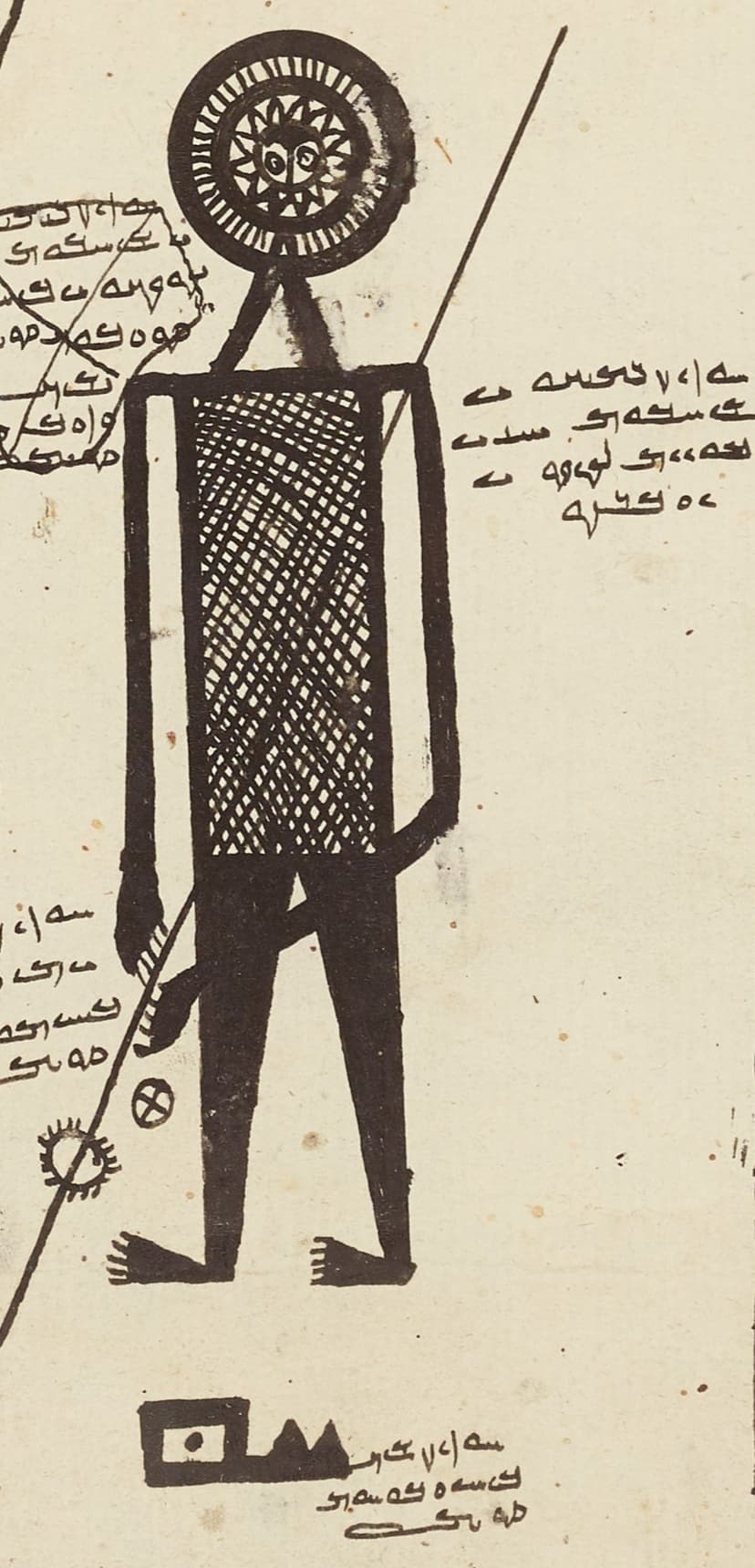
Bihram Rabba
Bihram Rabba, often referred to as "Bihram the Great," is a significant uthra, or angel, within Mandaeism. He presides over the masbuta, the Mandaean baptismal ritual, and plays a role in Mandaean scriptures where he is depicted as assisting in a rebellion against Yushamin and his sons. His name likely originates from Persian royal names.
Hibil Ziwa
Hibil Ziwa is a significant angelic being (uthra) in Mandaeism, originating from the World of Light. He is considered the Mandaean equivalent of the archangel Gabriel and is known for his descent into the World of Darkness to conquer its rulers and restore cosmic balance. Hibil Ziwa plays a crucial role in Mandaean cosmology, particularly in narratives of purification and salvation.
Sheetil
Sheetil is an uthra, or guardian angel, originating from the World of Light within Mandaeism. Considered the Mandaean equivalent of Seth, Sheetil is depicted as a son of the first Adam and a teacher of John the Baptist. This angelic figure played a role in revealing Mandaean teachings.