
Yushamin
Yushamin is a primal uthra (angel) in Mandaeism, created by the supreme deity 'The Great Life' (Hayyi Rabbi). He is considered the 'Second Life' and is the father of Abatur. Yushamin is significant for initiating the creation of the material world through a rebellion against the King of Light, though he is later reconciled.
Key Facts
- ›Yushamin is a primal uthra, or angel, in Mandaeism.
- ›He is also known as the 'Second Life' and an emanation of the 'Great Life' (Hayyi Rabbi).
- ›Yushamin initiated the creation of the material world through a rebellion with his sons.
- ›He is depicted as the father of Abatur.
- ›Yushamin is seen as a prototype of a priest who makes ritual errors.
Second Life, Yushamin Dakia, Yushamin the Pure, Yushamin the Peacock, Yushamin, son of Dmut-Hiia
Primal Emanation, Initiator of Material Creation, Prototype Priest
Peacock
Right Ginza, Book of John, Qulasta
'the Great Life', Abatur, Dmut-Hiia, Hibil Ziwa, Ptahil, Yukashar, Yukabar, EtinṣIb Ziwa, Sam, Nbaṭ, NṣAb Ziwa, Manda D-Hayyi, Sophia
About Yushamin
Yushamin is a significant figure in Mandaeism, recognized as a primal uthra, or angel, and an emanation of the supreme deity, known as 'The Great Life' or Hayyi Rabbi. He is also referred to as the 'Second Life' and is considered the father of Abatur, another key figure in Mandaean cosmology.
Role in Creation and Rebellion
Yushamin's most notable role is his initiation of the creation of the material world (tibil). According to Mandaean scriptures, such as the Right Ginza and the Book of John, Yushamin and his sons decided to participate in creation without consulting Hayyi Rabbi. This act is described as a rebellion against the King of Light, setting in motion the events that led to the formation of the material realm. His rebellion involved conflicts with various divine beings, including the King of Air, and resulted in him being bound by Hayyi Rabbi. Despite his transgressions, Yushamin is later reconciled and his petition for forgiveness is brought before the King of Light.
Symbolic Representation and Ritual Significance
Yushamin is known by several epithets, including 'Yushamin the Peacock' and 'Yushamin the Pure'. The connection between the Mandaean 'Peacock Angel' and the Yezidi deity Tawûsî Melek has been noted by scholars. In addition to his cosmological role, Yushamin serves as a spiritual prototype for priests who make errors in ritual practice, as documented in ritual instruction texts. His story is sometimes paralleled with the Gnostic figure of Sophia, who also sought to create without divine consent, leading to the material world's existence.
Source: Wikipedia ↗
Frequently Asked Questions
Who is Yushamin in Mandaeism?
Yushamin is a primary angel or uthra in Mandaeism, considered the 'Second Life' and an emanation of the supreme deity, 'The Great Life' (Hayyi Rabbi). He plays a crucial role in the Mandaean cosmology, particularly in the creation of the material world.
What is Yushamin's role in the creation of the material world?
Yushamin, along with his sons, initiated the creation of the material world (tibil) by deciding to participate in creation without consulting 'The Great Life'. This act is described as a rebellion against the King of Light.
What are Yushamin's epithets or other names?
Yushamin is referred to by several epithets, including 'the Second Life', 'pure Yushamin', 'Yushamin the Peacock', and 'Yushamin, son of Dmut-Hiia'. In Mandaean prayers, he is often called 'Yushamin the Pure'.
What is the significance of Yushamin's rebellion?
Yushamin's rebellion led to the creation of the material world and is a central narrative in Mandaean texts like the Right Ginza and the Book of John. Despite his actions, he is eventually reconciled, though his story also serves as a cautionary tale.
What is the connection between Yushamin and Abatur?
Yushamin is identified as the father of Abatur, who is also known as the Third Life in Mandaean cosmology. This lineage highlights Yushamin's foundational role in the unfolding of divine emanations.
How is Yushamin seen in relation to priestly duties?
According to ritual instruction documents, Yushamin serves as a spiritual prototype for a priest who makes mistakes or errors while conducting rituals. This reflects his own complex role in Mandaean narratives.
Related Angels
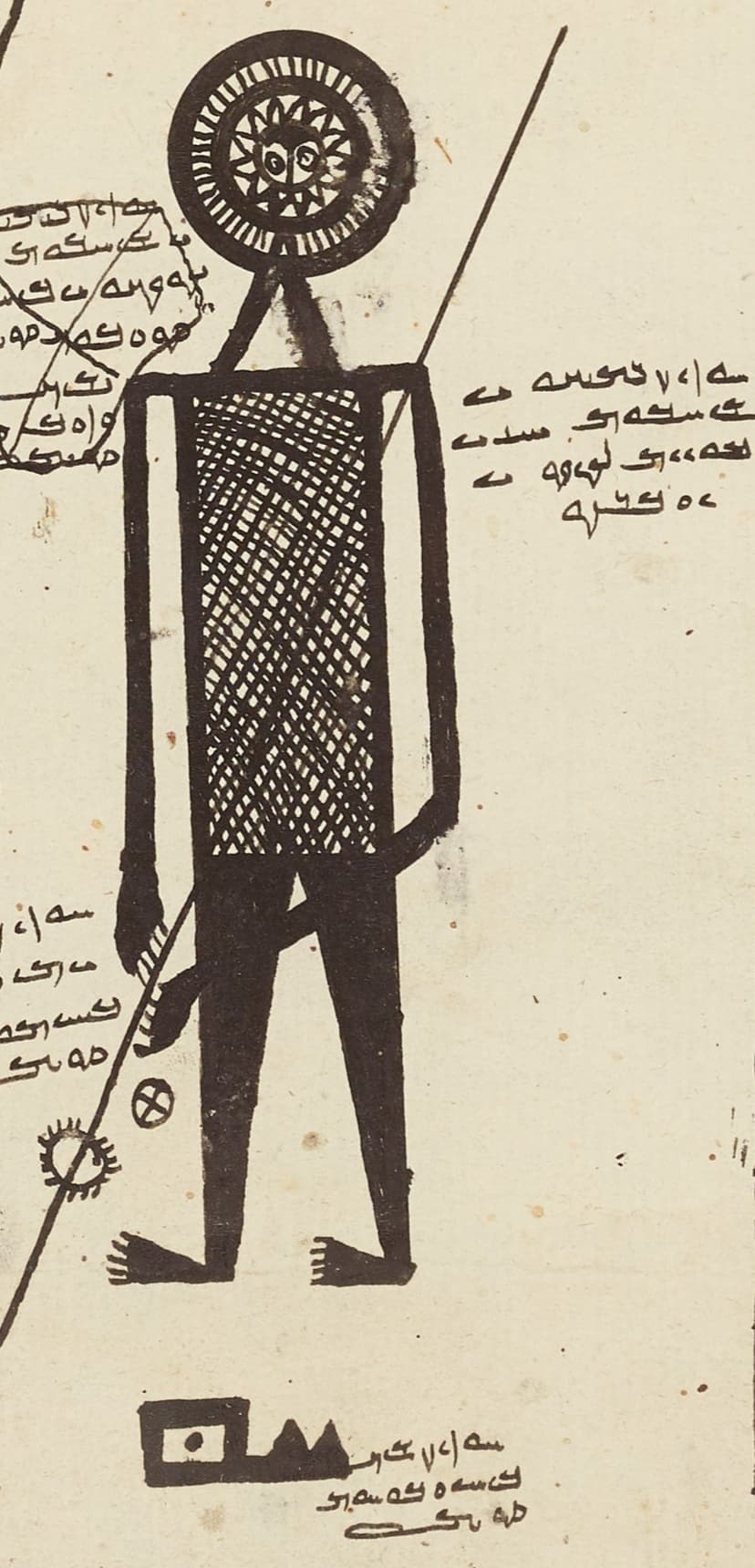
Bihram Rabba
Bihram Rabba, often referred to as "Bihram the Great," is a significant uthra, or angel, within Mandaeism. He presides over the masbuta, the Mandaean baptismal ritual, and plays a role in Mandaean scriptures where he is depicted as assisting in a rebellion against Yushamin and his sons. His name likely originates from Persian royal names.
Hibil Ziwa
Hibil Ziwa is a significant angelic being (uthra) in Mandaeism, originating from the World of Light. He is considered the Mandaean equivalent of the archangel Gabriel and is known for his descent into the World of Darkness to conquer its rulers and restore cosmic balance. Hibil Ziwa plays a crucial role in Mandaean cosmology, particularly in narratives of purification and salvation.
Sheetil
Sheetil is an uthra, or guardian angel, originating from the World of Light within Mandaeism. Considered the Mandaean equivalent of Seth, Sheetil is depicted as a son of the first Adam and a teacher of John the Baptist. This angelic figure played a role in revealing Mandaean teachings.