
Tawûsî Melek
Yazidism·Leader of the Archangels
Tawûsî Melek, also known as Melek Taûs or the Peacock Angel, is a central figure in Yazidism and shares similarities with beliefs in Yarsanism. He is considered an emanation of God, the leader of the archangels, and the lord responsible for the world's affairs. Contrary to misconceptions, Yazidis do not view him as a fallen or evil entity, but as a benevolent being entrusted with creation and earthly matters.
Key Facts
- ›Tawûsî Melek is the leader of the seven Divine Beings or seven Angels in Yazidi creation stories.
- ›He is responsible for all occurrences in the world, both good and bad, and is seen as an emanation of God.
- ›The peacock is the sacred symbol of Tawûsî Melek, representing the diversity and colorfulness of nature.
- ›The rainbow is linked to Tawûsî Melek, believed to signify his blessing.
- ›Yazidis are forbidden from harming peacocks, as they are considered sacred.
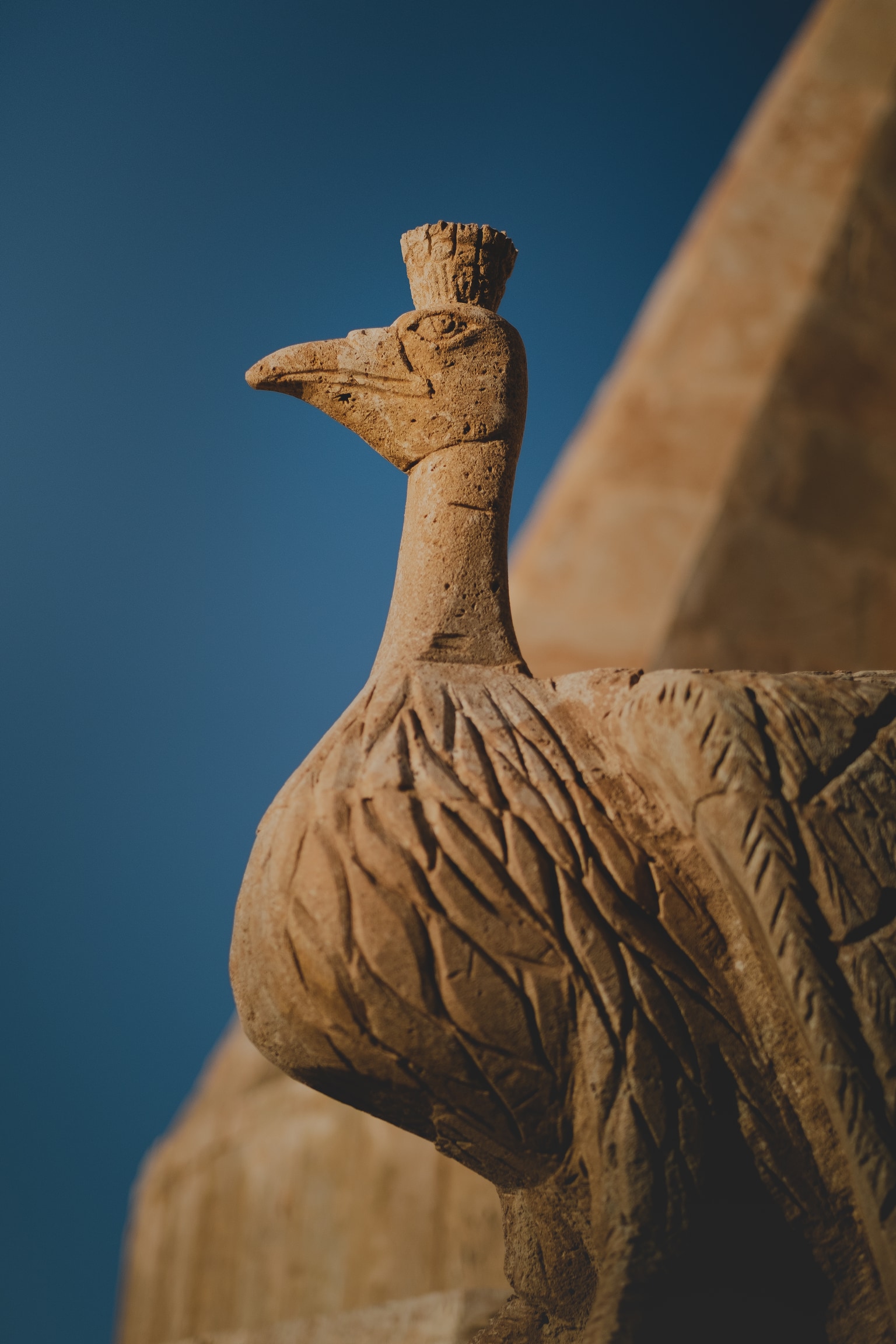
Melek Taûs, Peacock Angel
Leader of the Seven Angels, Lord of This World, Guardian of the World, Creator of the Cosmos
Light, Nature, Rainbow, Sun
Peacock, Rainbow, 365/366 Lamps
Benevolence, Purity, Obedience To God
God, Seven Divine Beings, Sheikh Adi Ibn Musafir, Malak Tawus, Satan, Iblis, Ezrayil, Ezazil
- Iconography of Peacocks Adorning Yazidi Sanctuaries, Shrines, Homes, and Centers.
- the Peacock's Radiating Feathers Symbolizing the Sun's Rays.
About Tawûsî Melek
Tawûsî Melek: The Peacock Angel of Yazidism
Tawûsî Melek, commonly known as the Peacock Angel, is a paramount spiritual figure within the Yazidi faith. In Yazidi cosmology, God created seven Divine Beings, with Tawûsî Melek appointed as their leader. These seven beings, also referred to as the Seven Angels or 'heft sirr' (the Seven Mysteries), were entrusted with overseeing the affairs of the world.
Role and Nature
Yazidi beliefs posit Tawûsî Melek as the Lord of this World, responsible for all events, both positive and negative. He is understood not as an entity of evil, but as a benevolent angel and an emanation of God himself, who passed a test and subsequently created the cosmos from a cosmic egg. Tawûsî Melek is described as eternal and an eternal light, embodying the divine power that emanates through nature.
Symbolism and Sacredness
The peacock is the sacred symbol of Tawûsî Melek, its vibrant plumage representing the diversity and colorfulness of the natural world. The radiating feathers of its tail are interpreted as a symbol of the sun's life-giving rays. Consequently, the peacock is revered, and Yazidis are strictly forbidden from hunting, eating, cursing, or mistreating these birds. Images of peacocks are ubiquitous in Yazidi holy sites, such as Lalish, as well as in the homes of the faithful.
Festivals and Traditions
The descent of Tawûsî Melek to Earth as light, signaling the renewal of life and the burgeoning of spring, is believed to occur on the first Wednesday of Nîsan (Eastern April). This day marks the Yazidi New Year, known as Sersal. On the eve of this festival, 365 or 366 lamps are lit, symbolizing the number of days in a year and Tawûsî Melek's blessing upon the Earth.
Misconceptions and Persecution
Due to theological differences, particularly concerning the concept of Satan, Tawûsî Melek has been erroneously associated with evil by followers of Abrahamic religions, leading to centuries of persecution for the Yazidi people. Yazidis do not possess the same concept of Satan as found in Judaism, Christianity, and Islam. Their theological framework views humans as responsible for their own moral failings and emphasizes God-given free will, rather than attributing evil to an independent entity like Satan or a fallen angel. Tawûsî Melek is considered a leader of archangels, not a disgraced or fallen one.
Source: Wikipedia ↗
Frequently Asked Questions
Who is Tawûsî Melek in Yazidism?
Tawûsî Melek is a central figure in Yazidism, considered an emanation of God and the leader of the archangels. He is entrusted with the care of the world and is responsible for all that happens on it, both good and bad.
What is the significance of the peacock for Tawûsî Melek?
The peacock is the sacred symbol of Tawûsî Melek. Its colorful feathers are believed to represent the diversity of nature, and its unfurling tail symbolizes the sun's life-giving rays. Peacocks are considered sacred and Yazidis are forbidden from harming them.
Is Tawûsî Melek considered an evil figure like Satan?
No, Yazidis firmly believe Tawûsî Melek is not a source of evil or wickedness. He is considered a benevolent angel and an emanation of God, and Yazidis do not worship Satan. Misconceptions linking him to Satan have led to persecution.
When is Tawûsî Melek believed to descend to Earth?
The first Wednesday of Nîsan (Eastern April) is believed to coincide with Tawûsî Melek's descent to Earth as light, bringing the New Year and renewal of life. This day is celebrated as Sersal, the Yazidi New Year.
What is the connection between Tawûsî Melek and Sheikh Adi Ibn Musafir?
Yazidis believe that Sheikh Adi Ibn Musafir, the founder or reformer of their religion, was an incarnation of Tawûsî Melek. This highlights the deep reverence and connection Yazidis have with the Peacock Angel.
Are there similar figures to Tawûsî Melek in other religions?
Yes, Yarsanism, a religion sharing similarities with Yazidism, has a figure named Malak Tawus. Malak Tawus is also described as pure, obedient to God, and consisting of light, though his identification shifts across different religious cycles within Yarsanism.
Related Angels
Ananiel
Ananiel is recognized as the 14th Watcher among the 20 leaders of the 200 fallen angels mentioned in the ancient Jewish text, the Book of Enoch. His name is often interpreted as "cloud of God" or "Rain of God," and he was entrusted by God with dominion over atmospheric phenomena and the trees of the earth. In some traditions, Ananiel is also revered as one of the seven holy archangels.
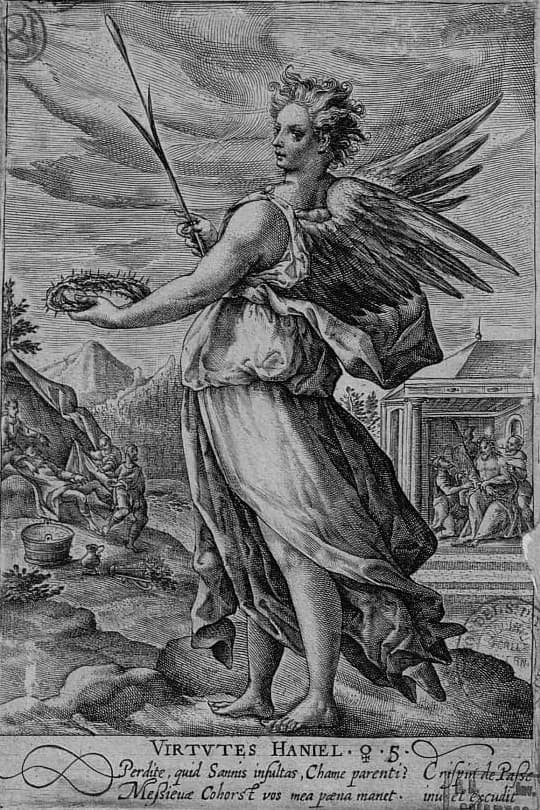
Aniel
Haniel is an angel primarily recognized in Jewish lore and angelology, often listed among the seven archangels. His name, meaning "God is my grace," connects him to concepts of favor and charm, and he is traditionally associated with the planet Venus and the sephirah Netzach. Haniel is also linked to feelings of joy.
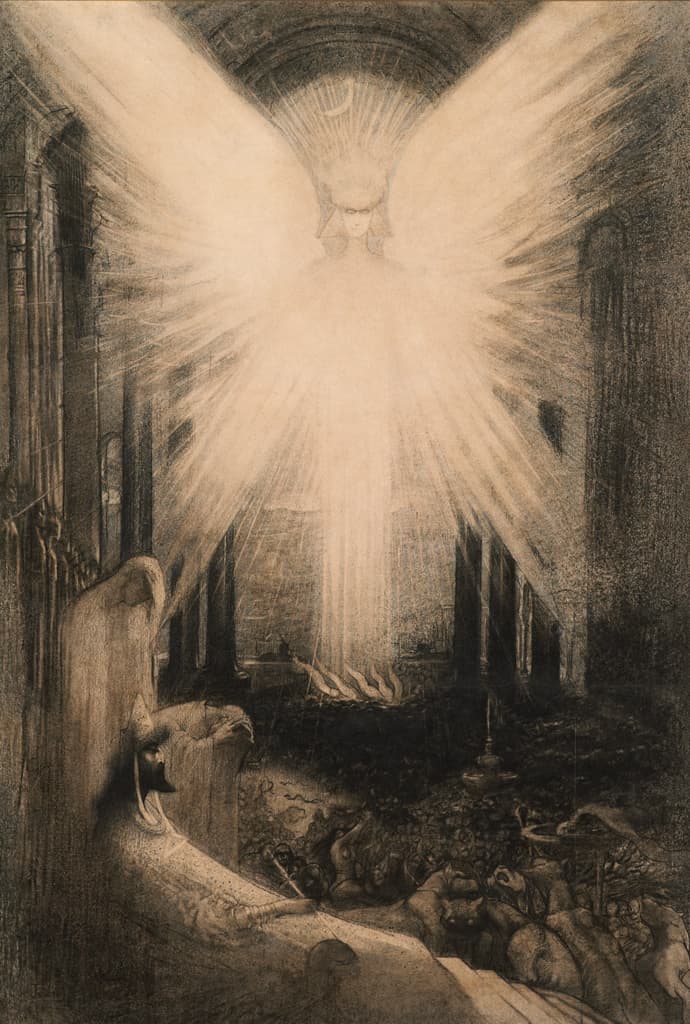
Azrael
Azrael is the canonical angel of death in Islam and appears in earlier apocryphal texts. He is depicted as a benevolent psychopomp, responsible for transporting souls after death and recording their fates. Azrael is recognized as one of the four archangels in Islam and corresponds to the Hebrew "Malakh ha-mavet" (Angel of Death).