
Azrael
Azrael is the canonical angel of death in Islam and appears in earlier apocryphal texts. He is depicted as a benevolent psychopomp, responsible for transporting souls after death and recording their fates. Azrael is recognized as one of the four archangels in Islam and corresponds to the Hebrew "Malakh ha-mavet" (Angel of Death).
Key Facts
- ›Azrael is primarily known as the angel of death in Islam.
- ›He acts as a psychopomp, guiding souls from the earthly realm to the afterlife.
- ›In Islamic tradition, Azrael holds a scroll detailing the lifespan of mortals, recording and erasing their names.
- ›He is considered one of the four major archangels in Islam.
- ›Azrael is identified with the Quranic Malak al-Mawt, the 'Angel of Death'.
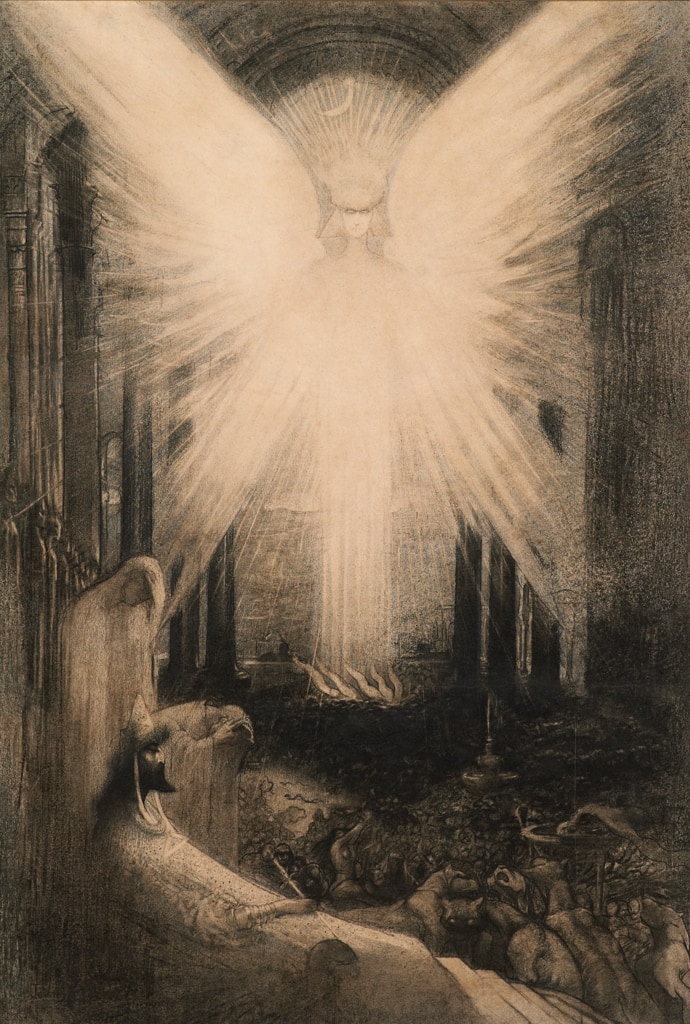
Malak al-Mawt, Mal'akh ha-Maweth, Angel of Death
Angel of Death, Psychopomp, Soul Transporter, Recorder of Fates
Scroll of Fate, Flaming Whip, Ram
Quran 32:11, Quran 6:61, Apocalypse of Peter
Gabriel, Michael, Israfil, Adam, Samael, Grim Reaper
- Leigh Hunt's 'Azrael'
- Henry Wadsworth Longfellow's 'the Reaper and the Flowers'
- G.K. Chesterton's 'Lepanto'
- Gargamel's Cat In 'the Smurfs'
- Jason Lee's Portrayal In 'Dogma'
- Cat In Stephen King's 'Doctor Sleep'
- Lord Asriel In Philip Pullman's 'His Dark Materials'
- Terry Pratchett's 'Reaper Man'
- Joy Williams's 'Concerning the Future of Souls'
About Azrael
Azrael is a significant figure in Islamic theology, recognized as the canonical angel of death. His name, derived from Hebrew, translates to 'God has helped' or 'Help from God.' While he appears in earlier apocryphal texts like the Apocalypse of Peter, his most prominent role is within Islam, where he functions as a benevolent psychopomp, responsible for guiding the souls of the deceased after their departure from the mortal realm.
Role and Significance
In Islamic tradition, Azrael is one of the four major archangels, alongside Gabriel, Michael, and Israfil. He is identified with the Quranic term 'Malak al-Mawt,' meaning 'Angel of Death.' His primary duty involves taking souls from their bodies, but he acts solely on divine instruction, informed by God when an individual's time has come. Azrael is also said to possess a scroll that records the fates of all mortals, noting their birth and death.
Depictions and Traditions
Descriptions of Azrael vary across different Islamic traditions and exegesis. Some accounts portray him as immense in size, with numerous eyes and wings, capable of dwarfing even the bearers of God's throne. He is sometimes depicted with a ram-like form or a flaming whip, and his body is said to be covered in eyes and tongues corresponding to the number of living humans. These vivid descriptions emphasize his cosmic scale and the gravity of his role. Unlike some depictions of death personified in other traditions, Azrael's function is framed within God's plan, highlighting divine justice and order.
Historical and Cultural Reception
The concept of Azrael and narratives surrounding him have also found their way into Western literature and popular culture. He has been depicted in poetry and novels, sometimes resembling the Grim Reaper, though often distinguished from more malevolent figures. His name has been adopted in various fictional works, reflecting his enduring presence as a powerful symbol of mortality and the transition between life and death.
Source: Wikipedia ↗
Frequently Asked Questions
What is the meaning of the name Azrael?
The name Azrael has Hebrew origins, translating to 'God has helped' or 'Help from God'. It is derived from the Hebrew theophoric עזראל.
Is Azrael mentioned in the Hebrew Bible?
No, the Hebrew Bible does not mention an angel by the name Azrael. It also does not appear in traditional Rabbinic literature like the Talmud or Midrashim. However, a similar name, Azriel, appears in Kabbalistic literature.
What is Azrael's role in Islam?
In Islam, Azrael is the angel of death, responsible for taking the souls of the deceased. He acts under God's command and holds a record of all human lives.
How is Azrael depicted in Islamic tradition?
Depictions vary, but some traditions describe Azrael as having a colossal size with thousands of eyes and wings. He is sometimes said to resemble a blue ram and carry a flaming whip. His body is sometimes described as being covered in eyes and tongues corresponding to the number of living humans.
Does Azrael have assistants?
Yes, Surah 6:61 in the Quran mentions a multitude of angels of death, who are interpreted as assistants to Azrael. These angels help in the process of taking souls.
Is Azrael ever depicted as a malevolent figure?
While Azrael is the angel of death, his role is generally portrayed as benevolent and divinely appointed, not malevolent. This is in contrast to figures like Samael in Jewish lore, who is sometimes depicted as a fallen and malevolent angel of death.
Related Angels
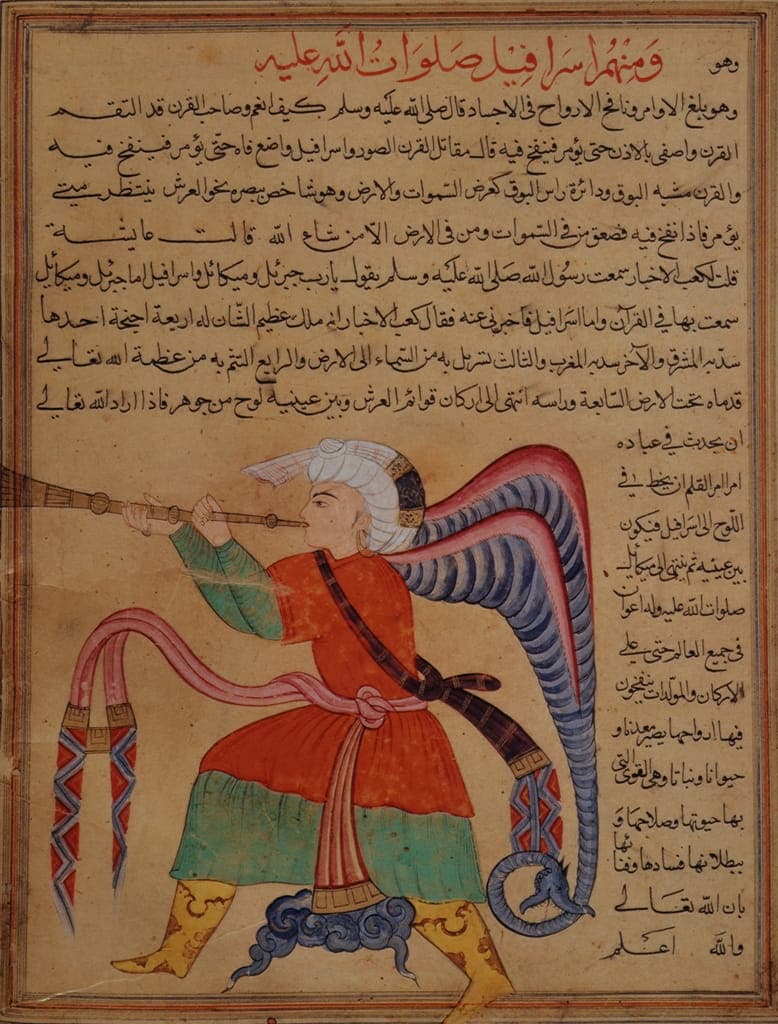
Israfil
Israfil is a principal archangel in Islamic tradition, tasked with blowing the trumpet to announce the Day of Judgment (Qiyamah). Though unnamed in the Quran, he is considered the angel closest to God and mediates divine commands to other archangels. He is often depicted as writing human destinies and is described with multiple wings, one covering his face in awe of God.
Artiya'il
Artiya'il is an angel recognized in Islamic lore, primarily known for his role in alleviating human sorrow and anxiety. He is described as an angel who removes the memories of distress and is depicted in Islamic tradition as appearing in various forms, such as a bird, to offer comfort.
Harut
Harut and Marut are a pair of angels mentioned in the Quran who, according to Islamic exegesis, were sent to Earth to test humanity. They are depicted as teaching the arts of sorcery in Babylon, with varying interpretations of whether they committed sins or if the story is allegorical. Their narrative is a subject of theological debate within Islam, concerning the infallibility of angels and the nature of divine punishment.