
Harut
Harut and Marut are a pair of angels mentioned in the Quran who, according to Islamic exegesis, were sent to Earth to test humanity. They are depicted as teaching the arts of sorcery in Babylon, with varying interpretations of whether they committed sins or if the story is allegorical. Their narrative is a subject of theological debate within Islam, concerning the infallibility of angels and the nature of divine punishment.
Key Facts
- ›Harut and Marut are two angels named in the Quran, specifically in Surah 2:102.
- ›They are associated with teaching sorcery (siḥr) in Babylon.
- ›Quranic exegesis suggests they were sent to Earth to test humanity after complaining about human wickedness.
- ›A theological dispute exists regarding their status: some believe they sinned and were punished, while others argue angels cannot sin.
- ›Alternative readings of the Quranic verse suggest they might be "two kings" who learned sorcery from devils.
- ›Their story is often linked to the angels' protest about the creation of Adam in Surah 2:30.
Hārūt wa-Mārūt
Teacher of Sorcery, Tester of Humanity
Quran Surah 2:102
Gabriel, Michael, Adam, Venus
Popular In Folklore, European-Christian Tales
About Harut
Harut and Marut
Harut and Marut are a pair of angels prominently mentioned in the Quran, specifically in Surah 2:102. Their narrative is a significant element within Islamic theology and exegesis, primarily revolving around their role in teaching the arts of sorcery (siḥr) in ancient Babylon.
Quranic Account and Exegesis
The Quranic verse states that sorcery was taught to people through what was revealed to Harut and Marut. According to classical Quranic exegesis (tafsīr), a common understanding is that these angels complained about the wickedness of humankind. In response, God sent them to Earth, endowed with human desires, to demonstrate that they too would struggle with obedience and to test humanity.
This interpretation posits that Harut and Marut committed various transgressions, including idolatry, drinking alcohol, and murder, after which they were unable to ascend back to heaven. Offered a choice between punishment on Earth or in the Hereafter, they chose the former, leading to their presence in Babylon teaching magic, but with a warning that they were a trial.
Theological Disputes
The story of Harut and Marut has been a source of theological debate among Muslim scholars. A central point of contention is the infallibility of angels. While many early commentators and a majority of scholars accept the narrative of their sins and subsequent punishment, some later theologians, particularly philosophers, argue that angels, being pure beings created for devotion, cannot commit sins. These scholars often reinterpret the Quranic verse or suggest that Harut and Marut were not angels but rather human kings who learned sorcery from devils.
Alternative readings of the Quranic verse exist. One interpretation, attributed to Hasan al-Basri, suggests that Harut and Marut were "two kings" (malikayn) rather than angels (malakayn). Another reading by Ibn Abbas interprets a word in the verse as "not" rather than "what," implying that devils taught sorcery and not what was sent down to the two angels. However, the most prevalent view in classical exegesis regards them as angels.
Connections and Origins
Harut and Marut are sometimes linked to the angels mentioned in Surah 2:30 who questioned God's decision to create Adam. In this context, their mission to Earth is seen as a means for God to demonstrate the unique qualities and capabilities of humans to the protesting angels. Some scholars also trace potential etymological links to Zoroastrian Amesha Spentas (Haurvatat and Ameretat) and parallels to stories of fallen angels in Jewish traditions, such as the Watchers in Second Temple literature. However, the specific narrative and its theological implications are largely considered unique to Islamic tradition.
Sufi Interpretations
Within Sufism, figures like Ibn Arabi have offered metaphorical interpretations of the Harut and Marut story. In this view, the "sorcery" taught by the angels represents the "theoretical" and "practical" intellect that can veil the soul from God's light, symbolized by their ability to cause separation between a husband and wife. Rumi, in his Masnavi, uses the story to caution believers against self-righteousness and criticizing others, highlighting that even those who appear pious can be blind to their own pride and failings.
Source: Wikipedia ↗
Frequently Asked Questions
Who are Harut and Marut?
Harut and Marut are a pair of angels mentioned in the Quran. They are primarily known for teaching sorcery in Babylon, according to Islamic tradition.
What is the story of Harut and Marut?
According to Quranic exegesis, Harut and Marut complained about human wickedness and were sent to Earth with desires to prove they could do better. They are said to have fallen into sin, teaching sorcery and being unable to return to heaven, ultimately choosing earthly punishment.
Are Harut and Marut considered fallen angels?
The Quran does not explicitly call them fallen angels, but the context of their story and punishment on Earth implies a fall from grace. However, some theological interpretations argue that angels are incapable of sin, leading to differing views on their status.
What is the theological significance of Harut and Marut?
Their story is a subject of theological dispute in Islam, particularly concerning the infallibility of angels. It also serves to explain the origin of magic and as a form of divine temptation.
What is the connection between Harut and Marut and the verse in Surah 2:102?
Surah 2:102 is the primary Quranic reference to Harut and Marut. The verse states that sorcery was taught to people through what was sent down to these two angels at Babylon.
Are there different interpretations of the Quranic verse about Harut and Marut?
Yes, there are different readings and interpretations. Some readings suggest Harut and Marut are 'two kings' rather than angels, and others debate the meaning of specific words within the verse, altering its implication.
Related Angels
Artiya'il
Artiya'il is an angel recognized in Islamic lore, primarily known for his role in alleviating human sorrow and anxiety. He is described as an angel who removes the memories of distress and is depicted in Islamic tradition as appearing in various forms, such as a bird, to offer comfort.
Azrael
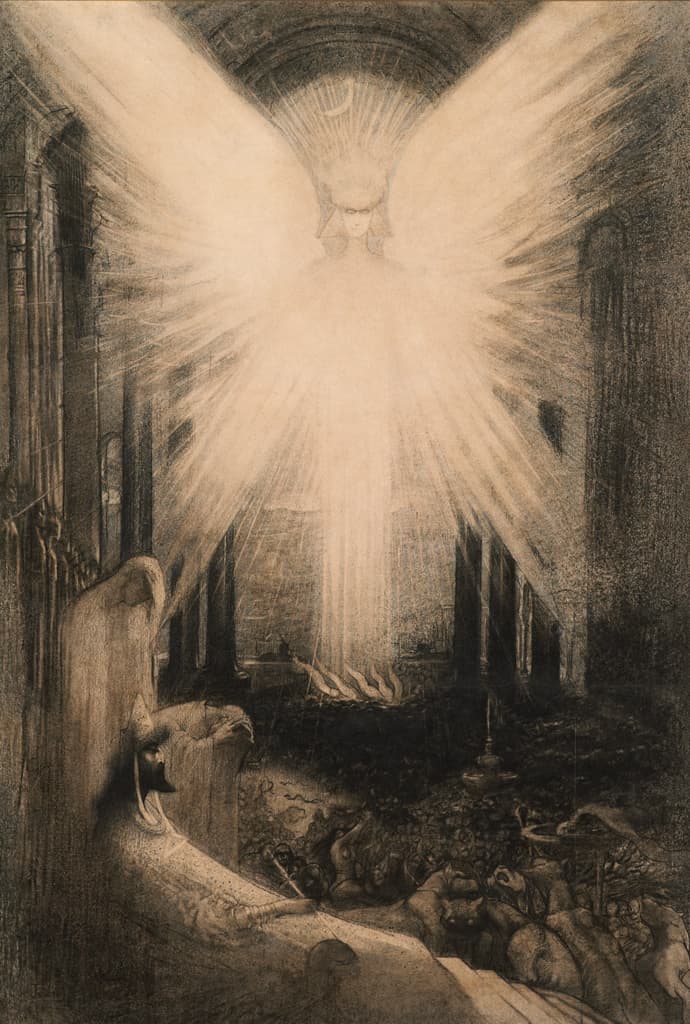
Azrael is the canonical angel of death in Islam and appears in earlier apocryphal texts. He is depicted as a benevolent psychopomp, responsible for transporting souls after death and recording their fates. Azrael is recognized as one of the four archangels in Islam and corresponds to the Hebrew "Malakh ha-mavet" (Angel of Death).
Israfil
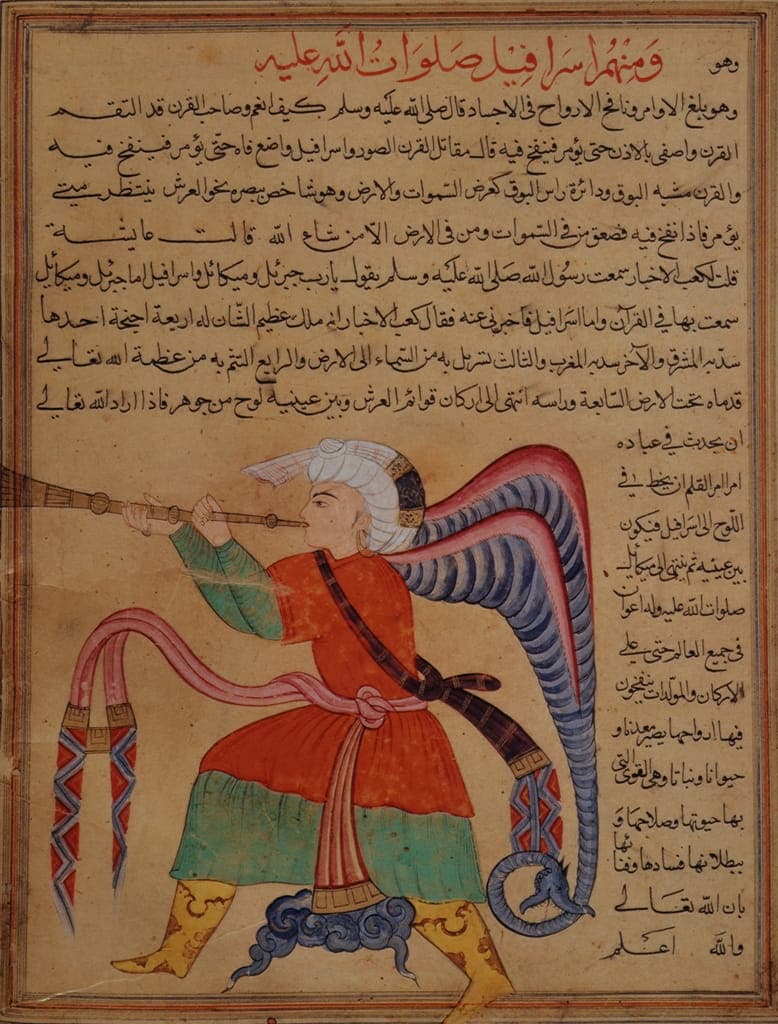
Israfil is a principal archangel in Islamic tradition, tasked with blowing the trumpet to announce the Day of Judgment (Qiyamah). Though unnamed in the Quran, he is considered the angel closest to God and mediates divine commands to other archangels. He is often depicted as writing human destinies and is described with multiple wings, one covering his face in awe of God.