
Yogmaya Temple
The Yogmaya Temple, also known as Jogmaya Temple, is a Hindu temple in Mehrauli, New Delhi, dedicated to the goddess Yogmaya, an aspect of Maya and the sister of Krishna. It is considered one of the few surviving temples from the pre-Sultanate period in India and has undergone numerous reconstructions.
Key Facts
- ›Dedicated to Goddess Yogmaya, an aspect of divine illusion and sister of Krishna.
- ›Believed to be one of the 27 temples destroyed by Mamluks, and the only surviving pre-Sultanate temple in use.
- ›Reconstructed by Hindu King Samrat Vikramaditya Hemu after its destruction.
- ›The present structure was restored in the early 19th century.
- ›It is an integral part of the inter-faith Phool Walon Ki Sair festival.
- ›Mehrauli was historically known as Yoginipura, named after this temple in 12th-century Jain scriptures.

Yogmaya
- Surviving Pre-Sultanate Period Temple Still In Use
- Historical Association With Pandavas and Samrat Vikramaditya Hemu
- Integral Part of the Phool Walon Ki Sair Festival
- Site Historically Known As Yoginipura
Navratri, Phool Walon Ki Sair
Black Stone, Marble, Red Stone, Copper
Pandavas, Samrat Vikramaditya Hemu, Akbar Ii, Lala Sethmal
Idol of Yogmaya Made of Black Stone
Anangtal Baoli
About Yogmaya Temple
The Yogmaya Temple, also referred to as Jogmaya Temple, is a significant Hindu temple located in Mehrauli, New Delhi, India, in close proximity to the Qutb complex. It is dedicated to Goddess Yogmaya, who is revered as an aspect of divine illusion and is considered the sister of Lord Krishna. The temple holds historical importance as it is believed to be one of the few surviving temples from the pre-Sultanate period that remains in active worship.
History and Significance
Local traditions and records suggest that the Yogmaya Temple was among the 27 temples destroyed by the Mamluks. Its reconstruction is attributed to the Hindu king Samrat Vikramaditya Hemu, who is credited with restoring it from ruins. Although its original architecture from its earliest period (estimated between 300-200 BCE) could not be fully reinstated after the destructions by Islamic rulers, the temple has been repeatedly reconstructed by the local community over time. Mehrauli itself is noted in 12th-century Jain scriptures as Yoginipura, a name derived from this temple.
The temple's origins are also linked to the Pandavas, who are said to have built it at the end of the Mahabharata war. More recent historical associations include Mughal Emperor Akbar II (reigned 1806–1837), whose wife sought the goddess's intervention for their son's release, leading to a vow of offering a floral punkah.
Architecture and Worship
The present structure of the Yogmaya Temple, restored in the early 19th century (specifically rebuilt in 1827), is described as a simple, contemporary design. It comprises an entrance hall and a sanctum sanctorum where the main idol of Yogmaya, carved from black stone, is housed within a marble well. The sanctum measures 17 ft square and is topped by a truncated shikara (tower) and a dome. The idol is adorned with sequins and cloth. The temple complex is enclosed by a 400 ft square wall with corner towers, and twenty-two towers were built within its precincts by Sood Mal. While bells are common in Hindu temples, they are not tolled during worship at Yogmaya Temple. Offerings of wine and meat are forbidden, as the goddess is described as austere.
Festivals and Traditions
The Yogmaya Temple is a focal point for devotees during the Navratri celebrations. It is also a crucial element of the Phool Walon Ki Sair festival, an important inter-faith event in Delhi held annually in autumn. This festival involves offering a floral punkah to the deity, a tradition that has continued for centuries. For over 5000 years, the local community has been responsible for the temple's upkeep, performing daily rituals and maintaining the premises.
Source: Wikipedia ↗
Frequently Asked Questions
What is the significance of the Yogmaya Temple?
The Yogmaya Temple is significant as one of the few surviving temples from the pre-Sultanate period in India that is still in active use. It is also historically linked to the Pandavas and was reconstructed by Hindu king Samrat Vikramaditya Hemu after its destruction by Mamluk rulers.
Who is the primary deity worshipped at Yogmaya Temple?
The primary deity worshipped at the Yogmaya Temple is Goddess Yogmaya, who is considered an aspect of Maya, the illusionary power of God. She is also believed to be the sister of Lord Krishna and an incarnation of Durga.
What is the history behind the Yogmaya Temple's destruction and reconstruction?
According to local records, the temple was among the 27 temples destroyed by the Mamluks. Hindu king Samrat Vikramaditya Hemu is credited with its reconstruction from ruins. While its original architecture could not be fully restored, locals have undertaken repetitive reconstructions over centuries.
What is the Phool Walon Ki Sair festival and its connection to the temple?
Phool Walon Ki Sair, meaning 'Festival of flower-sellers,' is an important inter-faith festival in Delhi. It involves offering a floral punkah to the deity at Yogmaya Temple, a tradition that began with Mughal Emperor Akbar II's wife praying for her son's safe return.
What are the architectural features of the Yogmaya Temple?
The present temple, rebuilt in 1827, features a simple contemporary structure with an entrance hall and a sanctum sanctorum housing the idol. It has a truncated shikara (tower) and a dome. The walled enclosure around the temple is 400 ft square with towers at the corners.
What is the origin of the name Yoginipura?
In 12th-century Jain scriptures, the area of Mehrauli where the temple is located is mentioned as Yoginipura. This name is believed to have been derived from the Yogmaya Temple itself.
Related Temples (Hindu)
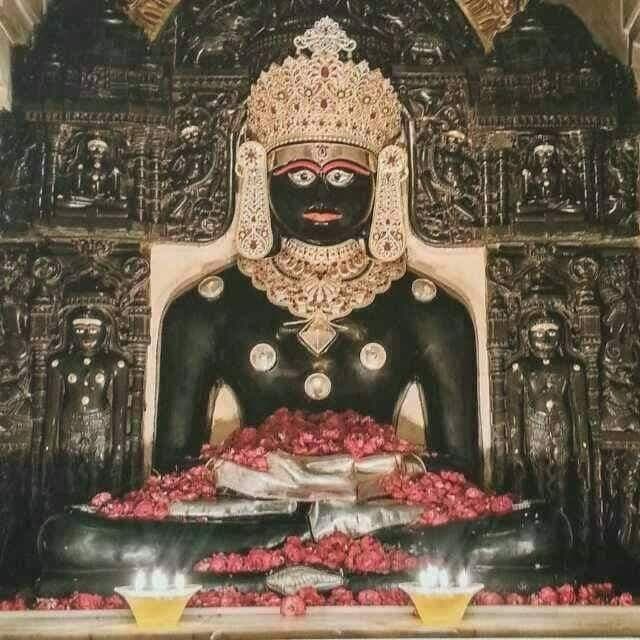
Neminath Jain Temple, Girnar
The Neminath Jain Temple, originally known as Karnavihara, is a significant Jain temple dedicated to the 24th Tirthankara, Neminatha, situated on Girnar hill in Gujarat, India. It is recognized as the foremost among the Girnar Jain temples, with its oldest existing structure dating back to the 12th century and built in the Māru-Gurjara architectural style.
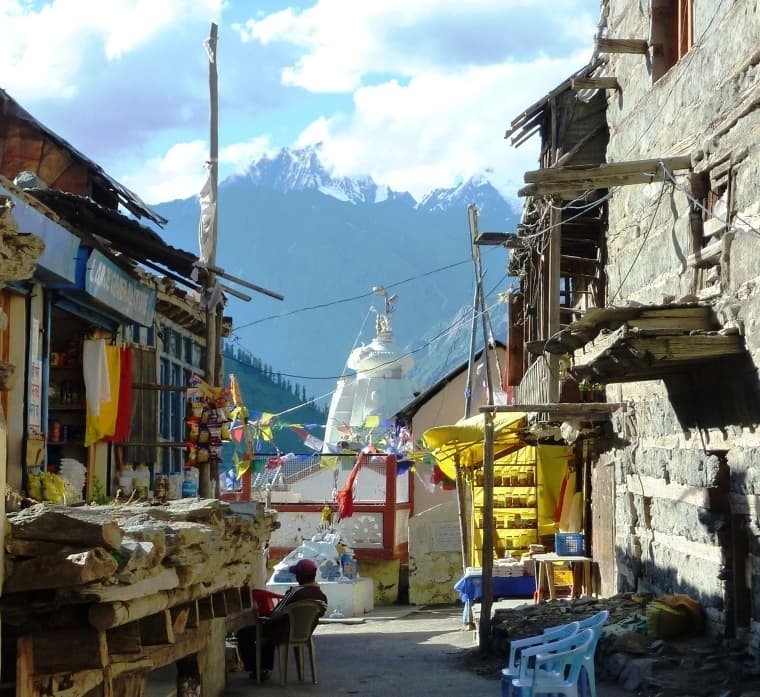
Triloknath Temple
The Triloknath Temple, located in Himachal Pradesh, India, is a significant religious site revered by both Tibetan Buddhists and Hindus. Originally believed to be a Buddhist vihara, it now houses a marble statue of Avalokiteshvara, worshipped as Shiva by Hindus and as Avalokiteshvara by Buddhists. The temple's architecture and history suggest a blend of influences, with its columns dating to the 9th century CE.
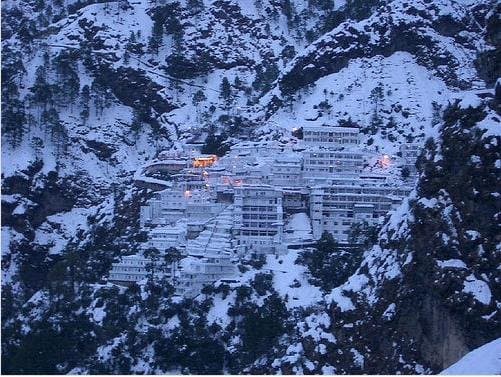
Vaishno Devi Temple
The Vaishno Devi Temple, also known as Shri Mata Vaishno Devi Temple, is a significant Hindu pilgrimage site located on Trikuta mountain in Katra, Jammu and Kashmir. Dedicated to Vaishno Devi, a manifestation of the goddesses Mahakali, Mahalakshmi, and Mahasaraswati, it is one of the most visited religious destinations in India, drawing millions of devotees annually.