
Veeraraghava Swamy Temple, Tiruvallur
The Veeraraghava Swamy Temple in Tiruvallur, Tamil Nadu, is a significant Hindu temple dedicated to Lord Vishnu, revered as Veeraraghava Perumal. Glorified in early Tamil devotional literature, it is recognized as one of the 108 Divya Desams. The temple is known for its antiquity, believed to have been initiated by the Pallavas and later contributed to by the Thanjavur Nayaks and Vijayanagara kings.
Key Facts
- ›Dedicated to Lord Vishnu, who is worshipped as Veeraraghava Perumal.
- ›Considered one of the 108 Divya Desams, sacred abodes of Vishnu.
- ›Believed to have been initiated by the Pallavas in the 8th century CE.
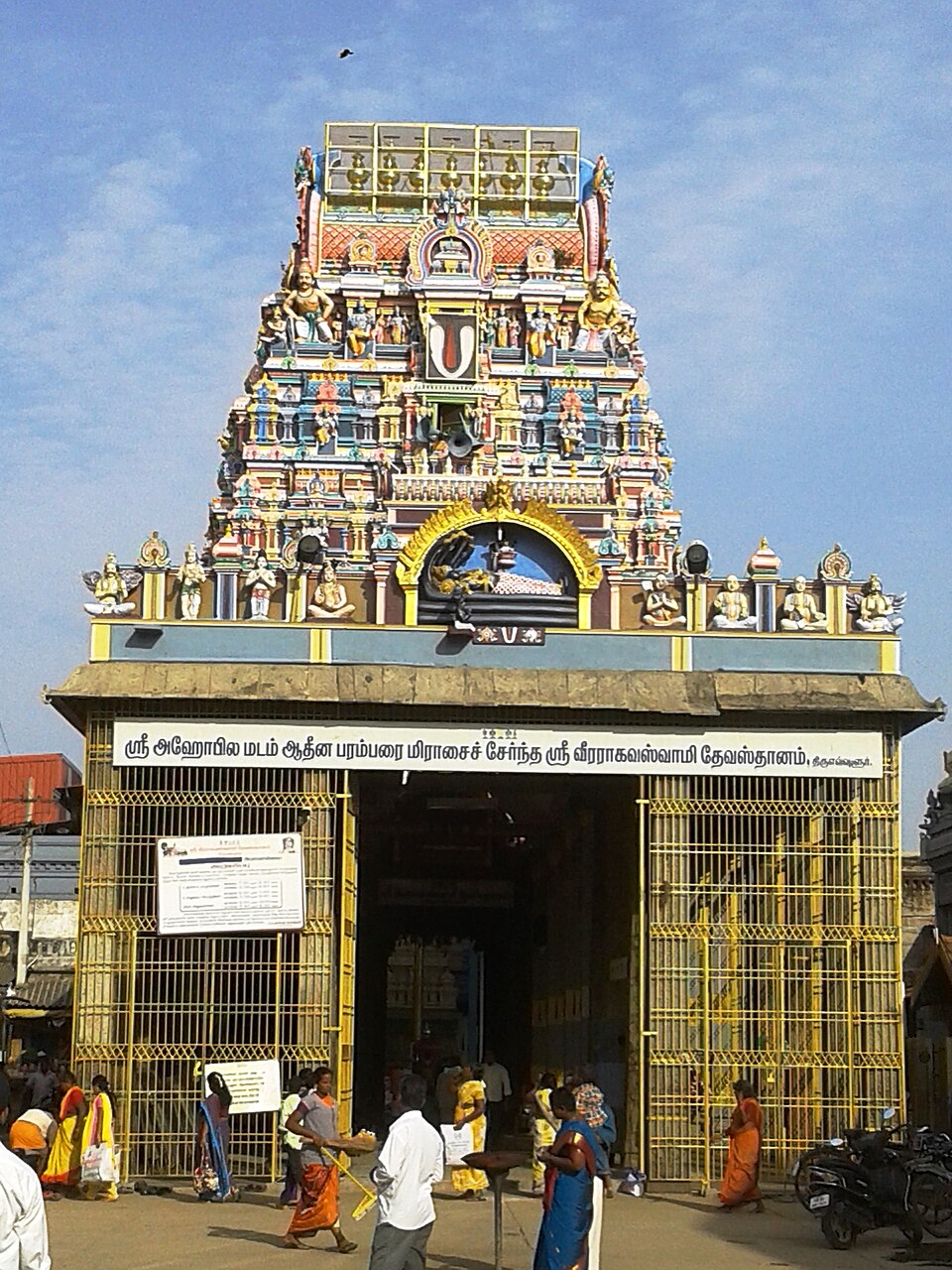
- ›Features a seven-tiered rajagopuram (gateway tower).
- ›The temple tank, Hritayathabhanasini, is noted for its size and believed medicinal properties.
- ›The temple observes six daily rituals and three major annual festivals, including the Chariot and Float festivals.
Vishnu, Veeraraghava Perumal, Kanakavalli Thayar, Lakshmi
Religious Pilgrimage Site, Historical Antiquity, Architectural Style, Believed To Cure Diseases
Pallavas, Cholas, Thanjavur Nayaks, Vijayanagara
Chariot Festival, Float Festival, Brahmotsavam, Krishna Jayanthi, Navratri, Vaikunta Ekadasi, Vijayadasami
Granite
Pallavas, Thanjavur Nayaks, Vijayanagara Kings
Hritayathabhanasini
About Veeraraghava Swamy Temple, Tiruvallur
The Veeraraghava Swamy Temple, located in Tiruvallur, Tamil Nadu, is a significant Hindu temple dedicated to Lord Vishnu, who is worshipped here as Veeraraghava Perumal. The temple is celebrated in the early medieval Tamil canon of the Alvar saints and is recognized as one of the 108 Divya Desams, sacred abodes dedicated to Vishnu. It is believed to possess considerable antiquity, with its origins traced back to the Pallava dynasty in the late 8th century CE, followed by contributions from the Thanjavur Nayaks and Vijayanagara kings.
Legend and History
Legends surrounding the temple include the story of Sage Salihotra, an ardent devotee of Vishnu, who offered half of his flour earnings to seekers and the other half to himself. Vishnu appeared before him as a guest, testing his devotion. Another legend narrates Vishnu appearing at this location to marry Lakshmi, who was the daughter of King Dharmasena. Historical inscriptions suggest the temple's existence during the Chola period, with later grants made by rulers from the Vijayanagara empire and Thanjai Nayak kings.
Architecture and Religious Importance
The temple is constructed in the traditional Tamil style of architecture and features a seven-tiered rajagopuram. The presiding deity, Veeraraghava Perumal, is enshrined in a recumbent posture, known as Bhujanga sayanam. The temple is particularly revered for its believed healing capabilities, with devotees often submitting metal representations of human organs to seek cures for ailments. The temple tank, Hritayathabhanasini, is noted for its immense size and is considered sacred, with its waters believed to possess medicinal properties and the power to absolve sins.
Worship and Festivals
The temple follows the traditions of the Vadakalai sect of Vaishnavism and adheres to the pancharatram agama. It is administered by the Ahobila Matha. Six daily rituals are performed, and three major annual festivals are celebrated. The most prominent among these are the chariot festival and the float festival, held during the Tamil month of Chittirai (March–April). Other festivals, including Krishna Jayanthi and Navratri, are also observed.
Source: Wikipedia ↗
Frequently Asked Questions
What is the historical origin of the Veeraraghava Swamy Temple?
The temple is believed to have been initiated by the Pallavas of the late 8th century CE. Later contributions were made by the Thanjavur Nayaks and Vijayanagara kings, with inscriptions dating back to the Chola period.
What is the religious significance of the Veeraraghava Swamy Temple?
The temple is dedicated to Lord Vishnu and is classified as one of the 108 Divya Desams, which are considered sacred abodes of Vishnu. It is believed that worshipping Veeraraghava Perumal can cure diseases and alleviate hardships.
What legends are associated with the Veeraraghava Swamy Temple?
One legend states that Sage Salihotra was tested by Vishnu, who appeared as a guest and was offered food and shelter. Another legend recounts Vishnu appearing to marry Lakshmi at this site. A further legend involves Lord Shiva cleansing himself of Brahmahatti Dosham in the temple tank.
What architectural features are notable at the Veeraraghava Swamy Temple?
The temple features a seven-tiered rajagopuram and is built in the Tamil style of architecture. The presiding deity, Veeraraghava Perumal, is in a recumbent position, and the Vimanam over the sanctum is called Vijayakoti Vimanam.
What is significant about the temple tank at Veeraraghava Swamy Temple?
The temple tank, Hritayathabhanasini, is the largest among Divya Desams and is believed to have medicinal properties. A dip in its waters is thought to relieve devotees from sins, and its water is considered more sacred than that of the River Ganga.
Which festivals are celebrated at the Veeraraghava Swamy Temple?
The temple observes six daily rituals and three yearly festivals. The most prominent are the chariot festival and float festival, celebrated during the Tamil month of Chittirai (March–April). Other festivals like Krishna Jayanthi and Navratri are also observed.
Related Temples (Hindu)

Ranganathaswamy Temple, Srirangam
The Ranganathaswamy Temple in Srirangam, Tamil Nadu, is a vast Hindu temple dedicated to Ranganathar, a form of Vishnu. It is renowned as the largest functioning religious complex in the world and holds the distinction of being the foremost of the 108 Divya Desams. The temple, rich in legend and history, has been a significant site for Sri Vaishnavism and has undergone numerous renovations and expansions over centuries.

Namakkal Anjaneyar Temple
The Namakkal Anjaneyar Temple in Tamil Nadu, India, is dedicated to the Hindu god Hanuman (Anjaneyar). It is renowned for its colossal 18-foot-tall monolithic idol of Hanuman, carved from a single stone and believed to date back to the 5th century. The temple's legend is intertwined with the story of Narasimha, an avatar of Vishnu, and his consort Lakshmi.

Adikesava Perumal temple, Mylapore
The Adikesava Perumal temple in Mylapore, Chennai, is a significant Hindu temple dedicated to Lord Vishnu, worshipped here as Adi Kesava Perumal, and his consort Lakshmi, as Mayuravalli Thayar. It is renowned as the birthplace of the Alvar saint Peyalvar and is considered one of the 108 Abhimana Kshethrams in the Vaishnavate tradition. The temple features Tamil architecture and is notable for its ancient temple tank, Chithra Kulam.