
Adikesava Perumal temple, Mylapore
The Adikesava Perumal temple in Mylapore, Chennai, is a significant Hindu temple dedicated to Lord Vishnu, worshipped here as Adi Kesava Perumal, and his consort Lakshmi, as Mayuravalli Thayar. It is renowned as the birthplace of the Alvar saint Peyalvar and is considered one of the 108 Abhimana Kshethrams in the Vaishnavate tradition. The temple features Tamil architecture and is notable for its ancient temple tank, Chithra Kulam.
Key Facts
- ›Dedicated to Lord Vishnu, worshipped as Adi Kesava Perumal, and his consort Lakshmi as Mayuravalli Thayar.
- ›Believed to be the birthplace of the Alvar Saint Peyalvar.
- ›Considered one of the 108 Abhimana Kshethrams of the Vaishnavate tradition.
- ›Features Tamil style of architecture and occupies approximately 1.5 acres.
- ›Has a 5-tier gopuram and two precincts, with the main deity housed in a granite image.
- ›The temple tank, Chithra Kulam, is believed to be ancient and serves as a rainwater harvesting facility.

Vishnu, Lakshmi
- Birthplace of Peyalvar, An Alvar Saint
- One of the 108 Abhimana Kshethrams of Vaishnavate Tradition
- Ancient Temple and One of the Oldest Extant Monuments In Mylapore
- Important Rainwater Storage Facility Through Its Temple Tank
Brahmotsavam, Float Festival
Granite
Chithra Kulam
About Adikesava Perumal temple, Mylapore
The Adikesava Perumal temple, located in the Mylapore neighborhood of Chennai, Tamil Nadu, is a significant Hindu temple dedicated to Lord Vishnu. Vishnu is worshipped here in the form of Adi Kesava Perumal, and his consort Lakshmi is revered as Mayuravalli Thayar. The temple is particularly notable for its historical and religious importance, being recognized as the birthplace of Peyalvar, one of the revered Alvar saints of the 6th-9th centuries CE.
Religious Significance
Adikesava Perumal temple holds a prominent place in the Vaishnavate tradition, being considered one of the 108 Abhimana Kshethrams, which are sacred places of pilgrimage for devotees of Vishnu. According to local legend, the presiding deity, Adi Kesava, married Bhargavi, the daughter of Sage Bhrigu. The temple is also believed to have been a place where Shiva, Parvati, and Lakshmi, in her form as Mayuravalli, were relieved of curses. Devotees often visit the temple seeking blessings for education and a good married life.
Architecture and Features
Constructed in the traditional Tamil style of architecture, the temple occupies an area of approximately 1.5 acres. It features a distinct rectangular plan, enclosed by high walls, and is crowned with a 5-tier gopuram, or gateway tower. The central sanctum houses the image of the presiding deity, Adi Kesava Perumal, which is made of granite and depicts the deity in a standing posture. The shrine of Garuda, Vishnu's eagle mount (Vahana), faces the sanctum. The temple complex includes two precincts, a worship hall, and a narrow Ardha Mandapam leading to the sanctum.
Temple Tank and Festivals
A significant feature of the Adikesava Perumal temple is its ancient temple tank, Chithra Kulam. Believed to be around 4,000 years old, it has historically served as a crucial rainwater storage facility for the surrounding areas. The temple observes several important festivals, including Brahmotsavam, a ten-day celebration during the Tamil month of Panguni, which involves grand processions of the twelve Alvars and twenty-one Vaishnava Acharyas. The float festival, known as Theppothsavam, is celebrated for five days during the Tamil month of Aadi.
Daily Worship and Administration
The temple is actively maintained and administered by the Hindu Religious and Charitable Endowments Department of the Government of Tamil Nadu. Daily worship at the temple follows a structured schedule, with rituals performed four times a day: Ushathkalam at 8 a.m., Kalasanthi at 10:00 a.m., Sayarakshai at 5:00 p.m., and Ardha Jamam at 7:00 p.m. Each ritual comprises three stages: alangaram (decoration), neivethyam (food offering), and deepa aradanai (waving of lamps). The temple is open to devotees from 7 a.m. to 11 a.m. and 5 p.m. to 8 p.m.
Source: Wikipedia ↗
Frequently Asked Questions
What is the legend behind the Adikesava Perumal temple?
According to legend, during the churning of the Ocean of Milk, Vishnu instructed his consort Lakshmi to go to Sage Bhrigu's hermitage. The sage, who was seeking a daughter, accepted Lakshmi as his child. The presiding deity, Adi Kesava, is believed to have married Bhargavi, the daughter of Sage Bhrigu.
Who is Peyalvar and what is his connection to the temple?
Peyalvar was one of the twelve Alvar saints who lived between the 6th and 9th centuries CE. The Adikesava Perumal temple is believed to be his birthplace, and he is said to have been found in a well called Manikairavam within the temple premises.
What are the architectural features of the Adikesava Perumal temple?
The temple is built in the Tamil style of architecture and covers about 1.5 acres. It has a rectangular plan enclosed by high walls and a 5-tier gopuram. The main deity is housed in the sanctum in a granite image, and the shrine of Garuda faces the presiding deity.
What is the significance of Chithra Kulam, the temple tank?
Chithra Kulam is the temple tank associated with Adikesava Perumal temple. It is believed to be of historic origin and one of the major rainwater storage facilities in the Mylapore area. The tank is also believed to be about 4,000 years old.
What are the main festivals celebrated at the Adikesava Perumal temple?
The main festival is Brahmotsavam, celebrated for ten days during the Tamil month of Panguni, which includes processions of the twelve Alvars and twenty-one Vaishnava Acharyas. The float festival (theppothsavam) is conducted for five days during the Tamil month of Aadi.
What are the daily rituals and timings at the temple?
The temple is open from 7 a.m. to 11 a.m. and 5 p.m. to 8 p.m. Daily rituals are performed four times a day: Ushathkalam at 8 a.m., Kalasanthi at 10:00 a.m., Sayarakshai at 5:00 p.m., and Ardha Jamam at 7:00 p.m. Each ritual includes decoration, food offering, and waving of lamps.
Related Temples (Hindu)

Ranganathaswamy Temple, Srirangam
The Ranganathaswamy Temple in Srirangam, Tamil Nadu, is a vast Hindu temple dedicated to Ranganathar, a form of Vishnu. It is renowned as the largest functioning religious complex in the world and holds the distinction of being the foremost of the 108 Divya Desams. The temple, rich in legend and history, has been a significant site for Sri Vaishnavism and has undergone numerous renovations and expansions over centuries.
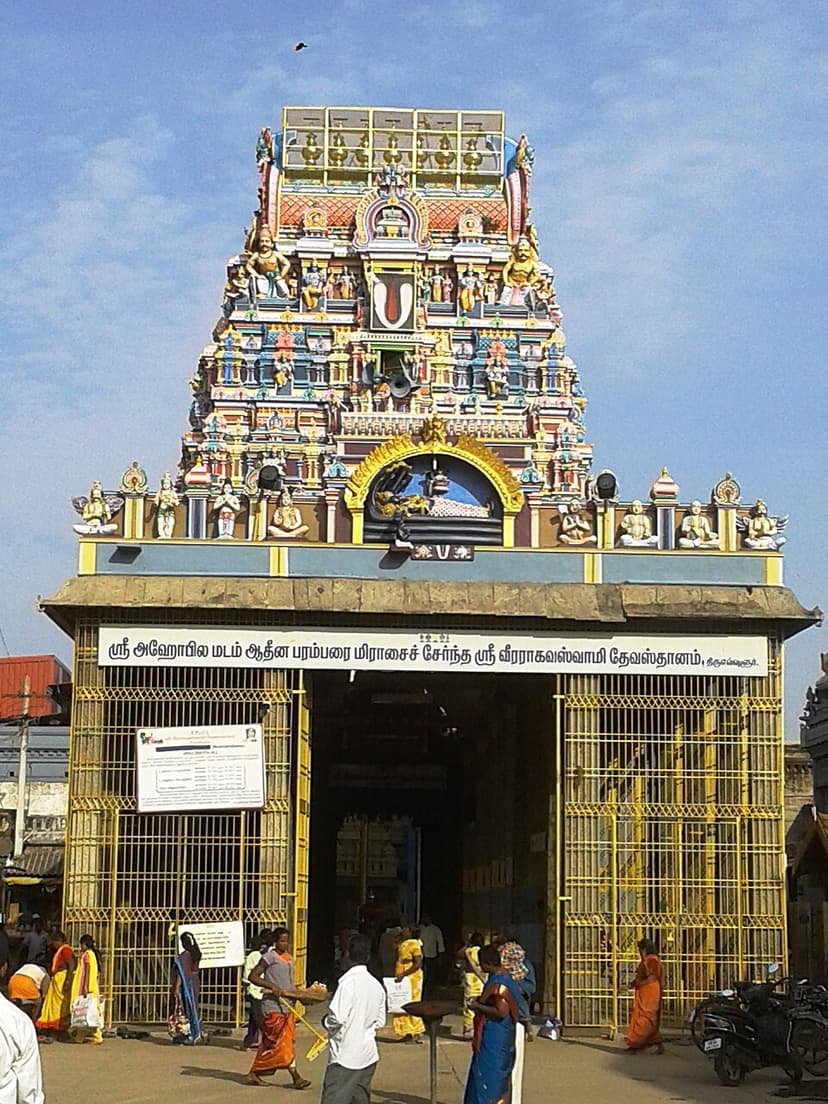
Veeraraghava Swamy Temple, Tiruvallur
The Veeraraghava Swamy Temple in Tiruvallur, Tamil Nadu, is a significant Hindu temple dedicated to Lord Vishnu, revered as Veeraraghava Perumal. Glorified in early Tamil devotional literature, it is recognized as one of the 108 Divya Desams. The temple is known for its antiquity, believed to have been initiated by the Pallavas and later contributed to by the Thanjavur Nayaks and Vijayanagara kings.

Namakkal Anjaneyar Temple
The Namakkal Anjaneyar Temple in Tamil Nadu, India, is dedicated to the Hindu god Hanuman (Anjaneyar). It is renowned for its colossal 18-foot-tall monolithic idol of Hanuman, carved from a single stone and believed to date back to the 5th century. The temple's legend is intertwined with the story of Narasimha, an avatar of Vishnu, and his consort Lakshmi.