
Namakkal Anjaneyar Temple
The Namakkal Anjaneyar Temple in Tamil Nadu, India, is dedicated to the Hindu god Hanuman (Anjaneyar). It is renowned for its colossal 18-foot-tall monolithic idol of Hanuman, carved from a single stone and believed to date back to the 5th century. The temple's legend is intertwined with the story of Narasimha, an avatar of Vishnu, and his consort Lakshmi.
Key Facts
- ›Dedicated to the Hindu god Hanuman (Anjaneyar).
- ›Features an 18-foot-tall monolithic idol of Hanuman, carved from a single stone.
- ›The idol is believed to date back to the 5th century.
- ›The temple's legend is associated with Vishnu's avatar Narasimha and Lakshmi.
- ›Follows the Vaikhanasa tradition of worship.
- ›The most prominent festival is the fifteen-day Panguni Uthiram.

Hanuman, Anjaneyar
- Home To One of the Tallest Idols of Hanuman In India.
- Architectural Style Is Noted As Tamil.
- Associated With the Legend of Narasimha and Lakshmi.
Panguni Uthiram
Stone
- 18 ft Tall Anjaneyar Idol Carved From A Single Stone
About Namakkal Anjaneyar Temple
The Namakkal Anjaneyar Temple, located in Namakkal, Tamil Nadu, India, is a significant Hindu temple dedicated to Hanuman, locally known as Anjaneyar. It is distinguished by its immense 18-foot-tall monolithic idol of Hanuman, believed to be carved from a single stone and dating back to the 5th century. This colossal idol is one of the tallest of Hanuman in India and is unique for sporting a sword at its waist and holding a garland made of Saligram, with no roof over the sanctum.
Legend and Religious Significance
The temple's lore is deeply connected to the story of Narasimha, an avatar of Vishnu, and his consort Lakshmi. According to legend, Lakshmi was performing penance at this location when Hanuman, carrying an image made of Saligrama, was requested by her to show her a vision of Narasimha. Hanuman entrusted the Saligrama image to Lakshmi, asking her to hold it until his return. The image then grew into a mount before Hanuman could return, leading to Narasimha appearing and establishing his abode here. The nearby Narasimhaswamy temple is also linked to this legend, with Hanuman believed to have worshipped Narasimha from a distance.
Architecture and Worship Practices
The temple follows the Tamil style of architecture and features a flat gateway tower leading to a pillared hall that opens into the sanctum. The sanctum houses the impressive Anjaneyar idol, which faces axially towards the Narasimha shrine located about 130 meters away at the foot of the Namakkal hill. The temple adheres to the Vaikhanasa tradition of worship, with four daily rituals performed by priests. These rituals, which include decoration, food offerings, and lamp ceremonies, are conducted four times a day. The temple also observes weekly, monthly, and fortnightly rituals, along with its major annual festival.
Festivals and Administration
The most prominent festival observed at the Namakkal Anjaneyar Temple is the fifteen-day Panguni Uthiram, celebrated during the Tamil month of Panguni (March-April). This festival involves processions where the images of the presiding deities are paraded through the temple streets. The temple is actively maintained and administered by the Hindu Religious and Charitable Endowments Department of the Government of Tamil Nadu, and it is considered a prominent tourist attraction in the district, drawing visitors from Namakkal and surrounding areas.
Source: Wikipedia ↗
Frequently Asked Questions
What is the significance of the 18-foot idol at the Namakkal Anjaneyar Temple?
The 18-foot-tall idol of Anjaneyar (Hanuman) is a significant feature of the temple, making it one of the tallest images of Hanuman in India. It is carved from a single stone and is believed to have existed since the 5th century.
What is the legend behind the Namakkal Anjaneyar Temple?
The temple's legend involves Lakshmi, Vishnu's consort, doing penance and requesting Hanuman to hold an image of Narasimha for her. Hanuman entrusted the image to Lakshmi, who placed it, and it grew into a mount before Hanuman's return. Narasimha then appeared and made his abode there.
What is the architectural style of the Namakkal Anjaneyar Temple?
The temple is constructed in the Tamil style of architecture. It features a flat gateway tower and a pillared hall leading to the sanctum.
What are the daily rituals performed at the temple?
The temple priests perform four daily rituals: Kalasandhi at 8:00 a.m., Uchikala pooja at 12:00 p.m., Sayaraksha at 6:00 p.m., and Ardhajama Pooja at 8:45 p.m. Each ritual includes decoration, food offering, and waving of lamps.
What is the main festival celebrated at the Namakkal Anjaneyar Temple?
The most prominent festival is the fifteen-day Panguni Uthiram, celebrated during the Tamil month of Panguni (March-April). During this festival, the images of the presiding deities are taken around the temple streets.
Who maintains and administers the Namakkal Anjaneyar Temple?
The temple is maintained and administered by the Hindu Religious and Charitable Endowments Department of the Government of Tamil Nadu.
Related Temples (Hindu)

Ranganathaswamy Temple, Srirangam
The Ranganathaswamy Temple in Srirangam, Tamil Nadu, is a vast Hindu temple dedicated to Ranganathar, a form of Vishnu. It is renowned as the largest functioning religious complex in the world and holds the distinction of being the foremost of the 108 Divya Desams. The temple, rich in legend and history, has been a significant site for Sri Vaishnavism and has undergone numerous renovations and expansions over centuries.
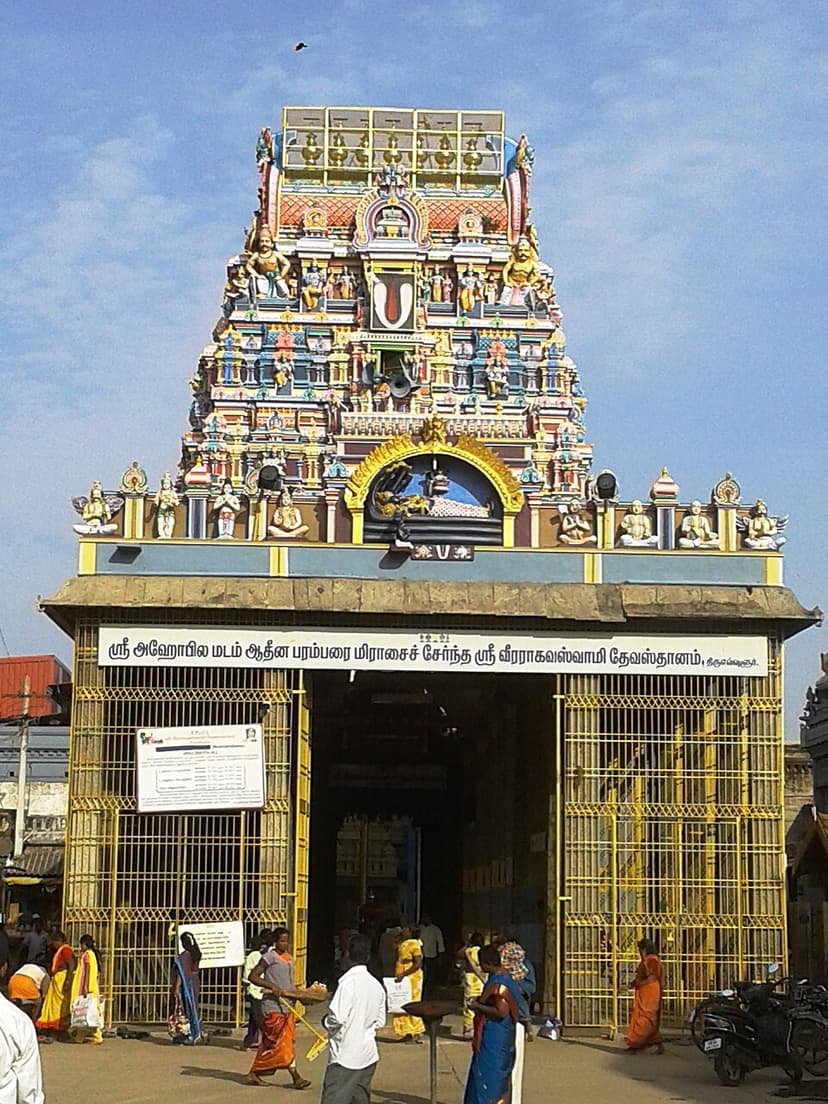
Veeraraghava Swamy Temple, Tiruvallur
The Veeraraghava Swamy Temple in Tiruvallur, Tamil Nadu, is a significant Hindu temple dedicated to Lord Vishnu, revered as Veeraraghava Perumal. Glorified in early Tamil devotional literature, it is recognized as one of the 108 Divya Desams. The temple is known for its antiquity, believed to have been initiated by the Pallavas and later contributed to by the Thanjavur Nayaks and Vijayanagara kings.

Adikesava Perumal temple, Mylapore
The Adikesava Perumal temple in Mylapore, Chennai, is a significant Hindu temple dedicated to Lord Vishnu, worshipped here as Adi Kesava Perumal, and his consort Lakshmi, as Mayuravalli Thayar. It is renowned as the birthplace of the Alvar saint Peyalvar and is considered one of the 108 Abhimana Kshethrams in the Vaishnavate tradition. The temple features Tamil architecture and is notable for its ancient temple tank, Chithra Kulam.