
Ranganathaswamy Temple, Srirangam
The Ranganathaswamy Temple in Srirangam, Tamil Nadu, is a vast Hindu temple dedicated to Ranganathar, a form of Vishnu. It is renowned as the largest functioning religious complex in the world and holds the distinction of being the foremost of the 108 Divya Desams. The temple, rich in legend and history, has been a significant site for Sri Vaishnavism and has undergone numerous renovations and expansions over centuries.
Key Facts
- ›It is the largest functioning Hindu temple complex in the world.
- ›It is considered the foremost of the 108 Divya Desams dedicated to Lord Vishnu.
- ›The temple is located on an island between the Kaveri and Kollidam rivers.
- ›It has been nominated as a UNESCO World Heritage Site and received the UNESCO Asia-Pacific Award of Merit for cultural heritage conservation in 2017.
- ›The temple complex spans 63 hectares (155 acres) and includes 81 shrines, 21 towers, and 39 pavilions.
- ›It plays a significant role in Sri Vaishnavism, particularly in the history of philosophers like Ramanuja.

Ranganathar, Ranganayaki
- Foremost Among the 108 Divya Desams
- Largest Functioning Religious Complex In the World
- Significant Site In Sri Vaishnavism History
- Cultural Heritage Conservation
- Archaeological and Epigraphical Site
Chola, Pandya, Hoysala, Vijayanagara, Nayaka, Maratha, Delhi Sultanate, Mughal, Nawab of Arcot
Annual 21-Day Festival During Margazhi
Granite, Sandstone
Dharmavarma, Killivalavan, Uraiyur Cholas, Ramanuja, Nathamuni, Yamunacharya, Kumara Kampana
- Image of Chakratalvar With Narasimha On the Rear Side
- Elaborately Carved Venugopala-Krishna Shrine
Kaveri River, Kollidam River
About Ranganathaswamy Temple, Srirangam
The Ranganathaswamy Temple, also known as Arulmigu Ranganathar Thirukovil, is a preeminent Hindu temple located in Srirangam, Tiruchirappalli, Tamil Nadu, India. It is dedicated to Ranganathar, a form of Vishnu, and his consort Ranganayaki, a form of Lakshmi. Renowned for its immense scale and historical significance, the temple is celebrated as the largest functioning religious complex in the world and holds the unique distinction of being the foremost among the 108 Divya Desams, sacred abodes dedicated to Vishnu.
Constructed in the Tamil architectural style, the Ranganathaswamy Temple is a sprawling complex encompassing 63 hectares (155 acres). It is designed with seven concentric enclosures, known as prakarams, which surround the central sanctum. This design includes 81 shrines, 21 towers, and 39 pavilions, creating a planned temple town. The temple's location on an island between the sacred Kaveri and Kollidam rivers has influenced its history, making it vulnerable to floods and invasions.
Historically, the Ranganathaswamy Temple has been a pivotal center for Sri Vaishnavism, playing a key role in its development from the 11th century onwards, particularly through the efforts of philosophers like Ramanuja. The temple's construction and renovations span many centuries, with inscriptions dating from the 7th to the 17th centuries, reflecting patronage from various dynasties including the Cholas, Pandyas, Vijayanagara, and Nayakas. Despite periods of destruction and rebuilding, it has remained an active place of worship and a significant pilgrimage destination.
Legend imbues the temple with rich mythology, detailing its origins, the divine intervention in its placement, and the stories of its deities and guardians. The temple is also recognized for its cultural heritage conservation efforts, having received the UNESCO Asia-Pacific Award of Merit in 2017, and is a tentative nominee for UNESCO World Heritage Site status. The annual festival during the Tamil month of Margazhi attracts over a million visitors, underscoring its enduring religious and cultural importance.
Source: Wikipedia ↗
Frequently Asked Questions
What is the Ranganathaswamy Temple dedicated to?
The Ranganathaswamy Temple is primarily dedicated to Ranganathar, a form of the Hindu deity Vishnu, and his consort Ranganayaki, a form of Lakshmi. The deity Ranganathar is depicted in a reclining posture.
Where is the Ranganathaswamy Temple located?
The temple is located in Srirangam, Tiruchirappalli, Tamil Nadu, India. It is situated on a large island formed by the Kaveri and Kollidam rivers.
What is the architectural style of the Ranganathaswamy Temple?
The temple is constructed in the Tamil architectural style. It features a unique Sapta-Prakaram design with seven concentric enclosures, each with walls and gopurams, and is known for its planometric geometry aligned with cardinal directions.
What is the historical significance of the Ranganathaswamy Temple?
The temple has a deep historical significance, playing a crucial role in Vaishnava history from the 11th century onwards. It has been a center for the Bhakti movement and has witnessed periods of destruction and rebuilding due to invasions and political instability.
Is the Ranganathaswamy Temple a UNESCO World Heritage Site?
The Ranganathaswamy Temple has been nominated as a UNESCO World Heritage Site and is currently on UNESCO's tentative list. In 2017, it received the UNESCO Asia-Pacific Award of Merit for cultural heritage conservation.
What legends are associated with the Ranganathaswamy Temple?
Numerous legends are associated with the temple, including its origin from Brahma, the story of King Dharmavarma, the curse of child sages on temple guardians, and tales of devotion and interfaith harmony involving the temple idol and a Muslim princess named Suratani.
What is the size of the Ranganathaswamy Temple complex?
The temple and its associated town occupy a large area of 63 hectares (155 acres). The complex is vast, featuring seven concentric enclosures, numerous shrines, towers, pavilions, and water tanks.
Related Temples (Hindu)
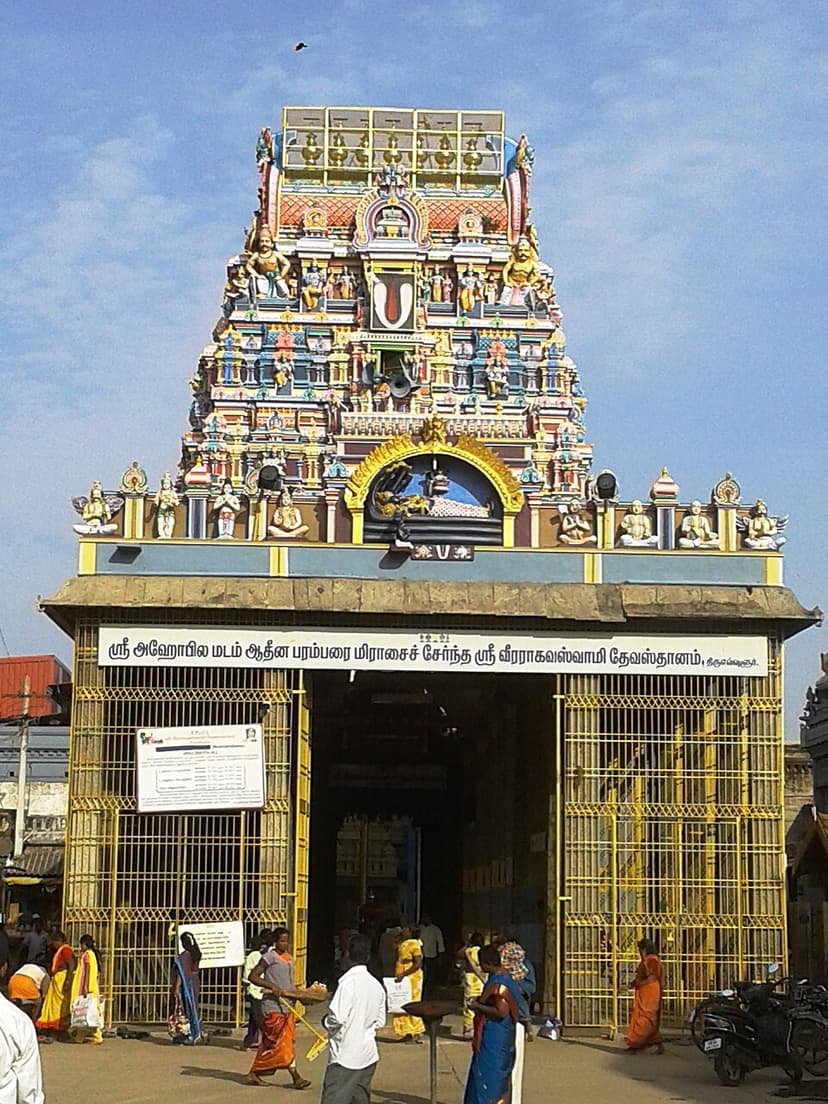
Veeraraghava Swamy Temple, Tiruvallur
The Veeraraghava Swamy Temple in Tiruvallur, Tamil Nadu, is a significant Hindu temple dedicated to Lord Vishnu, revered as Veeraraghava Perumal. Glorified in early Tamil devotional literature, it is recognized as one of the 108 Divya Desams. The temple is known for its antiquity, believed to have been initiated by the Pallavas and later contributed to by the Thanjavur Nayaks and Vijayanagara kings.

Namakkal Anjaneyar Temple
The Namakkal Anjaneyar Temple in Tamil Nadu, India, is dedicated to the Hindu god Hanuman (Anjaneyar). It is renowned for its colossal 18-foot-tall monolithic idol of Hanuman, carved from a single stone and believed to date back to the 5th century. The temple's legend is intertwined with the story of Narasimha, an avatar of Vishnu, and his consort Lakshmi.

Adikesava Perumal temple, Mylapore
The Adikesava Perumal temple in Mylapore, Chennai, is a significant Hindu temple dedicated to Lord Vishnu, worshipped here as Adi Kesava Perumal, and his consort Lakshmi, as Mayuravalli Thayar. It is renowned as the birthplace of the Alvar saint Peyalvar and is considered one of the 108 Abhimana Kshethrams in the Vaishnavate tradition. The temple features Tamil architecture and is notable for its ancient temple tank, Chithra Kulam.