
Vedadri Narasimha Temple
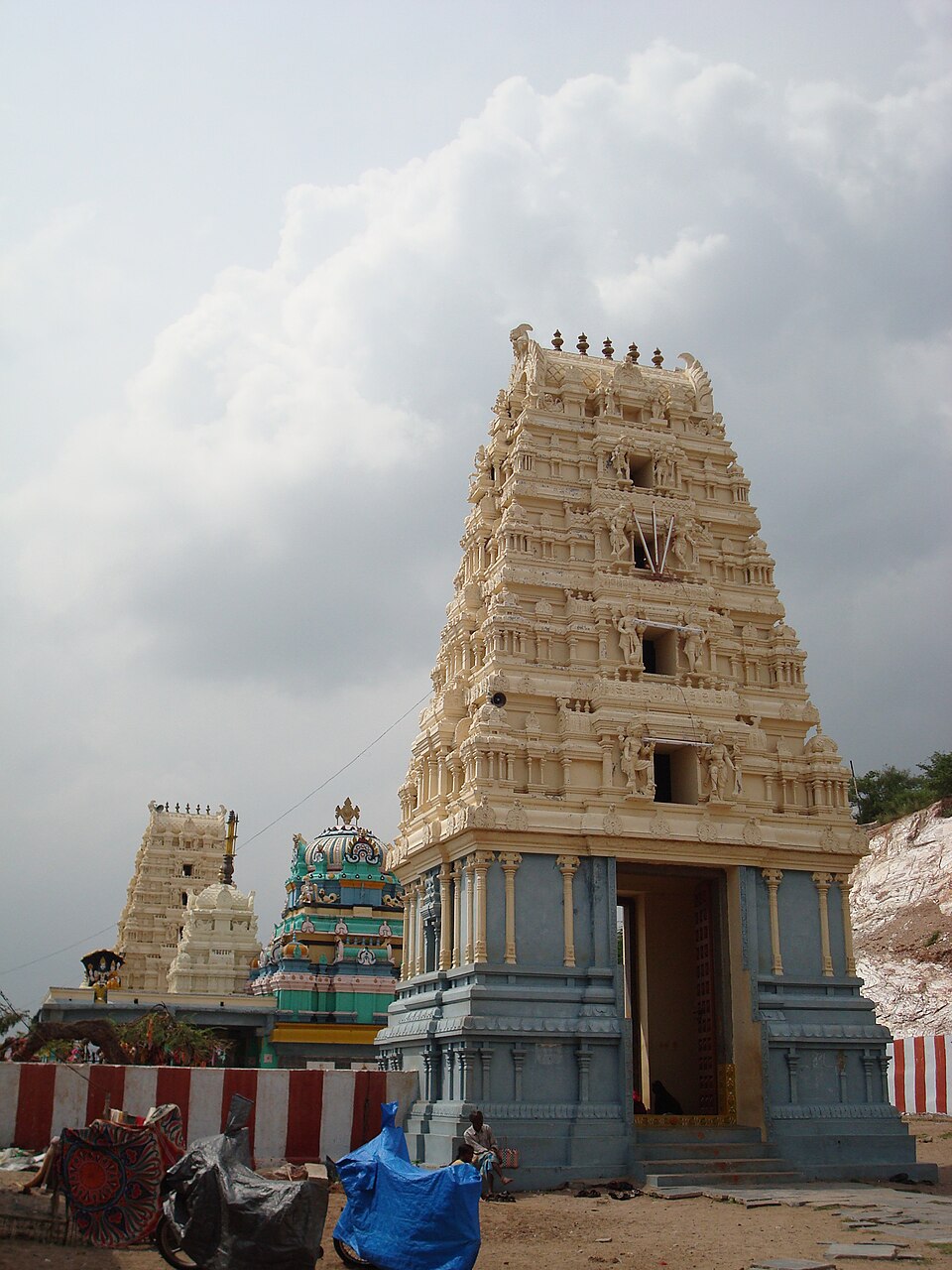
The Vedadri Narasimha Temple, located in Vedadri, Andhra Pradesh, India, is a significant Hindu pilgrimage site dedicated to Lord Narasimha. It is one of the Pancha Narasimha Kshetras and is situated on the banks of the Krishna River, holding deep mythological significance tied to the rescue of the Vedas.
Key Facts
- ›Dedicated to the worship of Lord Narasimha in five distinct forms.
- ›Considered one of the Pancha Narasimha Kshetras.
- ›Located on the bank of the Krishna River.
- ›Has historical traditions associating it with the rescue of the Vedas from the demon Somakasura.
- ›Gained prominence during the reign of the Kakatiya Empire.
- ›Renovated and expanded in the 1800s by Raja Vasireddy Muktiswara Prasad Nayudu.
Narasimha, Lakshmi
- Major Pilgrimage Site In Andhra Pradesh
- One of the Pancha Narasimha Kshetras
- Mythological Significance Related To the Vedas
Kakatiya Empire
Narasimha Jayanti
Raja Vasireddy Muktiswara Prasad Nayudu
Narasimha with Lakshmi on his left lap
Krishna River
About Vedadri Narasimha Temple
The Vedadri Narasimha Temple is a significant Hindu shrine located in the town of Vedadri, within the state of Andhra Pradesh, India. Dedicated to the worship of Lord Narasimha, a fierce avatar of Lord Vishnu, the temple holds a prominent place as one of the Pancha Narasimha Kshetras, a group of five sacred sites dedicated to this deity. Its location on the banks of the sacred Krishna River adds to its spiritual ambiance and accessibility for pilgrims.
Historical and Mythological Context
According to the temple's historical tradition, known as sthalapurana, the very name Vedadri is linked to the Vedas. The mythology recounts how the demon Somakasura once stole the Vedas from Lord Brahma and concealed them in the ocean. In response to the gods' desperate prayers, Lord Vishnu manifested as Narasimha to retrieve the Vedas. This divine act is said to have transformed the Vedas into the hill known as Vedadri, situated on the Krishna River.
The temple is believed to have gained considerable importance during the era of the Kakatiya Empire. It was also a frequented site by Narayana Tirtha, a distinguished Telugu Vaishnavite saint and composer. Further development and enhancement of the temple complex occurred in the 19th century. Raja Vasireddy Muktiswara Prasad Nayudu, an ancestor of the Muktyala Raja family, undertook renovations, which included renewing the dhwajastabham (flagstaff) and constructing 108 steps, providing pilgrims a direct pathway from the hillock to the Krishna River.
The Shrine and Worship
The central deity at the Vedadri Narasimha Temple is Lord Narasimha, depicted with Goddess Lakshmi seated on his left lap. The temple is particularly renowned for enshrining five distinct forms of Narasimha, which are Vira Narasimha, Salagrama Narasimha, Jwala Narasimha, Lakshmi Narasimha, and Yoga Narasimha. This unique congregation of five forms is why it is recognized as a Pancha Narasimha Kshetram. In addition to the main deity, the temple complex also features separate shrines dedicated to the twelve revered Tamil Vaishnavite Saints, known as the Alvars, and to the ancient Rishis Kashyapa and Atri, who are considered founders of the Vaikhanasa Agamas.
Source: Wikipedia ↗
Frequently Asked Questions
What is the mythological significance of Vedadri?
According to temple tradition, Vedadri represents the Vedas themselves in the form of a hill. This legend states that Lord Vishnu, in his Narasimha form, rescued the Vedas from the demon Somakasura and transformed them into Vedadri on the Krishna River.
What are the five forms of Narasimha worshipped at this temple?
The temple is known as a Pancha Narasimha Kshetram because it enshrines five forms of Lord Narasimha. These are Vira Narasimha, Salagrama Narasimha, Jwala Narasimha, Lakshmi Narasimha, and Yoga Narasimha.
When did the Vedadri Narasimha Temple gain prominence?
The temple is said to have gained significant prominence during the reign of the Kakatiya Empire. It was also a place frequently visited by the saint Narayana Tirtha.
What renovations were made to the temple in the 1800s?
In the 1800s, Raja Vasireddy Muktiswara Prasad Nayudu oversaw renovations and additions to the temple. These included renewing the dhwajastabham and constructing 108 steps to facilitate pilgrim access to the Krishna River from the temple hillock.
What is the main deity's iconography at the temple?
The main image of the deity at Vedadri Narasimha Temple depicts Lord Narasimha with Goddess Lakshmi seated on his left lap.
Related Temples (Hindu)

Taraknath Temple
The Taraknath Temple, located in Tarakeswar, West Bengal, India, is a significant Hindu pilgrimage site dedicated to Lord Shiva, worshiped here as Tarakanatha. Constructed in 1729, it features a distinct Bengal architectural style with an 'atchala' structure and an adjacent 'natmandir'. The temple is renowned for its belief that a dip in the nearby Dudhpukur tank fulfills prayers and is considered one of the 64 Jyotirlingas.

Tanot Mata Temple
The Tanot Mata Temple is a significant Hindu shrine located in the Jaisalmer district of Rajasthan, India, near the Pakistan border. Revered as a form of Goddess Hinglaj Mata, the temple is famously associated with the Indian victories in the Indo-Pakistani Wars of 1965 and 1971, with local folklore attributing the successful outcomes to divine intervention. The Border Security Force of India now manages the temple complex, which also includes a victory tower and a war museum.
Thriprayar Temple
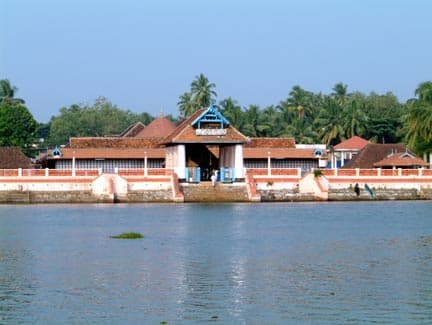
The Thriprayar Temple, also known as the Shree Ramaswami Temple, is a significant Hindu temple located in Triprayar, Thrissur district, Kerala, India. It is dedicated to Lord Rama, the seventh incarnation of Vishnu, who is depicted with four arms holding a conch, discus, bow, and garland. The temple's origin story involves the idol being worshipped by Krishna in Dwarka, later immersed in the sea, and eventually found by fishermen.