
Varahaswamy Temple
The Sri Varahaswamy Temple, also known as the Bhu Varahaswamy Temple, is a Hindu temple dedicated to Lord Varaha, an avatar of Vishnu. Located in the hill town of Tirumala, Andhra Pradesh, it is believed to be older than the main Venkateswara Temple and holds significant religious importance, with devotees traditionally visiting Varaha before Lord Venkateswara to complete their pilgrimage.
Key Facts
- ›Dedicated to Lord Varaha, an avatar of Vishnu.
- ›Believed to be older than the Venkateswara Temple in Tirumala.
- ›Pilgrimage to Tirumala is considered incomplete without a darshana of Varaha.
- ›Lord Venkateswara traditionally offers the first bell, puja, and food offerings to Varaha.
- ›Renovated in 1535 CE by Pedda Tirumalacharya.
- ›Administered by the Tirumala Tirupati Devasthanams.

Varaha, Vishnu
Religious Pilgrimage, Historical Importance
Brahmotsavams, Vaikuntha Ekadashi, Rathasaptami, Varaha Jayanti
Rock
Swami Pushkarini
About Varahaswamy Temple
Sri Varahaswamy Temple
The Sri Varahaswamy Temple, also recognized as the Bhu Varahaswamy Temple, is a significant Hindu shrine dedicated to Lord Varaha, the boar avatar of Lord Vishnu. It is located in the sacred hill town of Tirumala, within Tirupati district in the state of Andhra Pradesh, India. Situated to the north of the prominent Venkateswara Temple and on the north-west corner of Swami Pushkarini, this temple is historically considered to be older than the Venkateswara shrine.
Religious Significance and Rituals
Local Hindu legends recount that after defeating the asura Hiranyaksha and saving the earth, Lord Varaha resided on this hill, on the northern bank of the Swami Pushkarini. Consequently, the Tirumala Hills are also referred to as Adi Varaha Kshetra. A unique tradition, stemming from the beginning of the Kali Yuga, dictates that Lord Varaha donated land to Lord Venkateswara. In gratitude, Lord Venkateswara established a practice where the first bell, puja, and food offerings are made to Lord Varaha before being offered to himself. This practice continues to this day, emphasizing the paramount importance of Varaha.
Devotees are traditionally advised to have 'darshana' (sight) of Lord Varaha before proceeding to see Lord Venkateswara. It is widely believed that a pilgrimage to Tirumala is not considered complete without paying respects to Lord Varaha. Daily rituals are performed at the temple in accordance with the Vaikhanasa Agama. Key annual events such as the Chakrasnanam during the Brahmotsavams, Vaikuntha Ekadashi, and Rathasaptami are conducted in the mukha mandapa of the Varahaswamy Temple. The temple also celebrates Varaha Jayanti.
History and Administration
The temple underwent renovation in the year 1535 CE under the patronage of Pedda Tirumalacharya. Currently, the Varahaswamy Temple is administered by the Tirumala Tirupati Devasthanams (TTD), as part of the larger Venkateswara Temple complex.
Source: Wikipedia ↗
Frequently Asked Questions
What is the religious significance of the Varahaswamy Temple?
According to local legend, Lord Varaha stayed on these hills after saving the earth. The temple is significant because devotees are prescribed to have a darshana of Varaha before Lord Venkateswara, and the pilgrimage to Tirumala is considered incomplete without it. Additionally, Lord Venkateswara offers the right of the first bell, puja, and food offerings to Varaha as a gesture of gratitude.
What is the history of the Varahaswamy Temple?
The temple was renovated in the year 1535 CE by Pedda Tirumalacharya. Historical accounts suggest it is older than the main Venkateswara shrine in Tirumala.
What architectural style is the Varahaswamy Temple?
The Varahaswamy Temple is described as a rock temple situated on the northern bank of Swami Pushkarini.
What are the key rituals and festivals observed at the temple?
Daily rituals are conducted according to the Vaikhanasa Agama. Important events like Chakrasnanam during annual brahmotsavams, Vaikuntha Ekadashi, and Rathasaptami are held in the mukha mandapa of the Varahaswamy Temple. Varaha Jayanti is also celebrated.
Related Temples (Hindu)

Taraknath Temple
The Taraknath Temple, located in Tarakeswar, West Bengal, India, is a significant Hindu pilgrimage site dedicated to Lord Shiva, worshiped here as Tarakanatha. Constructed in 1729, it features a distinct Bengal architectural style with an 'atchala' structure and an adjacent 'natmandir'. The temple is renowned for its belief that a dip in the nearby Dudhpukur tank fulfills prayers and is considered one of the 64 Jyotirlingas.

Tanot Mata Temple
The Tanot Mata Temple is a significant Hindu shrine located in the Jaisalmer district of Rajasthan, India, near the Pakistan border. Revered as a form of Goddess Hinglaj Mata, the temple is famously associated with the Indian victories in the Indo-Pakistani Wars of 1965 and 1971, with local folklore attributing the successful outcomes to divine intervention. The Border Security Force of India now manages the temple complex, which also includes a victory tower and a war museum.
Thriprayar Temple
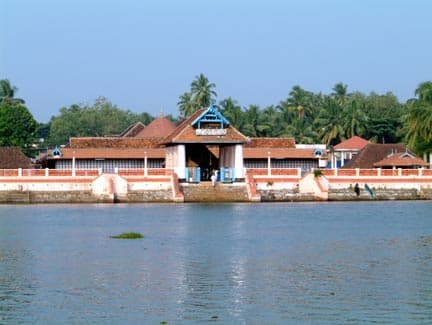
The Thriprayar Temple, also known as the Shree Ramaswami Temple, is a significant Hindu temple located in Triprayar, Thrissur district, Kerala, India. It is dedicated to Lord Rama, the seventh incarnation of Vishnu, who is depicted with four arms holding a conch, discus, bow, and garland. The temple's origin story involves the idol being worshipped by Krishna in Dwarka, later immersed in the sea, and eventually found by fishermen.