
Valayanad Devi Temple
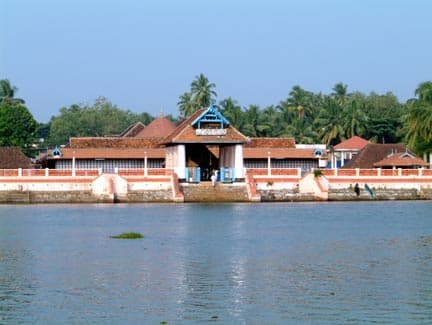
The Sree Valayanad Devi Temple, dedicated to Bhagavathy, is located in Valayanad near Kozhikode in North Kerala, India. It is the family deity of the Zamorin Kings of Kozhikode and is known for its unique Rurujit worship practices and the presiding deity, Chandika, also known as Mahartham and Kalasarppini.
Key Facts
- ›The temple is dedicated to Bhagavathy, specifically the goddess Chandika from Kashmir.
- ›It serves as the family deity for the Zamorin Kings who ruled Kozhikode.
- ›Legend states the goddess's presence was established when her bangle fell at the current temple site.
- ›The temple follows Rurujit worship practices, a distinct form of Saktheya worship.
- ›Key rituals include Guruthy Tharpanam, and offerings often involve meat and alcohol, performed by non-vegetarian priests.
- ›The annual festival runs for seven days, commencing on Karthika of Makaram.

Bhagavathy, Chandika, Mahartham, Kalasarppini
- Family Deity of the Zamorin Kings of Kozhikode
- Unique Rurujit Worship Practices
- Preserves Traditions of Saktheya Worship
Zamorin Kings
Annual Festival, Kalamezhuthupattu
Zamorin Kings
- Sapthamathrukkal Carved On the Southern Wall of the Sanctum Sanctorum
Trissaala Kulam
About Valayanad Devi Temple
Sree Valayanad Devi Temple
The Sree Valayanad Devi Temple, dedicated to Bhagavathy, is a significant religious site located in Valayanad, near Kozhikode in North Kerala, India. This temple holds deep historical and spiritual importance as it is considered the family deity of the Zamorin Kings, who were the rulers of Kozhikode during the medieval period.
History and Legend
Legends surrounding the temple's origin speak of a decisive battle where the Zamorin of Kozhikode faced defeat despite his superior resources against Valluva Konathiri. Believing the goddess's blessings were with his adversary, the Zamorin undertook a vow of penance in disguise at Thirumanthamkunnu temple. His devotion led to the goddess manifesting before him. He implored her to accompany him to his kingdom. During their journey, the goddess stipulated that if he looked back to check on her, she would return. When the sound of her anklets ceased, the Zamorin, overcome with doubt, turned back. The goddess then declared she would go no further but, as a reward for his devotion, would cast her bangle. The spot where the bangle landed would then house her presence.
After rotating for a week, the bangle fell at the location where the temple now stands. The area where the bangle rotated became known as Azhchavattom, and the place where it finally fell was named Thiruvalayanad, lending its name to the temple.
Description and Worship
The Valayanad Devi Temple faces north and features four gopurams. It is distinguished by its unique worship practices, particularly Rurujit worship, which is a specific form of Saktheya worship. The presiding deity is Chandika, a goddess from Kashmir, also referred to as Mahartham and Kalasarppini. The sanctum sanctorum houses the Sreechakra, meticulously designed by the yogi Thayyavur Sivasankar, where the goddess's eternal presence is believed to reside. The temple complex also includes consecrated idols of Shiva, Thevaara Bhagavathi, Lord Ayyappa, and Vigneswara, along with Khsethrapaalan. Carved into the southern wall of the sanctum are idols of the Sapthamathrukkal, the seven mother goddesses. A notable ritual performed here is Guruthy Tharpanam.
Festivals and Priesthood
The annual festival at the Valayanad Devi Temple begins on the day of Karthika in the Malayalam month of Makaram and continues for seven days. The idol of Devi is temporarily kept at the Tali Mahadeva Temple and is brought to the Valayanad temple a few days before the 'Uthsavam'. The sacred 'Arat' (holy dipping of the idol) takes place in Trissaala kulam in Mankavu. During the annual festival, Brahmins are brought in to perform the Uthama Pooja, as Madhyama (saktheya) Pooja is not conducted. The temple observes Kalamezhuthupattu for 41 days during the Mandala season, starting from the 1st of Vrichikam. Tuesdays and Fridays are considered particularly auspicious for devotees to offer prayers.
The priests who conduct the poojas according to Saktheya injunctions are known as Pidarar Brahmins. A distinctive aspect of the worship at this temple is the inclusion of meat and alcohol, with the priests consequently being non-vegetarian. Five Moosad families traditionally hold rights to conduct observances in the temple: Vattoli-illam, Vadakke-illam, Kozhiparambillam, Naduvilakandi, and Kozhikodanparambu. The chief poojaris are from Vattoli-illam and Vadakke-illam, by inherited right.
Source: Wikipedia ↗
Frequently Asked Questions
What is the history behind the establishment of the Valayanad Devi Temple?
According to legend, the Zamorin Kings of Kozhikode sought the blessings of Bhagavathy. After a defeat in battle, the Zamorin performed penance and requested the goddess to accompany him. During their journey, the Zamorin looked back, causing the goddess to stop and throw her bangle, which landed at the present temple site, establishing her presence there.
Who is the primary deity worshipped at the Valayanad Devi Temple?
The primary deity is Bhagavathy, specifically the goddess Chandika, who is also known as Mahartham and Kalasarppini. She is believed to be the goddess from Kashmir.
What are the unique worship practices at this temple?
The Valayanad Devi Temple is one of the Saktheya temples where pujas are performed according to the practice of Rurujit worship. This involves rituals and offerings that are distinct from many other Devi temples.
What is the significance of the Sreechakra in the sanctum sanctorum?
The Sreechakra, designed by Sivayogi Thayyavur Sivasankar, is housed in the sanctum sanctorum. It is believed to be the place where the goddess's presence is ever present.
What are some of the important festivals celebrated at the temple?
The annual festival commences on Karthika of Makaram and lasts for seven days. Another observance is Kalamezhuthupattu, which is held for 41 days during the Mandala season, starting from the 1st of Vrichikam.
What is notable about the priests and their practices at this temple?
The priests are Pidarar Brahmins who perform poojas according to Saktheya injunctions. A core feature of the worship involves meat and alcohol, and the priests are necessarily non-vegetarian.
Related Temples (Hindu)

Taraknath Temple
The Taraknath Temple, located in Tarakeswar, West Bengal, India, is a significant Hindu pilgrimage site dedicated to Lord Shiva, worshiped here as Tarakanatha. Constructed in 1729, it features a distinct Bengal architectural style with an 'atchala' structure and an adjacent 'natmandir'. The temple is renowned for its belief that a dip in the nearby Dudhpukur tank fulfills prayers and is considered one of the 64 Jyotirlingas.

Tanot Mata Temple
The Tanot Mata Temple is a significant Hindu shrine located in the Jaisalmer district of Rajasthan, India, near the Pakistan border. Revered as a form of Goddess Hinglaj Mata, the temple is famously associated with the Indian victories in the Indo-Pakistani Wars of 1965 and 1971, with local folklore attributing the successful outcomes to divine intervention. The Border Security Force of India now manages the temple complex, which also includes a victory tower and a war museum.
Thriprayar Temple
The Thriprayar Temple, also known as the Shree Ramaswami Temple, is a significant Hindu temple located in Triprayar, Thrissur district, Kerala, India. It is dedicated to Lord Rama, the seventh incarnation of Vishnu, who is depicted with four arms holding a conch, discus, bow, and garland. The temple's origin story involves the idol being worshipped by Krishna in Dwarka, later immersed in the sea, and eventually found by fishermen.