
Umiya Mata Temple
The Umiya Mata Temple is a prominent Hindu temple dedicated to Goddess Umiya, revered as the clan-deity (kuldevi) of the Kadava Patidar community. Located in Unjha, Gujarat, India, the temple is a significant pilgrimage site and a hub for cultural and social gatherings for the community.
Key Facts
- ›Dedicated to Goddess Umiya, the kuldevi of the Kadava Patidars.
- ›Located in Unjha, Mehsana district, Gujarat, India.
- ›Celebrated its Silver Jubilee in November 2009.
- ›Renovated through donations from wealthy industrialists and farmers.
- ›An important destination for politicians seeking the support of the Kadava Patidar community.
- ›Has inspired the development of Umiya Dham complexes in India and Umiya Mata temples in the United States.

Umiya Mata
Clan-Deity Temple For Kadava Patidars, Pilgrimage Destination, Political Focal Point For Community Support
Holi
About Umiya Mata Temple
The Umiya Mata Temple is a significant Hindu temple located in the heart of Unjha, in the Mehsana district of Gujarat, India. It is dedicated to Goddess Umiya, who is revered as the clan-deity, or kuldevi, of the Kadava Patidar community. The temple serves as a central point of worship and cultural identity for this community.
History and Development
In November 2009, the Umiya Mata Temple celebrated its Silver Jubilee, marking a significant milestone in its history. The temple has undergone renovations, largely funded by donations from affluent industrialists and farmers within the Kadava Patidar community. These contributions have allowed for enhancements to accommodate the large numbers of pilgrims who visit, with temporary shelters and guesthouses often erected during major events.
Religious and Social Hub
As a primary pilgrimage destination for the Kadava Patidars, the temple plays a crucial role in their religious and social life. It is also recognized for its influence in the political landscape. Politicians frequently visit the temple to engage with and seek the support of the Kadava Patidar community, understanding its importance as a vote bank. For instance, in 2016, Rahul Gandhi visited the temple with the aim of securing Kadava Patidar votes.
Expansion and Global Presence
The influence of Goddess Umiya and the Kadava Patidar community's devotion extends beyond Unjha. An ambitious Umiya Dham complex is under construction in Ahmedabad, Gujarat, intended to include a temple, guest housing, educational facilities, and healthcare services. Furthermore, the Umiya Mata tradition has spread globally, with temples established in the United States, including one in Macon, Georgia, and plans for others in New Jersey and Massachusetts. The Umiya Mataji Sanstha in Chicago also hosts community events like the Holi festival, further solidifying the deity's presence among the diaspora.
Source: Wikipedia ↗
Frequently Asked Questions
Who is Goddess Umiya?
Goddess Umiya is the clan-deity, or kuldevi, of the Kadava Patidar community. The Umiya Mata Temple is dedicated to her worship.
Where is the main Umiya Mata Temple located?
The main Umiya Mata Temple is situated in the center of Unjha, in the Mehsana district of Gujarat, India.
When was the Silver Jubilee of the Umiya Mata Temple celebrated?
The temple celebrated its Silver Jubilee in November 2009. This event marked 25 years since a significant milestone, likely its renovation or establishment.
How was the temple renovated?
The temple underwent renovation funded by donations from wealthy industrialists and farmers. This ensured its upkeep and expansion to accommodate large numbers of pilgrims.
What is the political significance of the Umiya Mata Temple?
The temple is an important destination for politicians aiming to gain the votes and support of the Kadava Patidar community. Visits by prominent political figures are often seen as efforts to connect with and appeal to this influential community.
Are there Umiya Mata temples outside of India?
Yes, Umiya Mata temples have been established in the United States, with one commissioned in Macon, Georgia, in 2013, and others planned for New Jersey and Boston, Massachusetts. These temples serve the Kadva Patidar Samaj communities abroad.
Related Temples (Hindu)

Taraknath Temple
The Taraknath Temple, located in Tarakeswar, West Bengal, India, is a significant Hindu pilgrimage site dedicated to Lord Shiva, worshiped here as Tarakanatha. Constructed in 1729, it features a distinct Bengal architectural style with an 'atchala' structure and an adjacent 'natmandir'. The temple is renowned for its belief that a dip in the nearby Dudhpukur tank fulfills prayers and is considered one of the 64 Jyotirlingas.

Tanot Mata Temple
The Tanot Mata Temple is a significant Hindu shrine located in the Jaisalmer district of Rajasthan, India, near the Pakistan border. Revered as a form of Goddess Hinglaj Mata, the temple is famously associated with the Indian victories in the Indo-Pakistani Wars of 1965 and 1971, with local folklore attributing the successful outcomes to divine intervention. The Border Security Force of India now manages the temple complex, which also includes a victory tower and a war museum.
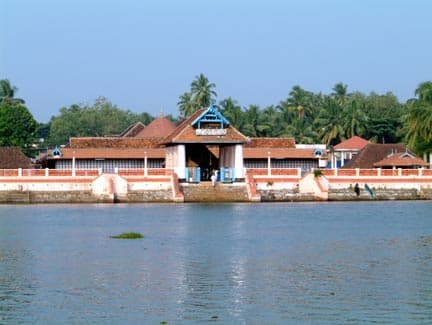
Thriprayar Temple
The Thriprayar Temple, also known as the Shree Ramaswami Temple, is a significant Hindu temple located in Triprayar, Thrissur district, Kerala, India. It is dedicated to Lord Rama, the seventh incarnation of Vishnu, who is depicted with four arms holding a conch, discus, bow, and garland. The temple's origin story involves the idol being worshipped by Krishna in Dwarka, later immersed in the sea, and eventually found by fishermen.