
Trimbakeshwar Shiva Temple
The Trimbakeshwar Shiva Temple is an ancient Hindu temple located in Trimbak, Maharashtra, India, dedicated to Lord Shiva. It is revered as one of the twelve Jyotirlingas and is a significant pilgrimage site, particularly for genealogical records and rituals related to the Godavari River.
Key Facts
- ›It is one of the twelve Jyotirlingas, considered highly auspicious sites dedicated to Shiva.
- ›The temple houses three lingas representing Brahma, Vishnu, and Shiva, a unique feature among Jyotirlingas.
- ›The sacred Godavari River originates near the temple at the Brahmagiri hill.
- ›The current temple structure was rebuilt by Peshwa Balaji Baji Rao after its destruction by Mughal ruler Aurangzeb.
- ›The temple is situated between the Brahmagiri, Nilagiri, and Kalagiri hills.
- ›Genealogy registers of pilgrims are maintained at Trimbakeshwar by local pandits.

Shiva
One of the Twelve Jyotirlingas, Site For Hindu Genealogy Registers, Origin of the Godavari River, Center For Specific Hindu Rituals
Peshwa
Basalt, Black Stone
Peshwa Balaji Baji Rao, Shrimant Sardar Raosaheb Parnerkar
Gold Mask of Trideva, Jeweled Crown With Diamonds and Emeralds
Godavari River, Kusavarta Kunda, Amritavarshini, Bilvatirtha, Viswanantirtha, Mukundatirtha
About Trimbakeshwar Shiva Temple
The Trimbakeshwar Shiva Temple, also known as Shri Tryambakeshwar Jyotirlinga Mandir, is an ancient Hindu temple situated in the town of Trimbak, within the Nashik District of Maharashtra, India. Dedicated to Lord Shiva, it holds profound religious significance as one of the twelve revered Jyotirlingas, which are considered the most sacred abodes of Shiva.
Religious and Geographical Importance
The temple is a pivotal pilgrimage destination for Hindus from across India, particularly for those seeking to maintain genealogical records, which are historically kept by local pandits in Trimbakeshwar. Its location is deeply intertwined with the origin of the Godavari River, India's second-longest river, which is believed to emerge from the Brahmagiri hill adjacent to the temple. The Kusavarta kunda, a sacred pond within the temple premises, is considered the source of the Godavari.
Architecture and Iconography
The temple is architecturally notable, nestled between the Brahmagiri, Nilagiri, and Kalagiri hills. A distinctive feature of the Trimbakeshwar Jyotirlinga is its representation with three faces, symbolizing Brahma, Vishnu, and Shiva. This triune form is unique among the twelve Jyotirlingas. The temple's black stone structure is lauded for its appealing architecture and sculpture. The Jyotirlinga itself is adorned with a jeweled crown, believed to be from the era of the Pandavas, which is displayed weekly. The current temple structure was commissioned and built by Peshwa Balaji Baji Rao, replacing a temple destroyed by Mughal ruler Aurangzeb.
Mythology and Rituals
Legends associated with the temple and the Godavari River are rich in Hindu mythology. One prominent narrative recounts Sage Gautama's penance to bring the Ganges to the region, resulting in the formation of the Godavari. The temple is also a significant center for performing specific Hindu rituals such as Narayan Nagbali, Kalsarpa Shanti, and Tripindi Vidhi, which are believed to address various spiritual and worldly concerns. The temple's association with the Nassak Diamond, once adorning the Shiva lingam, adds another layer to its historical narrative, though the diamond was later looted and is now housed elsewhere.
Source: Wikipedia ↗
Frequently Asked Questions
What is the significance of the Trimbakeshwar Shiva Temple?
The Trimbakeshwar Shiva Temple is significant as one of the twelve Jyotirlingas, representing a supreme manifestation of Lord Shiva. It is also a vital religious center where Hindu genealogy registers are kept and is closely associated with the sacred Godavari River.
What is unique about the Jyotirlinga at Trimbakeshwar?
The Jyotirlinga at Trimbakeshwar is unique because it has three faces, embodying the deities Brahma, Vishnu, and Shiva. This triune representation is not found in other Jyotirlinga shrines.
What is the origin of the Godavari River in relation to the temple?
According to mythology, the Godavari River originates from the Brahmagiri mountain near Trimbakeshwar. Sage Gautama performed penance to bring the Ganges to the region, which then flowed as the Godavari, and the Kusavarta kunda within the temple premises is considered its source.
Who built the current Trimbakeshwar Shiva Temple?
The current temple was built by Peshwa Balaji Baji Rao. It was constructed after the original temple was destroyed by the Mughal ruler Aurangzeb.
What rituals are performed at Trimbakeshwar?
Trimbakeshwar is a significant site for various Hindu rituals, including Narayan Nagbali, Kalsarpa Shanti, and Tripindi Vidhi. The Narayan Nagbali puja, performed for specific reasons like health and financial well-being, is exclusively conducted at Trimbakeshwar.
What is the architectural setting of the temple?
The Trimbakeshwar Shiva Temple is located at the foothills of the Brahmagiri mountain and is situated between three hills: Brahmagiri, Nilagiri, and Kalagiri. The temple complex includes a sacred pond called Amritavarshini.
Related Temples (Hindu)

Taraknath Temple
The Taraknath Temple, located in Tarakeswar, West Bengal, India, is a significant Hindu pilgrimage site dedicated to Lord Shiva, worshiped here as Tarakanatha. Constructed in 1729, it features a distinct Bengal architectural style with an 'atchala' structure and an adjacent 'natmandir'. The temple is renowned for its belief that a dip in the nearby Dudhpukur tank fulfills prayers and is considered one of the 64 Jyotirlingas.

Tanot Mata Temple
The Tanot Mata Temple is a significant Hindu shrine located in the Jaisalmer district of Rajasthan, India, near the Pakistan border. Revered as a form of Goddess Hinglaj Mata, the temple is famously associated with the Indian victories in the Indo-Pakistani Wars of 1965 and 1971, with local folklore attributing the successful outcomes to divine intervention. The Border Security Force of India now manages the temple complex, which also includes a victory tower and a war museum.
Thriprayar Temple
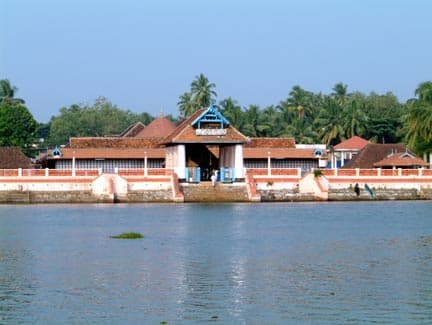
The Thriprayar Temple, also known as the Shree Ramaswami Temple, is a significant Hindu temple located in Triprayar, Thrissur district, Kerala, India. It is dedicated to Lord Rama, the seventh incarnation of Vishnu, who is depicted with four arms holding a conch, discus, bow, and garland. The temple's origin story involves the idol being worshipped by Krishna in Dwarka, later immersed in the sea, and eventually found by fishermen.