
Thanjai Mamani Koil
Thanjai Mamani Koil is a complex of three adjacent Hindu temples dedicated to Vishnu, located in Thanjavur, Tamil Nadu, India. Revered by the Alvars as one of the 108 Divya Desams, these temples are unique as they are collectively referenced in sacred hymns. The temples showcase architectural contributions from various dynasties, including the Medieval Cholas, Vijayanagara Empire, and Madurai Nayaks.
Key Facts
- ›Consists of three adjacent temples dedicated to Vishnu.
- ›Recognized as one of the 108 Divya Desams, highly revered by the Alvars.
- ›Unique in being collectively referenced in sacred hymns by poet saints.
- ›Features architectural influences from the Medieval Cholas, Vijayanagara Empire, and Madurai Nayaks.
- ›Temples are situated within granite walls.
- ›Follows the Vadakalai tradition of Srivaishnavism.

Vishnu
- One of the 108 Divya Desams Revered By Alvars
- Historical Architectural Contributions From Various Dynasties
- Unique Collective Reference In Sacred Hymns
Medieval Cholas, Vijayanagara Empire, Madurai Nayaks
Brhamotsavam, Garuda Seva
Granite
Vennaaru River, Rama Theertham, Amrutha Theertham, Surya Pushkarani
About Thanjai Mamani Koil
Thanjai Mamani Koil, also known as Thirutanjai or Thanjavur Perumal Temple, is a notable Hindu temple complex situated in Thanjavur, Tamil Nadu, India. It comprises three adjacent temples dedicated to the deity Vishnu. This temple is highly significant within Vaishnavism, being recognized as one of the 108 Divya Desams, which are temples of Vishnu that have been praised by the 12 poet saints known as the Alvars. Uniquely, unlike many other Divya Desams where individual shrines are referenced, the entire set of Thanjai Mamani Koil temples is collectively mentioned in the sacred hymns composed by these poet saints.
Historical and Architectural Context
The origins of Thanjai Mamani Koil are believed to be of considerable antiquity, with architectural contributions made at different times by prominent ruling powers. These include the Medieval Cholas, the Vijayanagara Empire, and the Madurai Nayaks. The temple complex is enclosed by sturdy granite walls, housing all the individual shrines within its precincts. The temples are located on the banks of the Vennaaru River.
Legend and Deities
The sacred legend associated with the temple originates from the Brahmanda Purana. It recounts how Vishnu assumed the form of Varaha, the boar, to vanquish three powerful demons named Tanchakan, Tantakan, and Kacamukan. According to tradition, Vishnu killed Tanchakan with his divine discus, the Sudarshana Chakra. The place was subsequently named Thanjavur in honor of the demon Tanchakan, after Vishnu granted his plea for relief from a curse. Another demon, Kachamukan, was defeated by Vishnu in the form of a Yali, a mythical creature, while Tantakan was pursued to Srimushnam.
Religious Practices and Festivals
Thanjai Mamani Koil strictly adheres to the Vadakalai tradition of Srivaishnavism. The temple priests, belonging to the Iyengars community, conduct daily rituals three times a day: Ushathkalam at 7:30 a.m., Uchikalam at 12:00 p.m., and Sayarakshai at 6:00 p.m. Each ritual involves decoration, food offerings, and the waving of lamps. The temples celebrate a total of twelve yearly festivals. The most significant among these is the Brhamotsavam, which spans three consecutive months: Panguni, Chittirai, and Vaikasi. The Garuda Sevai function during the Tamil month of Vaikasi is another prominent event, drawing an assembly of 18 Garuda festive deities from various temples.
Administration
The maintenance and administration of Thanjai Mamani Koil are overseen by the Hindu Religious and Charitable Endowments Department of the Government of Tamil Nadu, in collaboration with the Thanjavur Palace Devasthanam.
Source: Wikipedia ↗
Frequently Asked Questions
What is Thanjai Mamani Koil and where is it located?
Thanjai Mamani Koil is a group of three adjacent Hindu temples dedicated to Vishnu, situated in Thanjavur, Tamil Nadu, India. These temples are collectively known as Thirutanjai or Thanjavur Perumal Temple.
What is the significance of Thanjai Mamani Koil in Vaishnavism?
Thanjai Mamani Koil is recognized as one of the 108 Divya Desams, which are temples of Vishnu revered by the 12 poet saints known as the Alvars. It is particularly unique because the entire set of temples is referred to together in the sacred hymns (pasurams).
What is the legend behind the name Thanjavur and these temples?
According to legend from the Brahmanda Purana, Vishnu killed three demons named Tanchakan, Tantakan, and Kacamukan. The place was named Thanjavur after Vishnu relieved Tancakan's plea and hence named the place after himself. Vishnu also took the form of Varaha to defeat Tantakan.
Can you describe the architectural styles present at Thanjai Mamani Koil?
The temples exhibit architectural contributions from different historical periods. Influences from the Medieval Cholas, the Vijayanagara Empire, and the Madurai Nayaks are evident, with the structures enclosed by granite walls.
What are the main festivals celebrated at Thanjai Mamani Koil?
The most prominent festival is the Brhamotsavam, celebrated for three continuous months during the Tamil months of Panguni, Chittirai, and Vaikasi. Another significant event is the 18 Garuda seva during Vaikasi, where 18 festive deities from different temples assemble.
Who maintains and administers the Thanjai Mamani Koil temples?
The temples are managed and administered by the Hindu Religious and Charitable Endowments Department of the Government of Tamil Nadu, in conjunction with the Thanjavur Palace Devasthanam.
Related Temples (Hindu)

Taraknath Temple
The Taraknath Temple, located in Tarakeswar, West Bengal, India, is a significant Hindu pilgrimage site dedicated to Lord Shiva, worshiped here as Tarakanatha. Constructed in 1729, it features a distinct Bengal architectural style with an 'atchala' structure and an adjacent 'natmandir'. The temple is renowned for its belief that a dip in the nearby Dudhpukur tank fulfills prayers and is considered one of the 64 Jyotirlingas.

Tanot Mata Temple
The Tanot Mata Temple is a significant Hindu shrine located in the Jaisalmer district of Rajasthan, India, near the Pakistan border. Revered as a form of Goddess Hinglaj Mata, the temple is famously associated with the Indian victories in the Indo-Pakistani Wars of 1965 and 1971, with local folklore attributing the successful outcomes to divine intervention. The Border Security Force of India now manages the temple complex, which also includes a victory tower and a war museum.
Thriprayar Temple
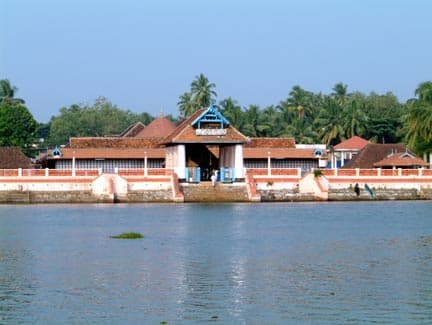
The Thriprayar Temple, also known as the Shree Ramaswami Temple, is a significant Hindu temple located in Triprayar, Thrissur district, Kerala, India. It is dedicated to Lord Rama, the seventh incarnation of Vishnu, who is depicted with four arms holding a conch, discus, bow, and garland. The temple's origin story involves the idol being worshipped by Krishna in Dwarka, later immersed in the sea, and eventually found by fishermen.