
Talesavara Siva Temple – II
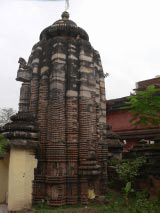
Talesavara Siva Temple – II is a Hindu temple located in Bhubaneswar, India, within the Bharati Matha precinct. The temple features a Siva lingam and a circular shrine, with its upper portion having been renovated by Matha authorities. It is constructed from coarse-grained sandstone using dry masonry techniques and is partially buried.
Key Facts
- ›Located in Bhubaneswar, Orissa, India.
- ›Situated within the Bharati Matha precinct.
- ›Features a Siva lingam and a circular shrine.
- ›Constructed from coarse-grained sandstone using dry masonry.
- ›The temple faces west and is partially buried.
- ›Suffered damage from a super cyclone, with repairs undertaken by Bharati Matha.
Shiva
Religious Site Dedicated To Shiva, Example of Temple Architecture In Bhubaneswar
Coarse-Grained Sandstone
Bharti Matha
About Talesavara Siva Temple – II
Talesavara Siva Temple – II is a Hindu temple located in Bhubaneswar, the capital city of Odisha, India. It is situated within the Bharati Matha precinct in the Badhaibanka chowk area of the Old Town. The shrine itself contains a Siva lingam and is characterized by a circular shrine structure.
The temple's construction utilizes coarse-grained sandstone and employs a dry masonry technique. A notable aspect of its current state is that it is partially buried up to the pabhaga portion, with the western side exhibiting some damage. The carvings on the temple walls are largely eroded.
Historical accounts indicate that the upper part of the temple underwent renovation by the Matha authorities, with financial assistance from a devotee. The temple faced significant damage from a super cyclone, but these damages were subsequently repaired by the Bharati Matha. The temple is owned by the Bharti Matha, and the current Matha Mahanta is Pranava Kishore Bharati Goswami.
Source: Wikipedia ↗
Frequently Asked Questions
Where is the Talesavara Siva Temple – II located?
The Talesavara Siva Temple – II is situated in Bhubaneswar, within the Bharati Matha precinct in Badhaibanka chowk, Old town, Bhubaneswar, Orissa, India.
What is the primary deity worshipped at this temple?
The temple houses a Siva lingam, indicating it is dedicated to Lord Shiva.
What is the construction material of the temple?
The temple building is made of coarse-grained sandstone and utilizes a dry masonry technique.
What is the current condition of the temple?
The temple is partially buried up to the pabhaga portion, and the western side is partly damaged. The carvings on the walls are largely eroded, though repairs have been made after significant damage from a super cyclone.
Who owns and manages the Talesavara Siva Temple – II?
The temple is owned by the Bharti Matha, and Pranava Kishore Bharati Goswami is the Matha Mahanta.
Related Temples (Hindu)

Taraknath Temple
The Taraknath Temple, located in Tarakeswar, West Bengal, India, is a significant Hindu pilgrimage site dedicated to Lord Shiva, worshiped here as Tarakanatha. Constructed in 1729, it features a distinct Bengal architectural style with an 'atchala' structure and an adjacent 'natmandir'. The temple is renowned for its belief that a dip in the nearby Dudhpukur tank fulfills prayers and is considered one of the 64 Jyotirlingas.

Tanot Mata Temple
The Tanot Mata Temple is a significant Hindu shrine located in the Jaisalmer district of Rajasthan, India, near the Pakistan border. Revered as a form of Goddess Hinglaj Mata, the temple is famously associated with the Indian victories in the Indo-Pakistani Wars of 1965 and 1971, with local folklore attributing the successful outcomes to divine intervention. The Border Security Force of India now manages the temple complex, which also includes a victory tower and a war museum.
Thriprayar Temple
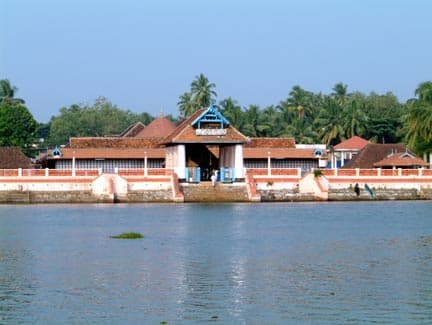
The Thriprayar Temple, also known as the Shree Ramaswami Temple, is a significant Hindu temple located in Triprayar, Thrissur district, Kerala, India. It is dedicated to Lord Rama, the seventh incarnation of Vishnu, who is depicted with four arms holding a conch, discus, bow, and garland. The temple's origin story involves the idol being worshipped by Krishna in Dwarka, later immersed in the sea, and eventually found by fishermen.