
Swaminarayan Akshardham
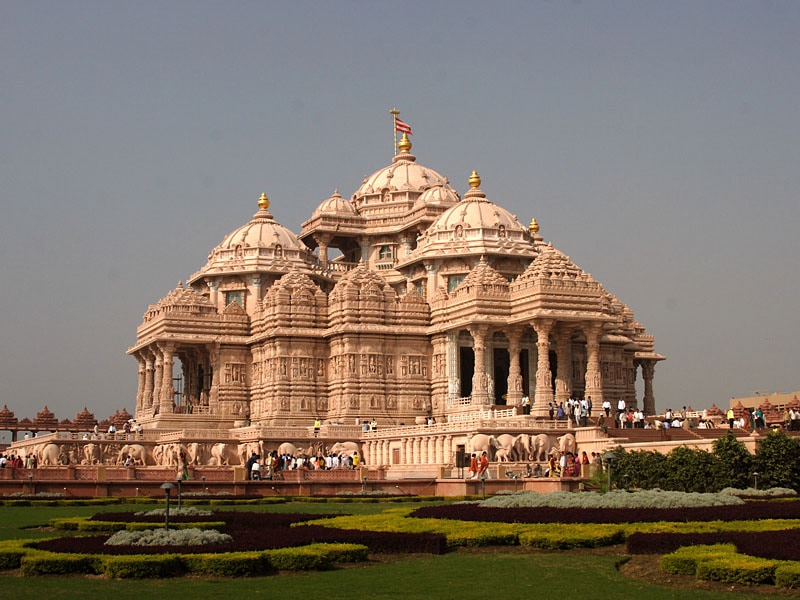
Swaminarayan Akshardham in Delhi, India, is a vast Hindu temple complex showcasing traditional and modern Indian culture and architecture. Inspired by Yogiji Maharaj and created by Pramukh Swami Maharaj, it was constructed by BAPS and opened in 2005. The complex features the main Akshardham Mandir, exhibition halls, and a musical fountain, dedicated to the life and teachings of Swaminarayan.
Key Facts
- ›The temple complex was opened on November 6, 2005.
- ›It was constructed without ferrous metals, adhering to traditional Hindu architectural guidelines.
- ›The main temple is carved from Rajasthani pink sandstone and Italian Carrara marble.
- ›Key exhibitions include 'Sahajanand Darshan' (Hall of Values), 'Neelkanth Darshan' (IMAX film), and 'Sanskruti Darshan' (cultural boat ride).
- ›The complex is situated on the banks of the Yamuna River.
- ›It is the world's second-largest BAPS Hindu temple.
Swaminarayan, Sita-Rama, Radha-Krishna, Shiva-Parvati, Lakshmi-Narayana
- Showcases Traditional and Modern Hindu Culture and Architecture
- Dedicated To the Life and Teachings of Swaminarayan
- A Significant Pilgrimage Destination For Followers of Swaminarayan Hinduism
Rajasthani Pink Sandstone, Italian Carrara Marble
Yogiji Maharaj, Pramukh Swami Maharaj
Murti of Swaminarayan, Images of the Faith's Lineage of Gurus, Life-Sized Elephants On the Gajendra Pith, Bronze Murti of Nilkanth Varni, Bronze Sculptures In Bharat Upavan
Yamuna River, Narayan Sarovar
About Swaminarayan Akshardham
Swaminarayan Akshardham: A Monument to Faith and Culture
Swaminarayan Akshardham in Delhi, India, stands as a monumental testament to Hindu culture, architecture, and spirituality. This sprawling complex, officially opened on November 6, 2005, is a creation of the Bochasanwasi Akshar Purushottam Swaminarayan Sanstha (BAPS), inspired by the vision of Yogiji Maharaj and realized by Pramukh Swami Maharaj. It is recognized as the world's second-largest BAPS Hindu temple, following its counterpart in New Jersey, USA.
Architectural Grandeur and Spiritual Heart
The centerpiece of the complex is the Akshardham Mandir, a magnificent structure measuring 43 meters high, 96 meters wide, and 109 meters long. Built in adherence to traditional Hindu architectural guidelines (Shilpa shastras) and Vastu shastra, it was constructed entirely without ferrous metals, using only Rajasthani pink sandstone and Italian Carrara marble. The temple is intricately carved with depictions of flora, fauna, dancers, musicians, and deities. Dominating its base is the Gajendra Pith, a plinth adorned with 148 life-sized elephants. Within the central dome resides the serene murti of Bhagwan Swaminarayan, seated in abhayamudra, surrounded by murtis of the faith's guru lineage and other principal deities like Sita-Rama, Radha-Krishna, Shiva-Parvati, and Lakshmi-Narayana.
Immersive Exhibitions and Cultural Experiences
Beyond the main shrine, Swaminarayan Akshardham offers a rich tapestry of experiences through its various exhibitions and attractions. The 'Sahajanand Darshan' (Hall of Values) uses advanced robotics and multimedia to illustrate Swaminarayan's teachings on morality and harmony. 'Neelkanth Darshan' features an IMAX film recounting Swaminarayan's early life and pilgrimage, while 'Sanskruti Darshan' provides a cultural boat ride through ancient Indian history. A notable feature is the Yagnapurush Kund, also known as the Musical Fountain, India's largest stepwell, which hosts a spectacular multimedia water and light show based on ancient Vedic stories.
Holistic Campus and Spiritual Significance
The campus also includes Bharat Upavan, a garden celebrating Indian heritage with sculptures of historical figures, and the Narayan Sarovar, a lake fed by waters from 151 sacred rivers and lakes. The complex serves as a temporal abode of God on earth for followers, embodying the meaning of 'Akshardham' as the abode of Swaminarayan. The temple is an active place of worship and a significant pilgrimage site, drawing devotees and visitors from around the globe to experience its spiritual ambiance and cultural richness.
Source: Wikipedia ↗
Frequently Asked Questions
What is Swaminarayan Akshardham?
Swaminarayan Akshardham in Delhi is a large Hindu temple and cultural complex. It is designed to showcase India's traditional and modern Hindu culture and architecture, inspired by the teachings of Bhagwan Swaminarayan.
When was Swaminarayan Akshardham opened?
The temple complex was officially opened on November 6, 2005. Its construction began on November 8, 2000, and was completed in just under five years.
What are the main attractions within the complex?
The main attractions include the Akshardham Mandir, exhibition halls detailing Swaminarayan's life and Indian culture, a musical fountain show called 'Sahaj Anand', and thematic gardens like Bharat Upavan.
What architectural styles influenced Swaminarayan Akshardham?
The temple's architecture is inspired by the Māru-Gurjara architectural style and was built according to Vastu shastra and Pancharatra shastra. The main mandir was designed by BAPS Swamis and Virendra Trivedi, drawing on research from various ancient Indian temple sites.
What materials were used to construct the temple?
The Akshardham Mandir is constructed from Rajasthani pink sandstone and Italian Carrara marble. Notably, it was built without the use of any ferrous metals, meaning no steel or concrete supports were used.
What is the significance of the Narayan Sarovar?
The Narayan Sarovar is a lake that surrounds the main monument, containing water collected from 151 rivers and lakes believed to have been sanctified by Swaminarayan. It is bordered by 108 gaumukhs from which water flows.
Related Temples (Hindu)
Neminath Jain Temple, Girnar
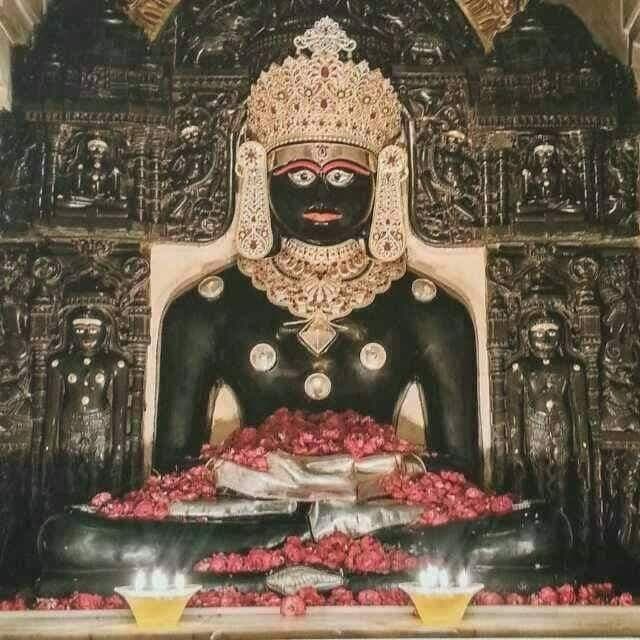
The Neminath Jain Temple, originally known as Karnavihara, is a significant Jain temple dedicated to the 24th Tirthankara, Neminatha, situated on Girnar hill in Gujarat, India. It is recognized as the foremost among the Girnar Jain temples, with its oldest existing structure dating back to the 12th century and built in the Māru-Gurjara architectural style.

Somnath Temple
The Somnath Temple, located in Prabhas Patan, Gujarat, India, is one of the most sacred pilgrimage sites for Hindus and the first among the twelve Jyotirlinga shrines of Shiva. It has a long and tumultuous history, having been destroyed and rebuilt multiple times by various rulers and invaders, most notably by Mahmud of Ghazni in 1026 CE. The present temple was reconstructed in the Māru-Gurjara style after India's independence.

Ambika Mata Temple
The Ambika Mata Temple, located in Jagat village, Rajasthan, India, is a significant Hindu temple dedicated to Ambika Devi, a form of Goddess Durga. Constructed during the reign of Rawal Allata of Mewar, it is recognized as an early example of Māru-Gurjara architecture and is often referred to as the "Khajuraho of Mewar" due to its intricate sculptures.