
Somnath Temple
The Somnath Temple, located in Prabhas Patan, Gujarat, India, is one of the most sacred pilgrimage sites for Hindus and the first among the twelve Jyotirlinga shrines of Shiva. It has a long and tumultuous history, having been destroyed and rebuilt multiple times by various rulers and invaders, most notably by Mahmud of Ghazni in 1026 CE. The present temple was reconstructed in the Māru-Gurjara style after India's independence.
Key Facts
- ›It is one of the most sacred pilgrimage sites for Hindus.
- ›It is the first among the twelve Jyotirlinga shrines of Shiva.
- ›The temple has been destroyed and reconstructed numerous times throughout history.
- ›Mahmud of Ghazni raided and desecrated the temple in 1026 CE.
- ›The present temple was reconstructed in the Māru-Gurjara style after India's independence, starting in 1950 and completed in 1951.
- ›The site of Somnath has been occupied since the Indus Valley Civilisation.

Shiva
- One of the Most Sacred Pilgrimage Sites For Hindus
- First Among the Twelve Jyotirlinga Shrines of Shiva
- Historical Importance Due To Repeated Destruction and Reconstruction
- Located At Prabhas Patan, A Significant Ancient Pilgrimage Site
Gurjara-Pratihara, Chaulukya, Chudasama, Mughal, Maratha
Stone
Mahmud of Ghazni, Kumarapala, Mahipala I, Khengara, Aurangzeb, Ahilyabai Holkar, Vallabhbhai Patel, K. M. Munshi
Saraswati River, Kapila River, Hiran River
About Somnath Temple
The Somnath Temple, located in Prabhas Patan, Veraval, Gujarat, India, is a revered Hindu pilgrimage site and the first of the twelve Jyotirlinga shrines dedicated to Lord Shiva. Its name, meaning "Lord of the Moon," originates from the legend of the Moon god Soma bathing in the Saraswati River here to regain his lost lustre, a narrative linked to the waxing and waning of the moon.
Historical Significance and Rebuilding
The history of the Somnath Temple is marked by repeated destructions and reconstructions. While the exact date of its earliest construction is uncertain, with estimates ranging from early centuries to the 9th century CE, the site of Prabhas Patan has been a pilgrimage destination since ancient times, mentioned in texts like the Mahabharata and Bhagavata Purana. The temple faced significant destruction, most notably in 1026 CE by Mahmud of Ghazni, an event that became a pivotal point in the historical narratives of both Islamic conquest and Hindu resistance. It was subsequently rebuilt by various rulers, including the Chaulukya king Kumarapala and the Chudasama king Mahipala I.
In the modern era, after India's independence, the ruins of the temple were cleared, and the present structure was rebuilt in the Māru-Gurjara style of architecture. The reconstruction was overseen by prominent leaders like Vallabhbhai Patel and K. M. Munshi, with the foundation stone laid in 1950 and the temple completed and consecrated in May 1951. Ahilyabai Holkar also constructed a smaller temple near the ruins around 1783 CE to ensure continuous worship.
Location and Architecture
The Somnath Temple is situated on the coast of the Saurashtra region, a location that historically served as a crucial port for maritime trade with East Africa and China. This strategic position contributed to its fame and prosperity. The temple's architecture reflects the Māru-Gurjara style, characterized by its intricate carvings and traditional design elements characteristic of Hindu temple construction.
Source: Wikipedia ↗
Frequently Asked Questions
What is the significance of the Somnath Temple?
The Somnath Temple is considered one of the most sacred pilgrimage sites for Hindus and holds the distinction of being the first among the twelve Jyotirlinga shrines dedicated to Lord Shiva. Its name, "Lord of the Soma," derives from the legend of the Moon god regaining his lustre here.
When was the Somnath Temple first built?
The exact date of the earliest Somnath temple's construction remains uncertain, with estimates varying from the early centuries of the 1st millennium CE to around the 9th century CE. While ancient texts mention a pilgrimage site at Prabhas Patan, archaeological evidence for an early temple has not been found.
What is the historical background of the Somnath Temple's destruction and reconstruction?
The Somnath Temple has a history of repeated destruction by various Muslim invaders and rulers, beginning with Mahmud of Ghazni in 1026 CE. It was subsequently rebuilt by rulers like Kumarapala and the Chudasama kings, and later by Ahilyabai Holkar. The present temple was reconstructed after India's independence.
Who ordered the reconstruction of the present Somnath Temple?
The reconstruction of the present Somnath Temple was initiated under the orders of Vallabhbhai Patel, the first Deputy Prime Minister of India, following India's independence. The reconstruction began in 1950 and was completed in May 1951.
What architectural style is the present Somnath Temple built in?
The present Somnath Temple has been reconstructed in the Māru-Gurjara style of Hindu temple architecture. This style is known for its intricate carvings and traditional temple design.
What is the significance of its coastal location?
The Somnath temple is situated on the coast of Saurashtra, which historically served as an important harbor for seafaring people trading with East Africa and China. This strategic location, combined with its pilgrimage status, contributed to its fame and wealth.
Related Temples (Hindu)
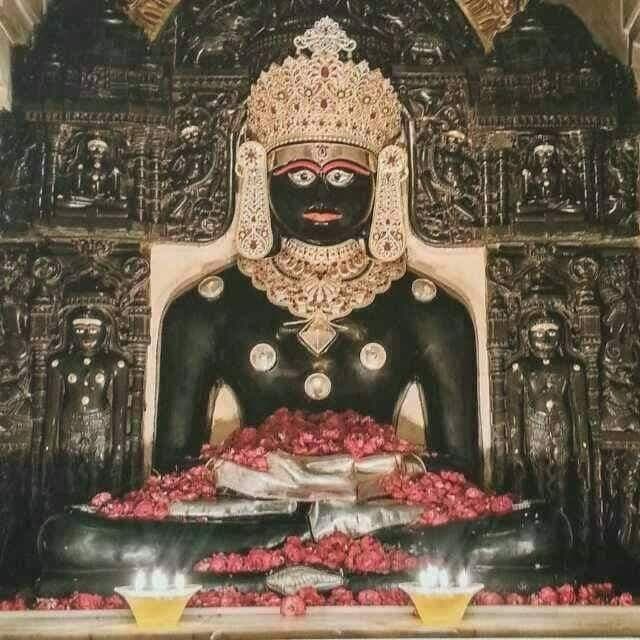
Neminath Jain Temple, Girnar
The Neminath Jain Temple, originally known as Karnavihara, is a significant Jain temple dedicated to the 24th Tirthankara, Neminatha, situated on Girnar hill in Gujarat, India. It is recognized as the foremost among the Girnar Jain temples, with its oldest existing structure dating back to the 12th century and built in the Māru-Gurjara architectural style.
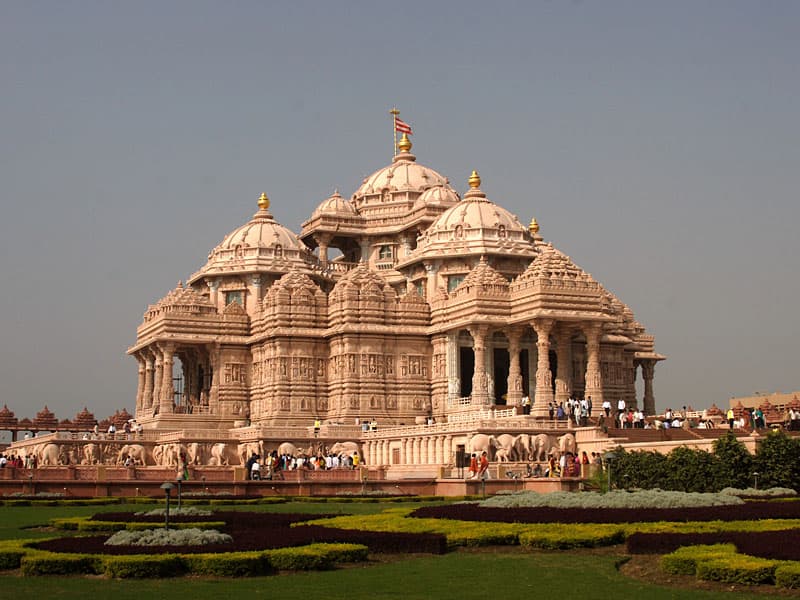
Swaminarayan Akshardham
Swaminarayan Akshardham in Delhi, India, is a vast Hindu temple complex showcasing traditional and modern Indian culture and architecture. Inspired by Yogiji Maharaj and created by Pramukh Swami Maharaj, it was constructed by BAPS and opened in 2005. The complex features the main Akshardham Mandir, exhibition halls, and a musical fountain, dedicated to the life and teachings of Swaminarayan.

Ambika Mata Temple
The Ambika Mata Temple, located in Jagat village, Rajasthan, India, is a significant Hindu temple dedicated to Ambika Devi, a form of Goddess Durga. Constructed during the reign of Rawal Allata of Mewar, it is recognized as an early example of Māru-Gurjara architecture and is often referred to as the "Khajuraho of Mewar" due to its intricate sculptures.