
Ambika Mata Temple
The Ambika Mata Temple, located in Jagat village, Rajasthan, India, is a significant Hindu temple dedicated to Ambika Devi, a form of Goddess Durga. Constructed during the reign of Rawal Allata of Mewar, it is recognized as an early example of Māru-Gurjara architecture and is often referred to as the "Khajuraho of Mewar" due to its intricate sculptures.
Key Facts
- ›Dedicated to Ambika Devi, a form of Goddess Durga, worshipped as Shakti.
- ›Built during the reign of Rawal Allata of Mewar.
- ›Features an early, transitional style of Māru-Gurjara architecture.
- ›Contains numerous fine sculptures of Hindu deities, particularly female divinities.
- ›The earliest inscription found dates back to 961 AD, indicating a repair.
- ›Preserved by the State Department of Archaeology and Museum, Rajasthan.

Ambika Devi, Durga, Shakti
- Architectural Example of MāRu-Gurjara Style
- Historical Importance Due To Inscriptions Dating Back To 961 Ad
- Known For Its Fine Sculptures of Female Divinities
Mewar Kingdom
Rawal Allata
Durga, Lakshmi, Brahmani, Musicians, Dancers, Singers of the Heavenly Court, Beautiful Women
About Ambika Mata Temple
The Ambika Mata Temple is a significant Hindu temple located in the village of Jagat, approximately 50 kilometers southeast of Udaipur in the Indian state of Rajasthan. The primary deity enshrined is Ambika Devi, a form of the Goddess Durga, who is revered as Shakti, the primeval source of energy. The temple's construction occurred during the reign of Rawal Allata of Mewar, and it is recognized as an important early, transitional example of Māru-Gurjara architecture.
Architecture and Sculptures
Often referred to as the "Khajuraho of Mewar," the Ambika Mata Temple is renowned for its numerous well-preserved sculptures. The temple itself is pentagonal in design, encircled by a substantial rampart wall, and features 17 turrets topped with a pagoda-like gabled roof. Intricate carvings adorn the exterior walls, depicting celestial musicians, dancers, singers, and numerous beautiful women, often integrated with curling vegetal motifs. The architectural theme evokes a mountain palace, conceptualized as the heavenly abode of the gods, echoing their earthly residence within the temple structure.
Historical Context
The temple is situated in a rock cleft and contains several inscriptions. The earliest of these, dated to 961 AD, documents a repair to the structure, providing a valuable historical marker. Today, the preservation of the Ambika Mata Temple is overseen by the State Department of Archaeology and Museum, Rajasthan. Its sculptures primarily represent Durga, beneficent goddesses like Lakshmi, and theoretical counterparts of male deities, such as Brahmani, reflecting its focus as a Devi temple.
Source: Wikipedia ↗
Frequently Asked Questions
Where is the Ambika Mata Temple located?
The Ambika Mata Temple is situated in the village of Jagat, approximately 50 km southeast of Udaipur, in the state of Rajasthan, India.
What is the primary deity worshipped at Ambika Mata Temple?
The presiding deity of the temple is Ambika Devi, who is a form of Goddess Durga. She is worshipped as Shakti, considered a primeval source of energy.
What is the architectural style of the Ambika Mata Temple?
The temple is an early, transitional example of Māru-Gurjara architecture. It is described as pentagonal, enclosed by a rampart wall, and features 17 turrets with a pagoda-like gabled roof.
When was the Ambika Mata Temple built?
The temple dates back to the tenth century. The earliest inscription found within the temple is dated 961 AD, which refers to a repair made to the structure.
What kind of sculptures are found at the Ambika Mata Temple?
The temple is known for its many fine sculptures, which are excellently preserved. As a Devi temple, most sculptures represent Durga, Lakshmi, other beneficent devis, or Brahmani and similar theoretical counterparts of male Hindu divinities.
What is unique about the Ambika Mata Temple's design?
The temple's design is characterized by exquisite details on its exterior walls, featuring musicians, dancers, singers of the heavenly court, and beautiful women, often with a curling vegetal motif. The overall theme evokes a mountain palace, a heavenly abode for the gods.
Related Temples (Hindu)

Rudra Mahalaya Temple
The Rudra Mahalaya Temple, also known as Rudramal, is a historically significant but desecrated Hindu temple complex located in Siddhpur, Gujarat, India. Its construction began in the 10th century and was completed in the 12th century, dedicated to the worship of Shiva. The temple suffered destruction and partial demolition by various sultans, with parts of it later converted into a congregational mosque.
Neminath Jain Temple, Girnar
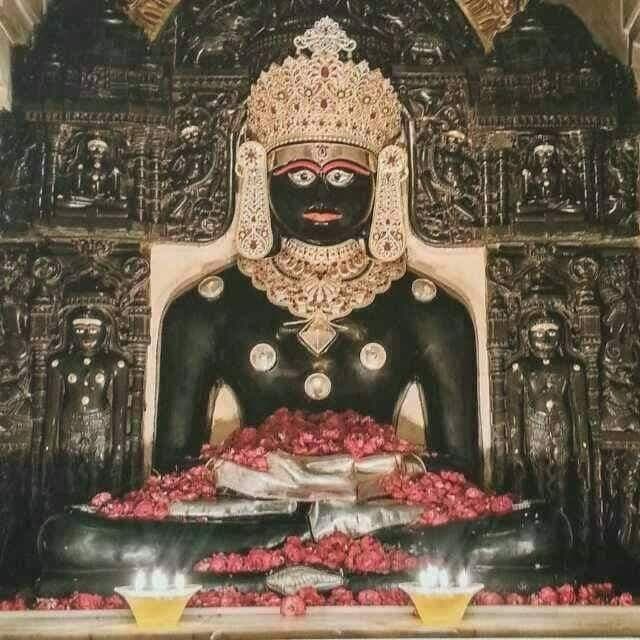
The Neminath Jain Temple, originally known as Karnavihara, is a significant Jain temple dedicated to the 24th Tirthankara, Neminatha, situated on Girnar hill in Gujarat, India. It is recognized as the foremost among the Girnar Jain temples, with its oldest existing structure dating back to the 12th century and built in the Māru-Gurjara architectural style.

Somnath Temple
The Somnath Temple, located in Prabhas Patan, Gujarat, India, is one of the most sacred pilgrimage sites for Hindus and the first among the twelve Jyotirlinga shrines of Shiva. It has a long and tumultuous history, having been destroyed and rebuilt multiple times by various rulers and invaders, most notably by Mahmud of Ghazni in 1026 CE. The present temple was reconstructed in the Māru-Gurjara style after India's independence.