
Surkanda Devi
Himalayan stone architecture·India
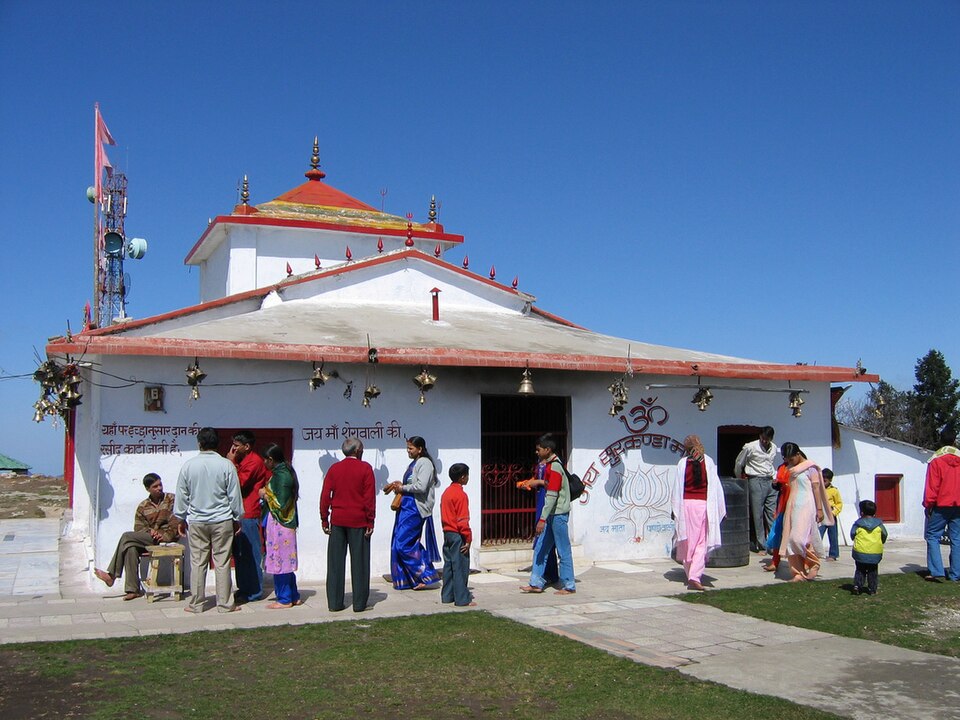
The Surkanda Devi Temple is a significant Hindu shrine situated at an altitude of approximately 2,756 meters in the Tehri Garhwal district of Uttarakhand, India. It is revered as one of the Shakta Pitha sites, believed to be where the head of Goddess Sati fell, making it a sacred center for divine consciousness and a pilgrimage destination offering panoramic Himalayan views.
Key Facts
- ›Located at an altitude of 2,756 meters, offering panoramic Himalayan views.
- ›Considered a sacred Shakta Pitha, marking the spot where Goddess Sati's head is believed to have fallen.
- ›The name 'Surkanda' derives from 'Sir' (head) and 'Khanda' (fragment).
- ›Follows traditional Himalayan stone architecture with a conical shikhara and local materials.
- ›Key festivals celebrated include Ganga Dussehra and Navratri.
- ›Accessible via a 1.5-kilometer trek from Kaddukhal.
Sati, Shakti
- Sacred Shakta Pitha Site
- Mythological Association With Goddess Sati's Head
- Spiritual Significance As the Seat of Consciousness
- Pilgrimage Destination
Ganga Dussehra, Navratri
Stone
About Surkanda Devi
Surkanda Devi Temple
The Surkanda Devi Temple is a significant Hindu shrine nestled in the Tehri Garhwal district of Uttarakhand, India, near the town of Dhanaulti. Perched at an elevation of approximately 2,756 meters (9,042 feet), the temple offers breathtaking panoramic vistas of the majestic Himalayan mountain ranges. It is recognized as one of the revered Shakta Pitha sites, sites of immense spiritual importance in Hinduism.
Mythological and Spiritual Significance
The temple's profound significance stems from its association with a pivotal event in Hindu mythology. According to tradition, this is the sacred spot where the head (Sir) of Goddess Sati, the consort of Lord Shiva, fell after her body was dismembered by Lord Vishnu's Sudarshana Chakra. This event, following Sati's self-immolation during a yajna (sacrificial ritual) conducted by her father, King Daksha, led to the creation of the Shakta Pithas. The name 'Surkanda' itself is believed to be derived from 'Sir' (head) and 'Khanda' (fragment), directly referencing this mythological occurrence. In Hindu metaphysics, the head is considered the seat of 'Chaitanya' (pure consciousness), thus bestowing the Surkanda Devi Temple with a unique spiritual eminence, emphasizing wisdom and cosmic awareness.
The temple also resonates with the philosophical tenets of Advaita Vedanta, which explores non-duality. Within this framework, Shiva symbolizes formless pure consciousness, and Shakti represents dynamic creative energy. Their union signifies the indivisible nature of reality, and Surkanda Devi, as the seat of consciousness, embodies the realization of oneness beyond dualistic perceptions.
Architecture and Environment
The Surkanda Devi Temple showcases traditional Himalayan stone architecture, characterized by its local stone construction. It features a distinctive conical shikhara (spire) topped with a trident (trishula). Bell garlands, offered by devotees, adorn the structure, contributing to its devotional atmosphere. While the temple has undergone repairs and renovations over time, it has retained its ancient spiritual ambiance. The temple is situated amidst dense forests of rhododendron, oak, and deodar trees, and it frequently experiences snowfall during winter months, enhancing its serene and mystical appeal. The location provides sweeping views of prominent Himalayan peaks such as Bandarpunch, Swargarohini, Chaukhamba, and Kedarnath.
Festivals and Pilgrimage
Two of the most important festivals celebrated at Surkanda Devi are Ganga Dussehra, observed in May-June with associated rituals and fairs, and Navratri, a nine-night festival dedicated to the nine forms of Goddess Durga, marked by special pujas, havan (fire rituals), and devotional music. Pilgrimage is also a common practice on full moon days (Purnima), when devotees undertake the journey to seek blessings.
The temple is accessed via a moderately challenging 1.5-kilometer trek from the village of Kaddukhal, which lies along the Mussoorie-Chamba road. The trail winds through scenic forests and is generally accessible year-round, though winter visitors should be prepared for snowy conditions. The nearest airport is Jolly Grant Airport in Dehradun, approximately 90 km away, and the closest railway station is also in Dehradun, about 70 km distant.
Conservation Efforts
Recognizing the temple's location within a fragile ecological zone, local communities and authorities are engaged in conservation efforts. These initiatives include promoting eco-tourism, implementing waste reduction programs, and undertaking tree plantation drives. Visitors are encouraged to minimize plastic use and respect the sanctity of the natural environment.
Surkanda Devi Temple is a notable destination within regional travel literature and documentaries focusing on sacred Himalayan sites. It forms an integral part of the 'Devi Darshan Triangle,' alongside the Kunjapuri Devi Temple and Chandrabadni Devi Temple.
Source: Wikipedia ↗
Frequently Asked Questions
What is the mythological significance of the Surkanda Devi Temple?
The temple is significant as it is believed to be the site where the head of Goddess Sati fell after her body was dismembered. This makes it one of the revered Shakta Pitha sites, a sacred center where divine consciousness is said to reside.
What does the name 'Surkanda' mean?
The name 'Surkanda' is believed to originate from two Sanskrit words: 'Sir,' meaning 'head,' and 'Khanda,' meaning 'fragment.' This etymology directly relates to the mythological event of Goddess Sati's head falling at this location.
What is the architectural style of the Surkanda Devi Temple?
The temple adheres to traditional Himalayan stone architecture, featuring a conical shikhara (spire) crowned by a trident. It is constructed using local stone materials and includes a simple sanctum (garbhagriha) housing the deity.
What are the main festivals celebrated at Surkanda Devi Temple?
Two of the most important festivals observed at the temple are Ganga Dussehra, celebrated in May-June with fairs and rituals, and Navratri, a nine-night festival dedicated to Goddess Durga, featuring special pujas and devotional music. Pilgrimage is also common on full moon days.
How can one reach the Surkanda Devi Temple?
The temple is accessible via a 1.5-kilometer trek from the village of Kaddukhal, situated on the Mussoorie-Chamba road. The nearest airport is Jolly Grant Airport in Dehradun, and the nearest railway station is also in Dehradun.
What is the connection between Surkanda Devi Temple and Advaita Vedanta?
The temple resonates with Advaita Vedanta's concept of non-duality, where Shiva represents formless consciousness and Shakti represents dynamic energy. The unity of Shiva and Shakti symbolizes the indivisible nature of reality, with Surkanda Devi, as the seat of consciousness, representing the realization of oneness.
Related Temples (Hindu)

Taraknath Temple
The Taraknath Temple, located in Tarakeswar, West Bengal, India, is a significant Hindu pilgrimage site dedicated to Lord Shiva, worshiped here as Tarakanatha. Constructed in 1729, it features a distinct Bengal architectural style with an 'atchala' structure and an adjacent 'natmandir'. The temple is renowned for its belief that a dip in the nearby Dudhpukur tank fulfills prayers and is considered one of the 64 Jyotirlingas.

Tanot Mata Temple
The Tanot Mata Temple is a significant Hindu shrine located in the Jaisalmer district of Rajasthan, India, near the Pakistan border. Revered as a form of Goddess Hinglaj Mata, the temple is famously associated with the Indian victories in the Indo-Pakistani Wars of 1965 and 1971, with local folklore attributing the successful outcomes to divine intervention. The Border Security Force of India now manages the temple complex, which also includes a victory tower and a war museum.
Thriprayar Temple
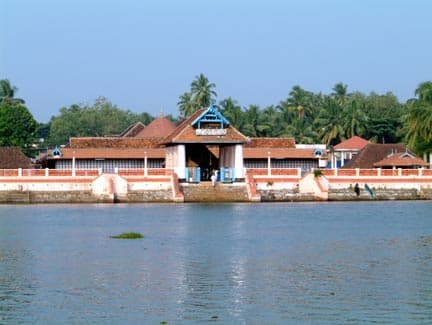
The Thriprayar Temple, also known as the Shree Ramaswami Temple, is a significant Hindu temple located in Triprayar, Thrissur district, Kerala, India. It is dedicated to Lord Rama, the seventh incarnation of Vishnu, who is depicted with four arms holding a conch, discus, bow, and garland. The temple's origin story involves the idol being worshipped by Krishna in Dwarka, later immersed in the sea, and eventually found by fishermen.