
Surendrapuri
Surendrapuri is a 17-acre religious tourism destination in Telangana, India, featuring the Kunda Satyanarayana Kaladhamam, India's first mythological museum. The complex also includes various Hindu temples, replicas of prominent Indian shrines, and significant sculptural representations of epic and puranic narratives. It was designed and built by Satyanarayana Kunda and opened to the public in May 2003.
Key Facts
- ›Located in the Yadadri Bhuvanagiri district of Telangana, India.
- ›Features Kunda Satyanarayana Kaladhamam, India's first mythological museum.
- ›Includes replicas of over 100 Indian temples, such as the Golden Temple and Jagannath Temple.
- ›Showcases sculptures and murals depicting scenes from Hindu epics and Puranas.
- ›Houses the Panchamukha Hanumadeeswara Devasthanam temple, built according to Vaastushastra and Agamashastra.
- ›Features an iconic 60-foot double-sided statue of Panchamukha Hanuman and Shiva.
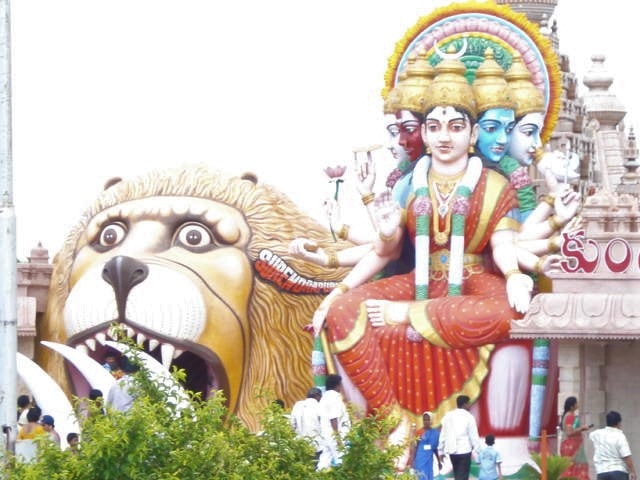
Hanuman, Shiva, Venkateswara, Lakshmi, Navagraha Deities
- Religious Tourism Destination
- Houses India's First Mythological Museum
- Features Replicas of Prominent Indian Temples
- Showcases Hindu Mythology Through Art and Sculpture
Black Stone
Satyanarayana Kunda
- Two-Sided Panchamukha Hanuman-Shiva Statue
- 16-Foot Panchamukha Hanuman Idol
- Mahashivalinga of Panchamukha Parameswara
- 101-Foot Shivalinga
- Statues and Sculptures From Indian Epics and Puranas
- Recreations of Saptalokas
About Surendrapuri
Surendrapuri is a prominent religious tourism destination situated in the Yadadri Bhuvanagiri district of Telangana, India, approximately 60 kilometers from Hyderabad. Spanning 17 acres, this complex is a unique blend of religious sites and a mythological museum, designed and built by Satyanarayana Kunda. It was opened to the public in May 2003 and has since become a significant attraction for pilgrims and tourists alike.
Kunda Satyanarayana Kaladhamam
The centerpiece of Surendrapuri is the Kunda Satyanarayana Kaladhamam, inaugurated in February 2009. This institution holds the distinction of being India's first mythological museum. Its 3-kilometer pathway guides visitors through an extensive collection of over 3,000 statues, sculptures, and structures. These exhibits are broadly categorized into four themes: Temples of India, Epics of India, Puranas, and Saptalokas. The museum showcases life-sized replicas of more than 100 Indian temples, including famous shrines like the Golden Temple of Amritsar and the Jagannath Temple of Puri. It also features vivid depictions of scenes from the Ramayana, Mahabharata, Bhagavata, and other significant Hindu texts, as well as key events from the Puranas like Ksheera Sagara Madhan and Gajendra Moksham. The Saptalokas, representing the seven celestial worlds of Hindu mythology, are also recreated through intricate sculptures and carvings.
Religious Structures
Beyond the museum, Surendrapuri hosts several significant Hindu temples. The Panchamukha Hanumadeeswara Devasthanam, associated with the Kanchi Kamakoti Peetham, is constructed in strict adherence to Vaastushastra and Agamashastra. Its Gopuras exhibit a fusion of North and South Indian architectural influences. Within the sanctum, a 16-foot idol of Panchamukha Hanuman, carved from black stone sourced from Kanchi, is enshrined. The complex also offers a darshan of the Mahashivalinga of Panchamukha Parameswara, reminiscent of the Pasupatinath temple in Nepal, alongside deities Lord Venkateswara and Goddess Lakshmi. Additionally, the Navagraha Temples are present, dedicated to the nine celestial bodies and their consorts. A striking feature is the Nagakoti Idol, a 101-foot Shivalinga surrounded by a colossal serpent, said to offer solace from various doshas. The complex's oldest attraction is a commanding 60-foot double-sided statue of Panchamukha Hanuman and Lord Shiva.
Source: Wikipedia ↗
Frequently Asked Questions
What is Surendrapuri?
Surendrapuri is a 17-acre religious tourism complex located near Hyderabad, Telangana, India. It is known for its mythological museum, temple replicas, and significant sculptures depicting Hindu epics and deities.
What is the Kunda Satyanarayana Kaladhamam?
The Kunda Satyanarayana Kaladhamam is India's first mythological museum, located within the Surendrapuri complex. It features over 3,000 statues, sculptures, and structures categorized into Temples of India, Epics of India, Puranas, and Saptalokas.
What kind of temple architecture is found at Surendrapuri?
The Panchamukha Hanumadeeswara Devasthanam temple at Surendrapuri has Gopuras that blend North and South Indian architectural styles. The temple's construction adheres to Vaastushastra and Agamashastra principles.
What are the key deities worshipped at Surendrapuri?
The complex features the Panchamukha Hanumadeeswara Devasthanam, with a 16-foot Panchamukha Hanuman idol and a Mahashivalinga of Panchamukha Parameswara. Devotees can also seek blessings from Lord Venkateswara and Goddess Lakshmi. The Navagraha temples are also present.
What is the significance of the Nagakoti idol?
The Nagakoti idol is a 101-foot Shivalinga encircled by a giant snake, situated atop Nagadri Hill. It is believed to help devotees overcome the ill-effects of Naga Dosha, Kuja Dosha, and Kaalasarpa Dosha.
When was Surendrapuri opened to the public?
Surendrapuri was designed and built by Satyanarayana Kunda and was opened to the public starting from May 2003.
Related Temples (Hindu)

Taraknath Temple
The Taraknath Temple, located in Tarakeswar, West Bengal, India, is a significant Hindu pilgrimage site dedicated to Lord Shiva, worshiped here as Tarakanatha. Constructed in 1729, it features a distinct Bengal architectural style with an 'atchala' structure and an adjacent 'natmandir'. The temple is renowned for its belief that a dip in the nearby Dudhpukur tank fulfills prayers and is considered one of the 64 Jyotirlingas.

Tanot Mata Temple
The Tanot Mata Temple is a significant Hindu shrine located in the Jaisalmer district of Rajasthan, India, near the Pakistan border. Revered as a form of Goddess Hinglaj Mata, the temple is famously associated with the Indian victories in the Indo-Pakistani Wars of 1965 and 1971, with local folklore attributing the successful outcomes to divine intervention. The Border Security Force of India now manages the temple complex, which also includes a victory tower and a war museum.
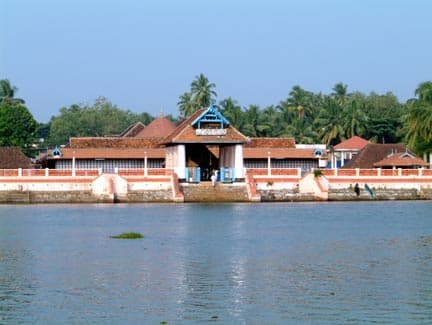
Thriprayar Temple
The Thriprayar Temple, also known as the Shree Ramaswami Temple, is a significant Hindu temple located in Triprayar, Thrissur district, Kerala, India. It is dedicated to Lord Rama, the seventh incarnation of Vishnu, who is depicted with four arms holding a conch, discus, bow, and garland. The temple's origin story involves the idol being worshipped by Krishna in Dwarka, later immersed in the sea, and eventually found by fishermen.