
Sthaneshwar Mahadev Temple
The Sthaneshwar Mahadev Temple, an ancient Hindu temple dedicated to Shiva, is located in Kurukshetra, Haryana, India. It is historically significant as the site where the Pandavas and Krishna are believed to have prayed for victory in the Mahabharata war. The current structure was built by Raghunath Rao Peshwa.
Key Facts
- ›Dedicated to Lord Shiva.
- ›Located in the ancient city of Sthaneshwar (presently Kurukshetra).
- ›Believed to be the site of Pandavas' prayers for the Mahabharata war.
- ›The Vardhana Empire's capital was named after Sthaneshwar Shiva.
- ›The existing temple was constructed by Raghunath Rao Peshwa.

Shiva
- Religious Pilgrimage Site
- Mythological Importance Related To Mahabharata
- Historical Connection To the Vardhana Empire
Vardhana Empire
Raghunath Rao Peshwa, Pushpabhuti
About Sthaneshwar Mahadev Temple
The Sthaneshwar Mahadev Temple is an ancient Hindu temple located in the old city of Thanesar, now known as Kurukshetra, in the Kurukshetra district of Haryana, India. Dedicated to Lord Shiva, the temple is a significant site steeped in mythology and history.
Historical and Mythological Significance
According to tradition, this sacred site is where the Pandavas, along with Lord Krishna, offered prayers to Lord Shiva and received his blessings for their victory in the pivotal battle of the Mahabharata. The city of Sthaneshwar itself, which later became Thanesar and is now part of Kurukshetra, was named after Shiva by Pushpabhuti, the founder of the Vardhana Empire. This historical connection highlights the temple's long-standing importance and its influence on the region's naming and governance.
Construction and Patronage
The current structure of the Sthaneshwar Mahadev Temple was constructed by Raghunath Rao Peshwa. While the exact age of the original site is not specified, the patronage by a figure like Raghunath Rao Peshwa indicates its continued reverence and upkeep through different historical periods. The ninth Guru of Sikhism, Shri Tegh Bahadur, also stayed at a spot near the Sthaneshwar Tirtha, which is marked by a gurdwara adjacent to the temple, further adding to the site's multi-faith historical context.
Source: Wikipedia ↗
Frequently Asked Questions
Who is the primary deity worshipped at Sthaneshwar Mahadev Temple?
The Sthaneshwar Mahadev Temple is dedicated to Lord Shiva, who is considered the presiding deity of the ancient city of Sthaneshwar. The temple's name itself reflects this dedication.
What is the historical significance of the Sthaneshwar Mahadev Temple?
The temple holds significant historical and mythological importance as the place where the Pandavas, along with Lord Krishna, are said to have prayed to Shiva for blessings before the epic battle of Mahabharata. It is believed they received his blessings for victory here.
Who constructed the current Sthaneshwar Mahadev Temple?
The existing structure of the Sthaneshwar Mahadev Temple was constructed by Raghunath Rao Peshwa. This indicates patronage from a notable historical figure in its later development.
What is the connection between the Sthaneshwar Mahadev Temple and the Vardhana Empire?
The founder of the Vardhana Empire, Pushpabhuti, named his kingdom's capital after Sthaneshwar Shiva. This shows a deep connection and reverence for the deity and the sacred site during that era.
Related Temples (Hindu)

Taraknath Temple
The Taraknath Temple, located in Tarakeswar, West Bengal, India, is a significant Hindu pilgrimage site dedicated to Lord Shiva, worshiped here as Tarakanatha. Constructed in 1729, it features a distinct Bengal architectural style with an 'atchala' structure and an adjacent 'natmandir'. The temple is renowned for its belief that a dip in the nearby Dudhpukur tank fulfills prayers and is considered one of the 64 Jyotirlingas.

Tanot Mata Temple
The Tanot Mata Temple is a significant Hindu shrine located in the Jaisalmer district of Rajasthan, India, near the Pakistan border. Revered as a form of Goddess Hinglaj Mata, the temple is famously associated with the Indian victories in the Indo-Pakistani Wars of 1965 and 1971, with local folklore attributing the successful outcomes to divine intervention. The Border Security Force of India now manages the temple complex, which also includes a victory tower and a war museum.
Thriprayar Temple
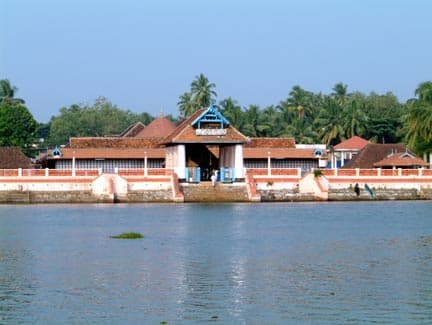
The Thriprayar Temple, also known as the Shree Ramaswami Temple, is a significant Hindu temple located in Triprayar, Thrissur district, Kerala, India. It is dedicated to Lord Rama, the seventh incarnation of Vishnu, who is depicted with four arms holding a conch, discus, bow, and garland. The temple's origin story involves the idol being worshipped by Krishna in Dwarka, later immersed in the sea, and eventually found by fishermen.