
Siddhivinayak Mahaganapati Temple
The Siddhivinayak Mahaganapati Temple is a significant Hindu temple located in Titwala, Maharashtra, India, dedicated to Lord Ganesha. According to legend, the temple was built by Shakuntala to appease Ganesha and reunite with her husband, King Dushyanta. It is a popular pilgrimage site, especially for those seeking marital harmony and successful marriages.
Key Facts
- ›Dedicated to Lord Ganesha, the elephant-headed god of wisdom.
- ›Located in Titwala, near Mumbai, Maharashtra, India.
- ›Associated with the legend of Shakuntala and King Dushyanta from the Mahabharata.
- ›Believed to help reunite separated married couples and fix marriages.
- ›Primarily visited on Tuesdays, which are considered auspicious for worshipping Ganesha.
- ›Festivals like Ganesh Chaturthi and Ganesh Jayanti attract hundreds of thousands of devotees.

Ganesha
- Religious Pilgrimage Site
- Believed To Aid In Marital Reconciliation and Marriage Arrangements
- Associated With the Epic Mahabharata and the Legend of Shakuntala
Peshwa
Ganesh Chaturthi, Ganesh Jayanti, Angarika Chaturthi
Stone, Marble
Shakuntala, Sage Kanva, Peshwa Madhavrao I, Ramchandra Mehendale
- Sculptures of the Ashtavinayaka On the Temple Shikhara
Kalu River, Titwala Talav
About Siddhivinayak Mahaganapati Temple
The Siddhivinayak Mahaganapati Temple is a prominent Hindu temple situated in Titwala, a town within the Thane district of Maharashtra, India, near Mumbai. This temple is dedicated to Lord Ganesha, the elephant-headed deity revered as the god of wisdom and remover of obstacles. Titwala itself is steeped in ancient lore, believed to be the hermitage site of sage Kanva, who adopted Shakuntala, a figure central to the epic Mahabharata and Kālidāsa's play, "Abhijñānaśākuntalam."
Legend and Significance
The temple's renown is largely attributed to its association with a poignant legend. According to local tradition, Shakuntala, after being cursed and subsequently forgotten by her husband King Dushyanta, was advised by sage Kanva to build a shrine to Ganesha as Siddhi Vinayaka. Devotional worship at this shrine was believed to facilitate her reunion with Dushyanta. Consequently, the temple is a significant pilgrimage destination for devotees who believe that worshipping the Ganesha image here can help resolve marital discord and bring about desired marriages. This belief draws a large number of devotees, particularly on Tuesdays, which are considered auspicious for Ganesha worship.
Historical Development and Architecture
Historically, the temple is said to have been built by Shakuntala but was later submerged under a tank. Its rediscovery occurred during the rule of Peshwa Madhavrao I, when de-silting operations for a water tank led to its unearthing. The temple was subsequently renovated and the ancient Ganesha image consecrated. The current temple complex, built on land donated by the Peshwas and hereditary priests, occupies a substantial area. The architecture includes a large audience hall with marble flooring and a stone platform. The temple's pinnacle is adorned with sculptures representing the Ashtavinayaka, the eight revered Ganesha temples near Pune.
Devotees and Festivals
The temple attracts vast numbers of devotees, especially from Mumbai. Auspicious days for worship include Tuesdays and the fourth day of the lunar fortnight, known as Angarika Chaturthi. Major festivals celebrated with great fervor are Ganesh Chaturthi (Ganeshotsav) and Ganesh Jayanti (Maghi Ganeshotsav), which draw hundreds of thousands of worshippers. The temple complex is located near the Kalu river and the Titwala Talav (lake), with the latter also having undergone recent de-silting and the addition of boating facilities.
Source: Wikipedia ↗
Frequently Asked Questions
What is the legend behind the Siddhivinayak Mahaganapati Temple?
According to local legend, Shakuntala, adopted daughter of sage Kanva, was cursed by sage Durvasa to be forgotten by her husband, King Dushyanta. Sage Kanva advised her to build a shrine to Ganesha as Siddhi Vinayaka. Her sincere prayers to Siddhi Vinayaka eventually led to her reunion with Dushyanta and the birth of their son, Bharata.
Why is the temple particularly popular for marital issues?
Hindus believe that devotional worship of the Ganesha image installed in this temple can help reunite separated married couples and facilitate the fixing of marriages for desired individuals. This belief stems from the legend of Shakuntala and Dushyanta.
When is the best time to visit the Siddhivinayak Mahaganapati Temple?
The temple is most frequented on Tuesdays, as Tuesdays are considered auspicious days for worshipping Lord Ganesha. Additionally, the temple sees massive crowds during major festivals like Ganesh Chaturthi and Ganesh Jayanti.
What happened to the original temple?
The original temple built by Shakuntala was submerged under a tank. It was rediscovered during de-silting operations to resolve a drought situation during the rule of the Peshwa Madhavrao I, who then consecrated the ancient Ganesha image in a newly built stone temple.
Can you describe the current architecture of the temple?
The current temple is built on land donated by the Peshwas and hereditary priests. It features an audience hall measuring 90x45 feet with galleries, marble flooring, and a stone platform. The temple's pinnacle is decorated with sculptures of the Ashtavinayaka.
Related Temples (Hindu)

Taraknath Temple
The Taraknath Temple, located in Tarakeswar, West Bengal, India, is a significant Hindu pilgrimage site dedicated to Lord Shiva, worshiped here as Tarakanatha. Constructed in 1729, it features a distinct Bengal architectural style with an 'atchala' structure and an adjacent 'natmandir'. The temple is renowned for its belief that a dip in the nearby Dudhpukur tank fulfills prayers and is considered one of the 64 Jyotirlingas.

Tanot Mata Temple
The Tanot Mata Temple is a significant Hindu shrine located in the Jaisalmer district of Rajasthan, India, near the Pakistan border. Revered as a form of Goddess Hinglaj Mata, the temple is famously associated with the Indian victories in the Indo-Pakistani Wars of 1965 and 1971, with local folklore attributing the successful outcomes to divine intervention. The Border Security Force of India now manages the temple complex, which also includes a victory tower and a war museum.
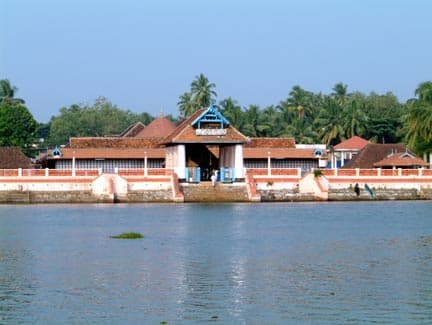
Thriprayar Temple
The Thriprayar Temple, also known as the Shree Ramaswami Temple, is a significant Hindu temple located in Triprayar, Thrissur district, Kerala, India. It is dedicated to Lord Rama, the seventh incarnation of Vishnu, who is depicted with four arms holding a conch, discus, bow, and garland. The temple's origin story involves the idol being worshipped by Krishna in Dwarka, later immersed in the sea, and eventually found by fishermen.