
Shoolini Devi
Shoolini Devi is a principal warrior form of the Hindu Goddess Durga or Parvati, embodying the supreme feminine power of Shiva. Her name derives from "shoola," meaning trident, symbolizing her ability to destroy ignorance and malevolent forces. She is particularly venerated in northern India and is the patron deity of Solan, Himachal Pradesh.
Key Facts
- ›Shoolini Devi is a warrior manifestation of Goddess Durga or Parvati.
- ›Her name originates from 'shoola,' referring to the trident she wields.
- ›She is considered the supreme Shakti (feminine power) of Shiva.
- ›According to Puranic lore, she manifested to help tame the rage of Narasimha.
- ›She is the Kuladevi (family deity) for the former Baghat State rulers and residents.
- ›The town of Solan in Himachal Pradesh is named after her.
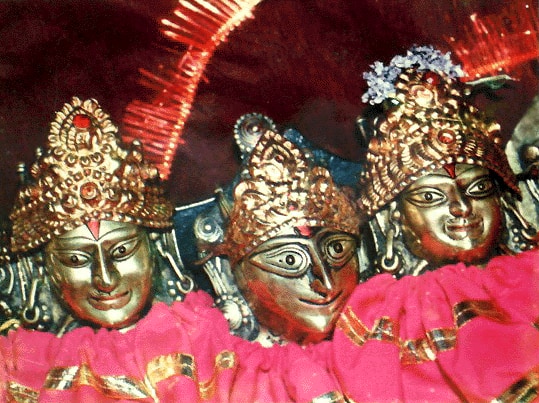
Durga, Parvati, Shakti, Shoolini Durga
- Kuladevi of the Rulers and Residents of the Former Baghat State
- Patron Deity of Solan, Himachal Pradesh
- Associated With the Myth of Taming Narasimha's Rage
Baghat State Rulers
Shoolini Mela
About Shoolini Devi
Shoolini Devi is recognized as a principal warrior form of the Hindu Goddess Durga or Parvati, embodying the supreme Shakti, or feminine power, of Shiva. She is considered both formless and embodied, serving as the cosmic source of knowledge, wisdom, creation, preservation, and annihilation.
Manifestation and Significance
The name Shoolini originates from the Sanskrit word "shoola," meaning trident or spear, signifying her attribute as a wielder of this weapon, which symbolizes her capacity to destroy ignorance, ego, and malevolent forces. According to Shaivite Puranic lore, Goddess Shoolini manifested to assist in restoring cosmic balance. When Narasimha, the fourth avatar of Vishnu, threatened universal equilibrium with his uncontrollable rage after slaying the demon king Hiranyakashipu, Shiva assumed the form of Sharabha. With Shiva's blessing, Parvati manifested as Shoolini and positioned herself in Sharabha's wing to help pacify Narasimha's fury, thus restoring universal equilibrium.
Cultural Reverence
Goddess Shoolini is particularly venerated in northern India. She is revered as the Kuladevi, or family and clan deity, for the rulers and residents of the former Baghat State in Solan, Himachal Pradesh. The town of Solan itself derives its name directly from Shoolini Mata. An annual three-day event, the Shoolini Mela, is celebrated in June in Solan to commemorate her symbolic visit to her sister's shrine, drawing thousands of devotees.
Source: Wikipedia ↗
Frequently Asked Questions
Who is Shoolini Devi?
Shoolini Devi is a principal warrior form of the Hindu Goddess Durga or Parvati, also known as Devi and Shakti. She embodies the supreme feminine power of Shiva and is considered a cosmic source of knowledge and creation.
What does the name Shoolini mean?
The name Shoolini derives from the Sanskrit root 'shoola,' which means trident or spear. This name highlights her attribute as the wielder of the trident, symbolizing her power to destroy ignorance, ego, and malevolent forces.
What is the Puranic origin of Shoolini Devi?
According to Shaivite Puranic lore, Goddess Shoolini manifested to help restore cosmic balance. She appeared with Shiva in his form as Sharabha to assist in taming the uncontrollable rage of Narasimha after he slew the demon king Hiranyakashipu.
Where is Shoolini Devi particularly venerated?
Goddess Shoolini is venerated in northern India, especially as the Kuladevi (family and clan deity) of the former rulers and residents of the Baghat State in Solan, Himachal Pradesh. The town of Solan itself derives its name from her.
What is the Shoolini Mela?
The Shoolini Mela is an annual three-day state-level festival celebrated in Solan, Himachal Pradesh, in her honor, typically in the last week of June. It commemorates her symbolic visit to her elder sister's shrine, Durga Devi, involving processions and cultural gatherings.
Related Temples (Hindu)

Taraknath Temple
The Taraknath Temple, located in Tarakeswar, West Bengal, India, is a significant Hindu pilgrimage site dedicated to Lord Shiva, worshiped here as Tarakanatha. Constructed in 1729, it features a distinct Bengal architectural style with an 'atchala' structure and an adjacent 'natmandir'. The temple is renowned for its belief that a dip in the nearby Dudhpukur tank fulfills prayers and is considered one of the 64 Jyotirlingas.

Tanot Mata Temple
The Tanot Mata Temple is a significant Hindu shrine located in the Jaisalmer district of Rajasthan, India, near the Pakistan border. Revered as a form of Goddess Hinglaj Mata, the temple is famously associated with the Indian victories in the Indo-Pakistani Wars of 1965 and 1971, with local folklore attributing the successful outcomes to divine intervention. The Border Security Force of India now manages the temple complex, which also includes a victory tower and a war museum.
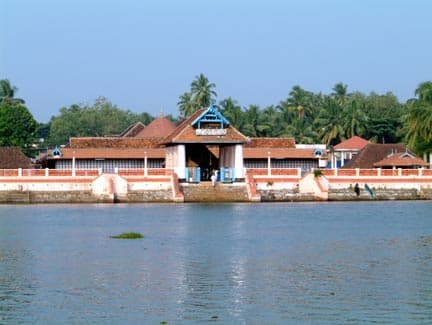
Thriprayar Temple
The Thriprayar Temple, also known as the Shree Ramaswami Temple, is a significant Hindu temple located in Triprayar, Thrissur district, Kerala, India. It is dedicated to Lord Rama, the seventh incarnation of Vishnu, who is depicted with four arms holding a conch, discus, bow, and garland. The temple's origin story involves the idol being worshipped by Krishna in Dwarka, later immersed in the sea, and eventually found by fishermen.