
Shikari Devi Temple
The Shikari Devi Temple, dedicated to Goddess Durga in her form as the Hunter's Goddess, is a significant Hindu pilgrimage site located in the Mandi district of Himachal Pradesh, India. Renowned for its unusual roofless architecture and the mysterious phenomenon of its snow-free premises, the temple is steeped in legends dating back to the Mahabharata era.
Key Facts
- ›The temple is dedicated to Goddess Durga, worshipped as Shikari Devi (the goddess of hunters).
- ›It is believed to have been established by the Pandavas during their exile, as mentioned in the Mahabharata.
- ›A unique feature of the temple is its roofless structure, with attempts to build a roof reportedly failing due to storms.
- ›The temple premises inexplicably remain free of snow even during heavy snowfall in the surrounding region.
- ›It is considered a powerful site where devotees believe prayers are manifested into reality.
- ›The temple is situated atop Shikari Devi peak, the highest peak in Mandi district, offering panoramic views.

Durga
Religious Pilgrimage Site, Historical Legends, Unique Architectural Features, Mysterious Natural Phenomena, Guardian of Forests and Wildlife, Scenic Natural Beauty and Panoramic Views
Navratri
Pandavas, Rishi Markendeya
About Shikari Devi Temple
The Shikari Devi Temple is a significant Hindu shrine located in the Mandi district of Himachal Pradesh, India, dedicated to Goddess Durga in her manifestation as the Hunter's Goddess, or "Shikari Devi."
History and Legends
The temple's origins are deeply rooted in mythology, with tradition holding that it was established by the Pandavas during their period of exile, as chronicled in the Mahabharata. Another legend attributes the shrine's construction to the sage Rishi Markendeya, who is said to have meditated at the site and built the temple under the goddess's direction. A further narrative speaks of the Pandavas encountering a mystical deer during a hunt, which led them to this location where they meditated and subsequently erected the temple.
Historically, local hunters invoked the blessings of Shikari Devi for success and protection from wild animals, solidifying her epithet as the "goddess of hunters." This practice highlights a historical fusion of nature, faith, and livelihood in the region.
Architecture and Unique Features
A striking characteristic of the Shikari Devi Temple is its roofless structure, which sets it apart from most temples. It is believed that the goddess prefers the open sky as her canopy, and attempts by various individuals, including former Chief Ministers, to construct a roof have reportedly been unsuccessful, with storms often destroying any completed structures.
Another remarkable and unexplained phenomenon is that the temple's premises remain perpetually free of snow, even during periods of heavy snowfall that bury the surrounding landscape. This mystery is attributed to the divine power of the goddess.
Beliefs and Significance
Devotees believe that sincere prayers offered at Shikari Devi Temple are manifested into reality, and that the goddess removes obstacles and bestows blessings upon those who approach her with their problems. The temple attracts a substantial number of pilgrims, particularly during the spring and autumn Navratri festivals, who come to seek the goddess's grace.
Traditional offerings include ghee lamps, coconuts, and Dhvajas, with many devotees also presenting cash or other gifts upon the fulfillment of their wishes. While animal sacrifices were historically part of the worship, this practice has become less common.
The temple stands atop Shikari Devi peak, the highest point in Mandi district, offering breathtaking panoramic views of surrounding Himalayan ranges, valleys, and distant plains. The Shikari Devi Sanctuary, which surrounds the temple, is a protected forest and wildlife area, reflecting a traditional harmony between spirituality and nature, with the deity revered as a guardian of the natural environment and travelers.
Source: Wikipedia ↗
Frequently Asked Questions
What is the origin of the Shikari Devi Temple?
According to tradition, the Shikari Devi Temple was established by the Pandavas during their exile in the Himalayas. Legends also suggest that Rishi Markendeya meditated here and built the shrine under divine guidance.
Why is the Shikari Devi Temple roofless?
The temple is famously roofless, and it is believed that the goddess prefers the open sky as her canopy. Attempts to build a roof over the shrine have reportedly been thwarted by storms.
What is the significance of the snow-free premises at Shikari Devi Temple?
A remarkable phenomenon associated with the temple is that its interior premises remain free of snow, even when the surrounding region is heavily covered. This is considered a miracle attributed to the goddess Shikari Devi.
Who is worshipped at the Shikari Devi Temple?
The temple is dedicated to Goddess Durga, specifically in her form as Shikari Devi, which translates to 'Hunter's Goddess'. This epithet historically relates to local hunters worshipping her for success and protection.
When is the best time to visit Shikari Devi Temple?
The temple receives a large influx of devotees during the Navratri festivals, both in spring and autumn. These periods are significant for seeking the blessings of Goddess Shikari Devi.
What kind of offerings are traditionally made at Shikari Devi Temple?
Traditional offerings include ghee lamps, coconuts, and Dhvajas. Devotees also present cash, Chattra, or other offerings as a token of gratitude for fulfilled wishes. In the past, animal sacrifices were practiced, tied to older hunter traditions.
Related Temples (Hindu)

Taraknath Temple
The Taraknath Temple, located in Tarakeswar, West Bengal, India, is a significant Hindu pilgrimage site dedicated to Lord Shiva, worshiped here as Tarakanatha. Constructed in 1729, it features a distinct Bengal architectural style with an 'atchala' structure and an adjacent 'natmandir'. The temple is renowned for its belief that a dip in the nearby Dudhpukur tank fulfills prayers and is considered one of the 64 Jyotirlingas.

Tanot Mata Temple
The Tanot Mata Temple is a significant Hindu shrine located in the Jaisalmer district of Rajasthan, India, near the Pakistan border. Revered as a form of Goddess Hinglaj Mata, the temple is famously associated with the Indian victories in the Indo-Pakistani Wars of 1965 and 1971, with local folklore attributing the successful outcomes to divine intervention. The Border Security Force of India now manages the temple complex, which also includes a victory tower and a war museum.
Thriprayar Temple
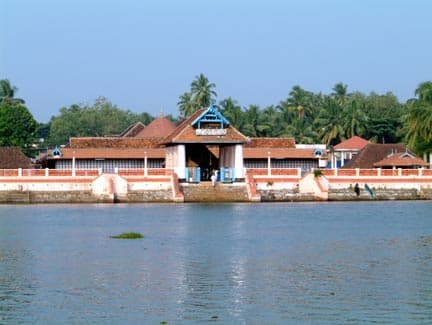
The Thriprayar Temple, also known as the Shree Ramaswami Temple, is a significant Hindu temple located in Triprayar, Thrissur district, Kerala, India. It is dedicated to Lord Rama, the seventh incarnation of Vishnu, who is depicted with four arms holding a conch, discus, bow, and garland. The temple's origin story involves the idol being worshipped by Krishna in Dwarka, later immersed in the sea, and eventually found by fishermen.