
Satpuda Manudevi Temple, Adgaon
The Manudevi Temple, situated near Adgaon village in the Satpura Range of Maharashtra, India, is a significant place of worship dedicated to the goddess Manudevi. She is revered as the kuldevi (family deity) for a substantial portion of the Jalgaon district's population and is worshipped by many in the Khandeshi region. The temple complex is marked by an artificial lake and hosts the annual Navratri festival.
Key Facts
- ›The temple is dedicated to the goddess Manudevi.
- ›Manudevi is considered the kuldevi (family deity) of a majority of people in the Jalgaon district.
- ›The temple is located near Adgaon village in the Satpura Range, Maharashtra, India.
- ›An artificial lake is a notable feature within the temple complex.
- ›The festival of Navratri is celebrated annually with devotees visiting for nine days.
- ›The temple is associated with small fairs held during Navratri.
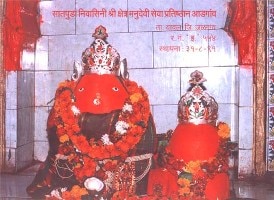
Manudevi
- Kuldevi For A Large Population In Jalgaon District
- Important Worship Site For Khandeshi People
- Site of Navratri Celebrations
Navratri
Artificial Lake
About Satpuda Manudevi Temple, Adgaon
The Manudevi Temple is a significant Hindu place of worship located near Adgaon village in Yawal Taluka, within the Jalgaon district of Maharashtra, India. Nestled in the Satpura Range, the temple is dedicated to the goddess Manudevi, who holds a special place as the kuldevi, or family deity, for a substantial portion of the Jalgaon district's population, reportedly around 70%. The goddess is widely worshipped by the people of Khandeshi and surrounding areas, and is recognized as the Kuldevata for numerous families.
The temple complex is distinguished by the presence of a nearby artificial lake, adding to its serene ambiance. The religious importance of the Manudevi Temple is particularly highlighted during the annual festival of Navratri. During this nine-day period, devotees undertake pilgrimages to the temple, and small fairs are organized, drawing many people to participate in the celebrations and seek blessings from the goddess.
Source: Wikipedia ↗
Frequently Asked Questions
Who is the primary deity worshipped at the Manudevi Temple?
The primary deity worshipped at the Manudevi Temple is the goddess Manudevi. She is revered as the kuldevi, or family deity, by a significant portion of the population in the Jalgaon district and the broader Khandeshi region.
Where is the Manudevi Temple located?
The Manudevi Temple is located near Adgaon village in Yawal Taluka, within the Jalgaon district of Maharashtra, India. It is situated in the picturesque Satpura Range.
What is the significance of Manudevi for the local population?
Manudevi holds significant importance as the kuldevi for approximately 70% of the people in the Jalgaon district. She is worshipped by most of the Khandeshi people and is believed to be the Kuldevata of many families, including the Baviskar family.
What are the notable features of the Manudevi Temple complex?
The Manudevi Temple complex is notable for its setting in the Satpura Range and features a nearby artificial lake. The temple is a focal point for religious observances, particularly during festivals.
When is the main festival celebrated at the Manudevi Temple?
The festival of Navratri is celebrated annually at the Manudevi Temple. Devotees visit the temple for nine days during this period, and small fairs are often arranged.
Related Temples (Hindu)

Taraknath Temple
The Taraknath Temple, located in Tarakeswar, West Bengal, India, is a significant Hindu pilgrimage site dedicated to Lord Shiva, worshiped here as Tarakanatha. Constructed in 1729, it features a distinct Bengal architectural style with an 'atchala' structure and an adjacent 'natmandir'. The temple is renowned for its belief that a dip in the nearby Dudhpukur tank fulfills prayers and is considered one of the 64 Jyotirlingas.

Tanot Mata Temple
The Tanot Mata Temple is a significant Hindu shrine located in the Jaisalmer district of Rajasthan, India, near the Pakistan border. Revered as a form of Goddess Hinglaj Mata, the temple is famously associated with the Indian victories in the Indo-Pakistani Wars of 1965 and 1971, with local folklore attributing the successful outcomes to divine intervention. The Border Security Force of India now manages the temple complex, which also includes a victory tower and a war museum.
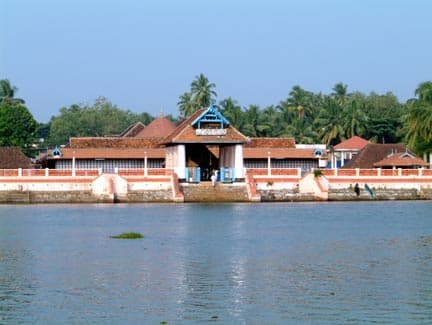
Thriprayar Temple
The Thriprayar Temple, also known as the Shree Ramaswami Temple, is a significant Hindu temple located in Triprayar, Thrissur district, Kerala, India. It is dedicated to Lord Rama, the seventh incarnation of Vishnu, who is depicted with four arms holding a conch, discus, bow, and garland. The temple's origin story involves the idol being worshipped by Krishna in Dwarka, later immersed in the sea, and eventually found by fishermen.