
Santram Mandir
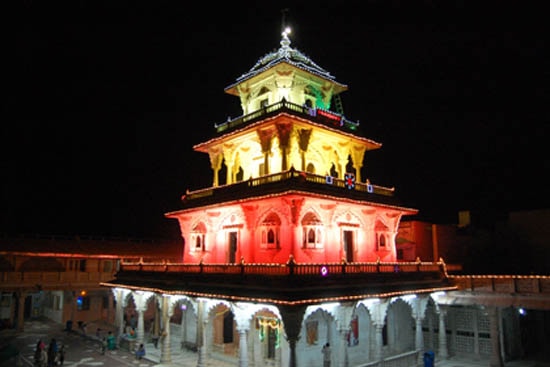
Santram Mandir is a Hindu temple located in Nadiad, Gujarat, India, operated by the Santram Maharaj organization. It serves as a significant religious site within the region.
Key Facts
- ›The temple is situated in Nadiad, Gujarat, India.
- ›It is managed by the Santram Maharaj organization.
- ›The temple is dedicated to Hindu worship.
- ›Its establishment is linked to the Santram Maharaj organization.
Hindu Deities
Religious Pilgrimage Site
Santram Maharaj Organization
About Santram Mandir
Santram Mandir is a notable Hindu temple situated in the city of Nadiad, within the Indian state of Gujarat. The temple complex is managed and operated by the Santram Maharaj organization, which plays a key role in its administration and the religious activities conducted there.
As a place of Hindu worship, Santram Mandir is an active site for devotees. Its existence and operation are intrinsically linked to the Santram Maharaj organization. While specific details regarding its founding century or architectural style are not elaborated, its presence in Gujarat signifies its role within the region's rich religious landscape.
Key Information
- Location: Nadiad, Gujarat, India
- Operator: Santram Maharaj organization
- Religious Affiliation: Hinduism
- Status: Active place of worship and pilgrimage site
Source: Wikipedia ↗
Frequently Asked Questions
Where is Santram Mandir located?
Santram Mandir is located in Nadiad, Gujarat, India. This region is known for its numerous temples and religious sites.
Who runs Santram Mandir?
The temple is managed and operated by the Santram Maharaj organization. This organization is responsible for its upkeep and religious activities.
What is the primary purpose of Santram Mandir?
Santram Mandir is a Hindu temple, serving as a place of worship and prayer for devotees. It is an active religious center within its community.
Related Temples (Hindu)

Taraknath Temple
The Taraknath Temple, located in Tarakeswar, West Bengal, India, is a significant Hindu pilgrimage site dedicated to Lord Shiva, worshiped here as Tarakanatha. Constructed in 1729, it features a distinct Bengal architectural style with an 'atchala' structure and an adjacent 'natmandir'. The temple is renowned for its belief that a dip in the nearby Dudhpukur tank fulfills prayers and is considered one of the 64 Jyotirlingas.

Tanot Mata Temple
The Tanot Mata Temple is a significant Hindu shrine located in the Jaisalmer district of Rajasthan, India, near the Pakistan border. Revered as a form of Goddess Hinglaj Mata, the temple is famously associated with the Indian victories in the Indo-Pakistani Wars of 1965 and 1971, with local folklore attributing the successful outcomes to divine intervention. The Border Security Force of India now manages the temple complex, which also includes a victory tower and a war museum.
Thriprayar Temple
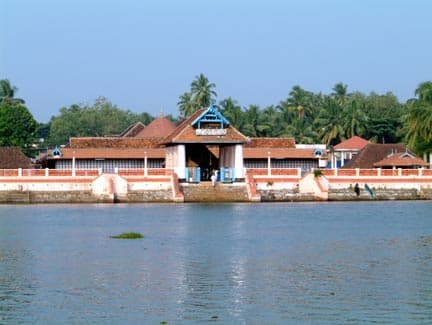
The Thriprayar Temple, also known as the Shree Ramaswami Temple, is a significant Hindu temple located in Triprayar, Thrissur district, Kerala, India. It is dedicated to Lord Rama, the seventh incarnation of Vishnu, who is depicted with four arms holding a conch, discus, bow, and garland. The temple's origin story involves the idol being worshipped by Krishna in Dwarka, later immersed in the sea, and eventually found by fishermen.