
Sammakka Saralamma Jatara
The Sammakka Saralamma Jatara, also known as Medaram Jatara, is a significant Hindu tribal festival celebrated in Telangana, India, honoring the goddesses Sammakka and Saralamma. Held at Medaram in the Mulugu district, the festival involves devotees offering jaggery, locally called Bangaram, to the deities, with rituals performed by Koya Tribe priests according to their ancient customs.
Key Facts
- ›The festival honors the Hindu Tribal goddesses Sammakka and Saralamma.
- ›It is celebrated in Medaram, Tadvai Mandala, Mulugu district, Telangana, India.
- ›Devotees offer jaggery, known locally as Bangaram, to the deities.
- ›Rituals are performed by Koya Tribe priests according to Koya customs.
- ›The festival has grown from a predominantly Koya tribe event to one attracting millions of pilgrims from diverse backgrounds.
- ›The Telangana government provides extensive facilities for the Jatara, including roads, water, and sanitation.

Sammakka, Saralamma
- Hindu Tribal Festival
- Major Pilgrimage Destination
- Celebration of Koya Tribe Customs and Traditions
Sammakka Saralamma Jatara, Medaram Jatara
About Sammakka Saralamma Jatara
The Sammakka Saralamma Jatara, also known as Medaram Jatara, is a significant Hindu festival celebrated in the state of Telangana, India. It is dedicated to honoring the tribal goddesses Sammakka and Saralamma, drawing millions of devotees to Medaram in the Mulugu district. The festival is deeply rooted in the traditions of the Koya Tribe, whose priests perform the intricate rituals according to ancient customs.
Key Aspects of the Jatara
Devotees participate in the Jatara by offering jaggery, a local delicacy referred to as Bangaram, to the goddesses. This practice is a central element of the worship observed during the festival. The rituals are exclusively conducted by Koya Tribe priests, ensuring that the traditional Koya customs and heritage are maintained and respected.
Evolution and Scale
Initially, the Medaram Jatara was a gathering primarily for the Koya tribe, with only a few thousand attendees. However, over the decades, its popularity has surged dramatically. The festival now attracts an immense number of pilgrims, numbering in the crores, from across India and beyond. The Telangana government plays a crucial role in facilitating this massive congregation by providing extensive infrastructure and services, including robust road networks, clean water, sanitation facilities, and healthcare support.
Historical Governance and Organization
Historical accounts highlight the efforts to manage and improve the festival's organization. For instance, under the supervision of Subedar Amir Ali Khan in 1946, significant measures were implemented for pilgrim welfare, including water stations, first-aid posts, and traffic management. These efforts were praised for enhancing safety, comfort, and cleanliness, setting a precedent for future Jatara administrations and earning widespread appreciation from devotees and local dignitaries for their administrative skill and care.
Source: Wikipedia ↗
Frequently Asked Questions
What is the Sammakka Saralamma Jatara?
The Sammakka Saralamma Jatara, also known as Medaram Jatara, is a major Hindu festival dedicated to honoring the tribal goddesses Sammakka and Saralamma. It is celebrated in the state of Telangana, India, and is characterized by the offering of jaggery by devotees.
Where is the Sammakka Saralamma Jatara held?
The festival takes place in Medaram, located in the Tadvai Mandala of the Mulugu district in Telangana, India. This specific location is central to the rituals and gatherings associated with the Jatara.
What do devotees offer to the goddesses?
Devotees offer jaggery to the goddesses Sammakka and Saralamma. This offering is locally referred to as Bangaram, adding a specific cultural context to the act of devotion.
Who performs the rituals during the Jatara?
The rituals related to the goddesses are exclusively performed by priests from the Koya Tribe. These ceremonies are conducted in strict accordance with the traditional customs and practices of the Koya people.
How has the attendance at the Jatara changed over time?
Historically, the Jatara was primarily attended by the Koya tribe. However, in recent times, the number of non-Koya pilgrims has dramatically increased, with millions now visiting, making the Koya people a small percentage of the total worshippers.
What role does the government play in the festival?
The Government of Telangana actively facilitates the Jatara by providing essential services. These include well-maintained roads, potable water supply, sanitation, and health and hygiene measures to ensure the comfort and safety of the large number of pilgrims.
Related Temples (Hindu)

Taraknath Temple
The Taraknath Temple, located in Tarakeswar, West Bengal, India, is a significant Hindu pilgrimage site dedicated to Lord Shiva, worshiped here as Tarakanatha. Constructed in 1729, it features a distinct Bengal architectural style with an 'atchala' structure and an adjacent 'natmandir'. The temple is renowned for its belief that a dip in the nearby Dudhpukur tank fulfills prayers and is considered one of the 64 Jyotirlingas.

Tanot Mata Temple
The Tanot Mata Temple is a significant Hindu shrine located in the Jaisalmer district of Rajasthan, India, near the Pakistan border. Revered as a form of Goddess Hinglaj Mata, the temple is famously associated with the Indian victories in the Indo-Pakistani Wars of 1965 and 1971, with local folklore attributing the successful outcomes to divine intervention. The Border Security Force of India now manages the temple complex, which also includes a victory tower and a war museum.
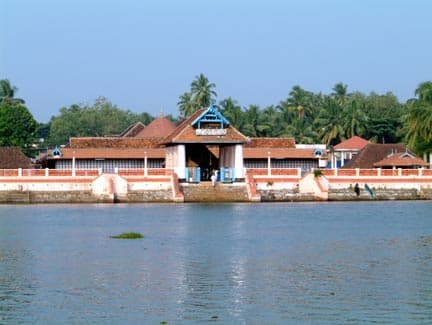
Thriprayar Temple
The Thriprayar Temple, also known as the Shree Ramaswami Temple, is a significant Hindu temple located in Triprayar, Thrissur district, Kerala, India. It is dedicated to Lord Rama, the seventh incarnation of Vishnu, who is depicted with four arms holding a conch, discus, bow, and garland. The temple's origin story involves the idol being worshipped by Krishna in Dwarka, later immersed in the sea, and eventually found by fishermen.