
Salasar Balaji Temple
The Salasar Balaji Temple, dedicated to the Hindu deity Hanuman, is a prominent pilgrimage site located in Salasar, Rajasthan, India. The temple's origins are rooted in local legend, which recounts the discovery of a Hanuman idol and subsequent divine instructions to establish it in Salasar. It is particularly renowned for the ritual offering of Churma, a sweet dish made from millet, to the deity.
Key Facts
- ›Dedicated to the Hindu god Hanuman, also known as Balaji.
- ›Located in Salasar town, Churu district, Rajasthan, India.
- ›Two major annual fairs are held during Chaitra (March-April) and Ashwin (September-October).
- ›Associated with the ritual offering of Churma, a local delicacy.
- ›The temple's origin story involves the discovery of an idol and divine dreams.
- ›Situated on the Jaipur-Bikaner highway.
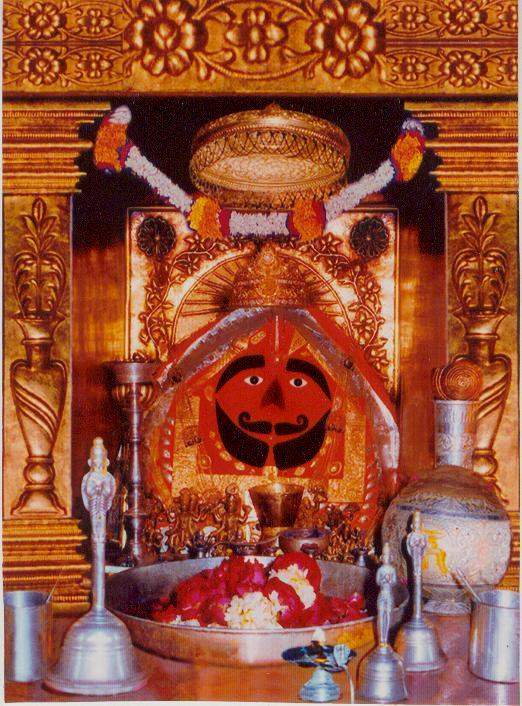
Hanuman
- Pilgrimage Destination For Devotees of Hanuman
- Site of Significant Annual Fairs
- Center of Local Legend and Devotion
Chaitra Fair, Ashwin Fair
Mohandas of Salasar, Landlord of Asota
Idol of Balaji
About Salasar Balaji Temple
The Salasar Balaji Temple is a significant Hindu place of worship dedicated to Lord Hanuman, revered here as Balaji. Located in the town of Salasar, near Sujangarh in the Churu district of Rajasthan, India, the temple is a major pilgrimage destination for devotees of Hanuman.
Origins and Legend
The temple's history is intertwined with local folklore. According to prevalent legend, the idol of Balaji was discovered in the village of Asota, Rajasthan, when a farmer's plough struck a stone object. Upon digging, an idol of Balaji was unearthed. Significantly, on the same day, a landlord in Asota reportedly had a dream where Lord Hanuman commanded him to install the idol in a temple in Salasar. Concurrently, a resident of Salasar named Mohandas also received a divine instruction in a dream to establish the idol's presence in Salasar.
Rituals and Festivals
A unique ritual associated with the Salasar Balaji Temple is the offering of Churma, a sweet dish made from millet, to Shree Balaji Maharaj. This practice is said to have originated when the farmer who found the idol offered Churma to the deity. The temple hosts two major annual fairs, drawing large numbers of devotees, during the months of Chaitra (March–April) and Ashwin (September–October).
Source: Wikipedia ↗
Frequently Asked Questions
Where is the Salasar Balaji Temple located?
The Salasar Balaji Temple is situated in the town of Salasar, near Sujangarh, within the Churu district of Rajasthan, India. It is located right in the heart of Salasar town and is accessible via the Jaipur-Bikaner highway.
What is the origin story of the Salasar Balaji Temple?
Local legend tells of a farmer in Asota, Rajasthan, whose plough struck an object, leading to the discovery of a stone idol of Balaji (Hanuman). Simultaneously, a landlord and a resident of Salasar named Mohandas had dreams instructing them to install the idol in a temple in Salasar.
What is the significance of Churma at Salasar Balaji Temple?
Churma, a sweet dish prepared from millet, is a significant ritualistic offering to Shree Balaji Maharaj at the temple. This practice began when the farmer who discovered the idol offered Churma to the deity.
When are the major festivals celebrated at Salasar Balaji Temple?
Two significant annual fairs are organized at the Salasar Balaji Temple. These take place during the Hindu months of Chaitra (typically March–April) and Ashwin (typically September–October).
Related Temples (Hindu)

Taraknath Temple
The Taraknath Temple, located in Tarakeswar, West Bengal, India, is a significant Hindu pilgrimage site dedicated to Lord Shiva, worshiped here as Tarakanatha. Constructed in 1729, it features a distinct Bengal architectural style with an 'atchala' structure and an adjacent 'natmandir'. The temple is renowned for its belief that a dip in the nearby Dudhpukur tank fulfills prayers and is considered one of the 64 Jyotirlingas.

Tanot Mata Temple
The Tanot Mata Temple is a significant Hindu shrine located in the Jaisalmer district of Rajasthan, India, near the Pakistan border. Revered as a form of Goddess Hinglaj Mata, the temple is famously associated with the Indian victories in the Indo-Pakistani Wars of 1965 and 1971, with local folklore attributing the successful outcomes to divine intervention. The Border Security Force of India now manages the temple complex, which also includes a victory tower and a war museum.
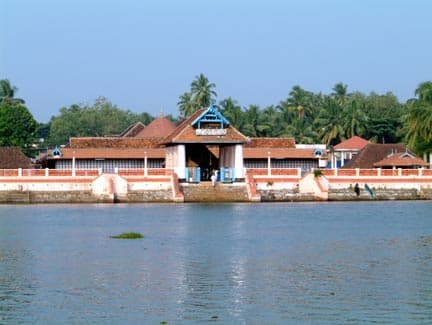
Thriprayar Temple
The Thriprayar Temple, also known as the Shree Ramaswami Temple, is a significant Hindu temple located in Triprayar, Thrissur district, Kerala, India. It is dedicated to Lord Rama, the seventh incarnation of Vishnu, who is depicted with four arms holding a conch, discus, bow, and garland. The temple's origin story involves the idol being worshipped by Krishna in Dwarka, later immersed in the sea, and eventually found by fishermen.