
Sadhimataji temple
The Sadhimataji temple is an ancient Hindu place of worship situated in Kherva village, Mehsana District, Gujarat, India. It is dedicated to Sadhimata, the kuldevi (main goddess) of the Raval Yogi Community, and holds significant cultural and religious importance for this community.
Key Facts
- ›The temple is located 2.5 km south of Kherva village, along the Mehsana-Kalol, Gandhinagar Highway.
- ›It is an old temple situated under a large Neem tree, featuring a rectangular dome interior.
- ›Sadhimataji is the kuldevi (main goddess) of the Raval Yogi Community.
- ›The temple was built by former pujari Shree Khodabhai Raval, and his descendants continue to maintain its worship.
- ›The principal festival celebrated is 'Dharo Atham no Melo,' sponsored annually by the Raval Yogi community.
- ›Devotees often visit barefoot to seek fulfillment of their wishes, with Sundays and Tuesdays being particularly popular visiting days.
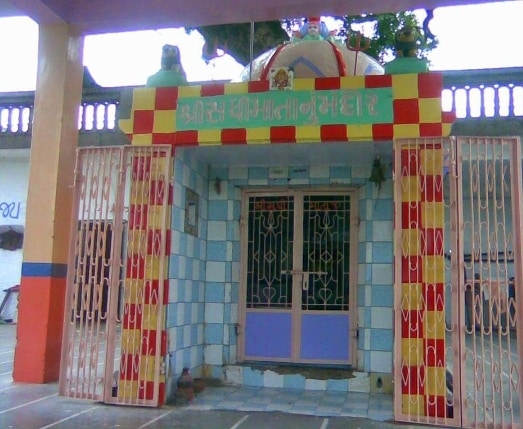
Sadhimata
Kuldevi Temple For the Raval Yogi Community, Site of Annual 'Dharo Atham No Melo' Festival
Dharo Atham No Melo
Cement
Shree Khodabhai Raval
About Sadhimataji temple
The Sadhimataji temple is an ancient Hindu temple located in Kherva village, within the Mehsana District of Gujarat, India. Situated approximately 2.5 kilometers south of Kherva village along the Mehsana-Kalol, Gandhinagar Highway, it is a significant religious site, particularly for the Raval Yogi Community.
Religious Significance
Sadhimata is revered as the kuldevi, or main goddess, of the Raval Yogi Community. The temple serves as a central point of worship for this community, with the lineage of former pujari Shree Khodabhai Raval continuing to maintain the worship of the goddess through successive generations. The current main pujari is Manoj Yogi.
History and Construction
This is a very old temple, notable for its location beneath a large Neem tree. The interior of the temple is characterized by a rectangular dome, and the structure is covered by a cement terrace. The temple complex includes a well-equipped courtyard in front and another larger courtyard behind, often utilized for fairs and traditional events. An inn behind the temple provides accommodation for the pujari.
Festivals and Devotion
The primary festival celebrated at the Sadhimataji temple is the 'Dharo Atham No Melo,' an annual fair sponsored by the Raval Yogi community. This event takes place on Bhadrva Sud Aatham according to the Hindu Panchang. The temple is well-known beyond Kherva, drawing devotees from surrounding areas who often undertake barefoot journeys to seek the fulfillment of their wishes. Sundays and Tuesdays are particularly popular days for visits, as is the Hindu New Year.
Source: Wikipedia ↗
Frequently Asked Questions
Where is the Sadhimataji temple located?
The Sadhimataji temple is located in Kherva village, within the Mehsana District of Gujarat, India. It is situated on the Mehsana-Kalol, Gandhinagar Highway, approximately 2.5 km south of Kherva village.
Who is Sadhimataji the goddess of?
Sadhimataji is the kuldevi, or main goddess, of the Raval Yogi Community. The temple serves as a significant place of worship for members of this community.
What is the main festival celebrated at Sadhimataji temple?
The principal festival and fair held at the temple is 'Dharo Atham No Melo.' This event is sponsored annually by the Raval Yogi community and takes place on Bhadrva Sud Aatham in the Hindu Panchang.
What architectural features does the Sadhimataji temple have?
The temple is described as very old and is located beneath a large Neem tree. Internally, it features a rectangular dome and is covered by a cement terrace. A courtyard with facilities is situated in front, with another large courtyard behind used for fairs and traditions.
Who built the Sadhimataji temple?
The temple was originally built by Shree Khodabhai Raval, a former pujari. The tradition of worship has been maintained by his family line through generations.
When do people typically visit the Sadhimataji temple?
Many people visit the Sadhimataji temple on Sundays and Tuesdays. Devotees often arrive barefoot to express their devotion and seek the fulfillment of their wishes.
Related Temples (Hindu)

Taraknath Temple
The Taraknath Temple, located in Tarakeswar, West Bengal, India, is a significant Hindu pilgrimage site dedicated to Lord Shiva, worshiped here as Tarakanatha. Constructed in 1729, it features a distinct Bengal architectural style with an 'atchala' structure and an adjacent 'natmandir'. The temple is renowned for its belief that a dip in the nearby Dudhpukur tank fulfills prayers and is considered one of the 64 Jyotirlingas.

Tanot Mata Temple
The Tanot Mata Temple is a significant Hindu shrine located in the Jaisalmer district of Rajasthan, India, near the Pakistan border. Revered as a form of Goddess Hinglaj Mata, the temple is famously associated with the Indian victories in the Indo-Pakistani Wars of 1965 and 1971, with local folklore attributing the successful outcomes to divine intervention. The Border Security Force of India now manages the temple complex, which also includes a victory tower and a war museum.
Thriprayar Temple
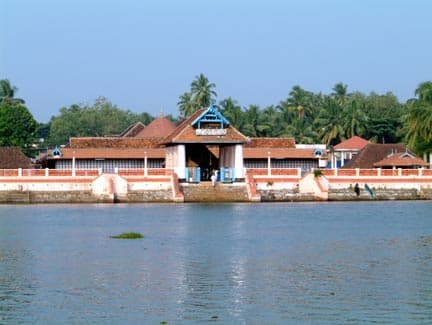
The Thriprayar Temple, also known as the Shree Ramaswami Temple, is a significant Hindu temple located in Triprayar, Thrissur district, Kerala, India. It is dedicated to Lord Rama, the seventh incarnation of Vishnu, who is depicted with four arms holding a conch, discus, bow, and garland. The temple's origin story involves the idol being worshipped by Krishna in Dwarka, later immersed in the sea, and eventually found by fishermen.