
Sabarimala Temple
The Sabarimala Sree Dharma Sastha Temple, dedicated to Lord Ayyappan, is a significant Hindu pilgrimage site located atop the Sabarimala hill in Kerala, India. Renowned for its association with ancient legends and religious traditions, it attracts millions of devotees annually, particularly during the Mandala Pooja and Makaravilakku festivals.
Key Facts
- ›The temple is dedicated to Lord Ayyappan, considered the son of Lord Shiva and Vishnu's Mohini avatar.
- ›It is situated atop the Sabarimala hill, surrounded by 18 hills within the Periyar Tiger Reserve.
- ›Sabarimala is one of the largest annual pilgrimage sites globally, drawing 10-15 million devotees each year.
- ›The temple is open for worship only during specific periods, including the Mandala Pooja and Makaravilakku.
- ›The 18 sacred steps (Pathinettaampadi) leading to the sanctum sanctorum are a central feature of the pilgrimage.
- ›The temple complex includes shrines for Ayyappan's companions like Valiyakadutta Swami, Karuppu Swami, and Karuppai Amma.
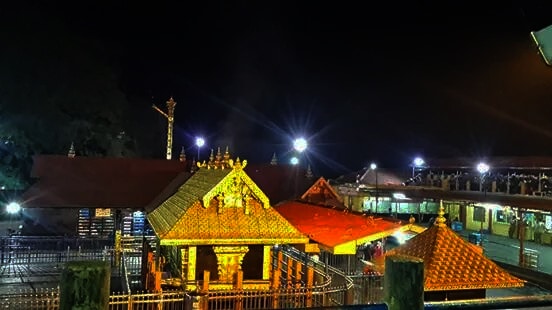
Lord Sree Dharma Sastha, Lord Ayyappan
- Major pilgrimage site
- Amalgamation of religious traditions
- Historical importance for the Pandalam Royal Family
Panthalam Dynasty
Mandala Pooja, Makaravilakku, Maha Thirumal Sankranti
Gold, Panchaloha
Rajashekhara, Parashurama
- Idol of Manikandan as Ayyappan in a yogic posture
Pampa River
About Sabarimala Temple
Sabarimala Sree Dharma Sastha Temple
The Sabarimala Sree Dharma Sastha Temple, often referred to as the Sabarimala Temple, is a prominent Hindu pilgrimage destination situated atop the Sabarimala hill in the Pathanamthitta district of Kerala, India. The temple is dedicated to Lord Sree Dharma Sastha, worshipped here as Lord Ayyappan, who is considered the son of Lord Shiva and Mohini, the female avatar of Lord Vishnu. The temple complex is nestled amidst 18 hills within the Periyar Tiger Reserve and is renowned as one of the largest annual pilgrimage sites globally, attracting an estimated 10 to 15 million devotees each year.
Origins and Legends
Ancient Puranic texts and local legends form the spiritual bedrock of Sabarimala. The deity Shasta, also known as Hariharaputra (son of Hari and Hara), is central to these narratives. The legend of Manikandan, the infant found and raised by the childless king Rajashekhara of the Panthalam dynasty, is intrinsically linked to the temple's founding myth. Manikandan's journey to kill the demoness Mahishi and his subsequent divine ascension to Sabarimala, where he asked for a temple to be built on the hill marked by an arrow's landing, are key elements of the lore.
The temple's location is also associated with the Hindu epic Ramayana, as it is believed to be the place where Shabari, a tribal devotee of Lord Rama, attained salvation. The name 'Sabarimala' itself translates to 'the hill of Shabari'. Additionally, the temple's history is interwoven with the worship of the Shasta deity in various forms across South India, with Sabarimala representing the Vanaprastha (hermitage) stage of Shasta's life.
The Temple and its Architecture
The main temple structure, the Sannidhanam, is built on a plateau. Its sanctum sanctorum features a gold-plated roof and golden finials. The most iconic architectural element is the Pathinettaampadi, the 18 sacred steps leading to the shrine, which pilgrims must ascend as part of their ritual. The temple complex also houses shrines dedicated to Ayyappan's trusted companions, such as Valiyakadutta Swami, Karuppu Swami, and Karuppai Amma, as well as his half-brother Kannimoola Ganapathy and the important deity Maalikapurathamma.
Religious Practices and Festivals
Sabarimala is open for worship only during specific periods each year, including the Mandala Pooja (approximately November 15 to December 26) and Makaravilakku (January 14). The pilgrimage itself is a rigorous undertaking, often involving a 41-day austerity period known as Vratham, which includes a strict lacto-vegetarian diet, celibacy, and controlled behavior. Pilgrims traditionally undertake a challenging trek through forests, though modern access routes are also available. Prominent rituals include Neyyabhishekam (pouring ghee on the idol) and the distribution of blessed food like Aravana payasam and Appam. The devotional lullaby Harivarasanam is sung nightly to put the deity to sleep.
Administration and Historical Context
Historically, the Sabarimala temple has been under the administration of the Travancore Devaswom Board (TDB). While ancient references to the temple are scarce, extant records from the late medieval period, including a mortgage document from 1793, indicate its significance to the Pandalam royal family. The temple has undergone reconstruction and restoration over the centuries, notably after fire incidents in 1902 and 1950, with the latter involving the replacement of the original stone idol with a Panchaloha (five-metal alloy) idol.
Source: Wikipedia ↗
Frequently Asked Questions
What is the legend behind the birth of Lord Ayyappan at Sabarimala?
According to legend, Lord Ayyappan, also known as Manikandan, was born from the union of Lord Shiva and Vishnu's Mohini avatar to defeat the demoness Mahishi. He was found and raised by the childless king Rajashekhara of the Panthalam dynasty.
What are the significant rituals and offerings at Sabarimala Temple?
Key rituals include Neyyabhishekam, where pilgrims pour sacred ghee onto the idol, and the distribution of prasadam, typically Aravana payasam and Appam. The Harivarasanam, a devotional lullaby, is sung nightly before the temple closes.
When is the Sabarimala Temple open for worship?
The temple is open during specific periods: the Mandala Pooja (approx. Nov 15 - Dec 26), Makaravilakku (Jan 14), Maha Thirumal Sankranti (Apr 14), and the first five days of each Malayalam month.
What is the significance of the 18 sacred steps at Sabarimala?
The Pathinettaampadi, or 18 sacred steps, are the main stairway to the temple's sanctum sanctorum. Custom dictates that pilgrims must not ascend these steps without carrying an 'Irumudikkettu', a ritual bundle of offerings.
What is the Makara Vilakku festival?
Makara Vilakku is an annual festival held on Makara Sankranti, meaning the festival of Capricorn. It involves the procession of the sacred ornaments of Lord Ayyappan and culminates in a congregation at the hill shrine, attracting hundreds of thousands of devotees.
What is the traditional pilgrimage to Sabarimala like?
The traditional pilgrimage involves a 41-day austerity period (Vratham), including a lacto-vegetarian diet, celibacy, and controlled behavior. Devotees often undertake a challenging mountainous forest path, believed to be the route taken by Ayyappa himself.
Related Temples (Hindu)

Taraknath Temple
The Taraknath Temple, located in Tarakeswar, West Bengal, India, is a significant Hindu pilgrimage site dedicated to Lord Shiva, worshiped here as Tarakanatha. Constructed in 1729, it features a distinct Bengal architectural style with an 'atchala' structure and an adjacent 'natmandir'. The temple is renowned for its belief that a dip in the nearby Dudhpukur tank fulfills prayers and is considered one of the 64 Jyotirlingas.

Tanot Mata Temple
The Tanot Mata Temple is a significant Hindu shrine located in the Jaisalmer district of Rajasthan, India, near the Pakistan border. Revered as a form of Goddess Hinglaj Mata, the temple is famously associated with the Indian victories in the Indo-Pakistani Wars of 1965 and 1971, with local folklore attributing the successful outcomes to divine intervention. The Border Security Force of India now manages the temple complex, which also includes a victory tower and a war museum.
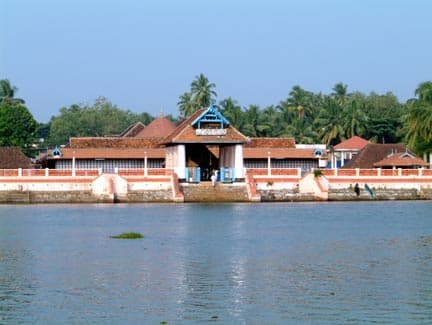
Thriprayar Temple
The Thriprayar Temple, also known as the Shree Ramaswami Temple, is a significant Hindu temple located in Triprayar, Thrissur district, Kerala, India. It is dedicated to Lord Rama, the seventh incarnation of Vishnu, who is depicted with four arms holding a conch, discus, bow, and garland. The temple's origin story involves the idol being worshipped by Krishna in Dwarka, later immersed in the sea, and eventually found by fishermen.